Earn
EARN — money mostly comes from doing something useful for someone else: work, a made thing, a solved problem. income is trading your time and effort for value — and every kind of honest work has worth.
Loading audio…
Press play to listen along. The line being read lights up as you go.
Show full transcript
Loading transcript…
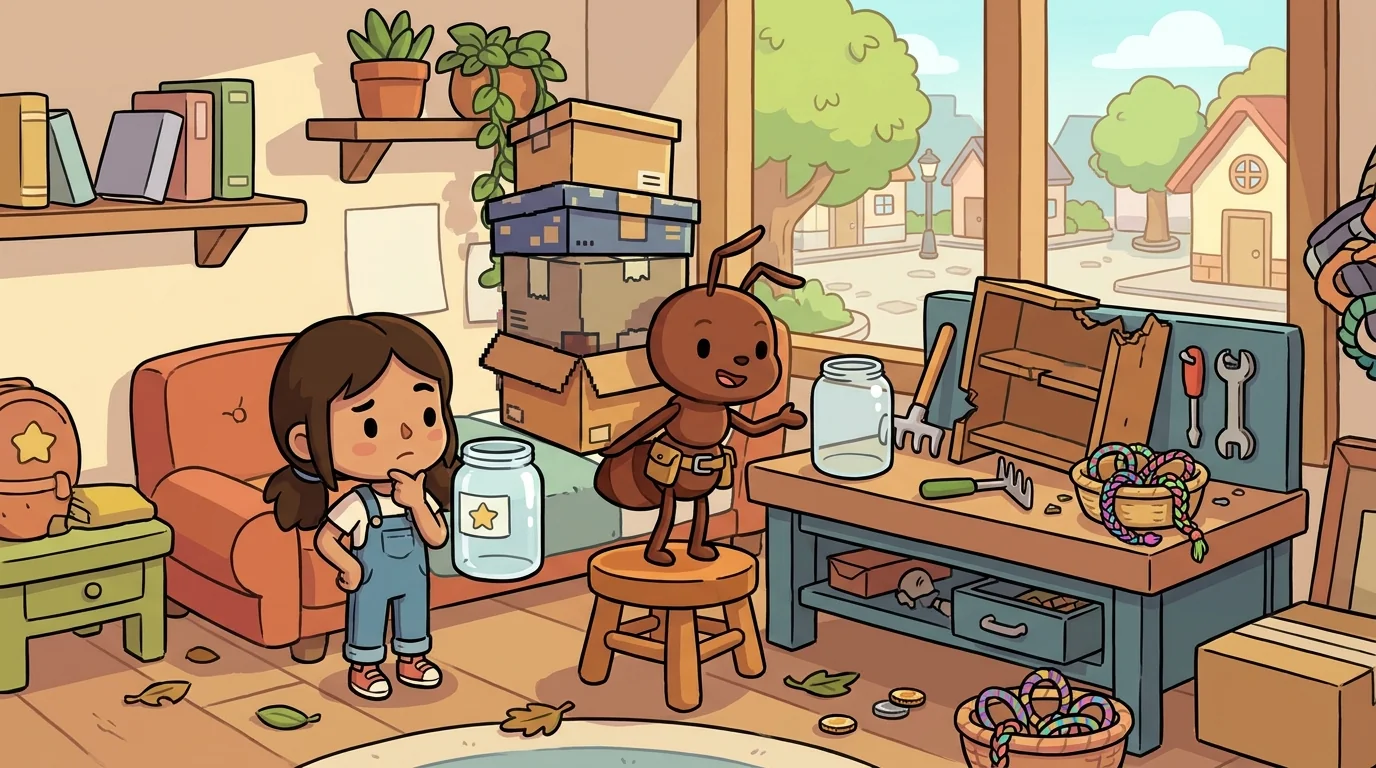
A student was staring at an empty allowance jar, stumped by a question that seemed simple.
"I want to buy a thing," she said, "but the jar's empty. So... where does money even come from? Do I just wait for it to appear?"
"It appears when you do something useful for someone else," said Earn, who was an ant — small, tireless, forever carrying something heavier than herself. "That's the whole secret of income. Money isn't magic and it isn't luck, mostly. It's a trade. You give someone your time, your effort, a thing you made, a problem you solved — and they give you money for it, because it was worth something to them."
The student frowned. "So to get money, I have to... work?"
"To earn it, yes," Earn said, setting down her load. "There are other ways money comes to you — a gift, an allowance, help from your family — and those are real and good too. But earning is the one you make happen yourself: you find something useful you can do, you do it well, and the value you gave comes back to you as money. Rake the leaves, fix the wobbly shelf, sell the bracelets you braid. Someone needed it. You did it. That's income."
Earn had learned the dignity of work young, and it had shaped how she saw everyone.
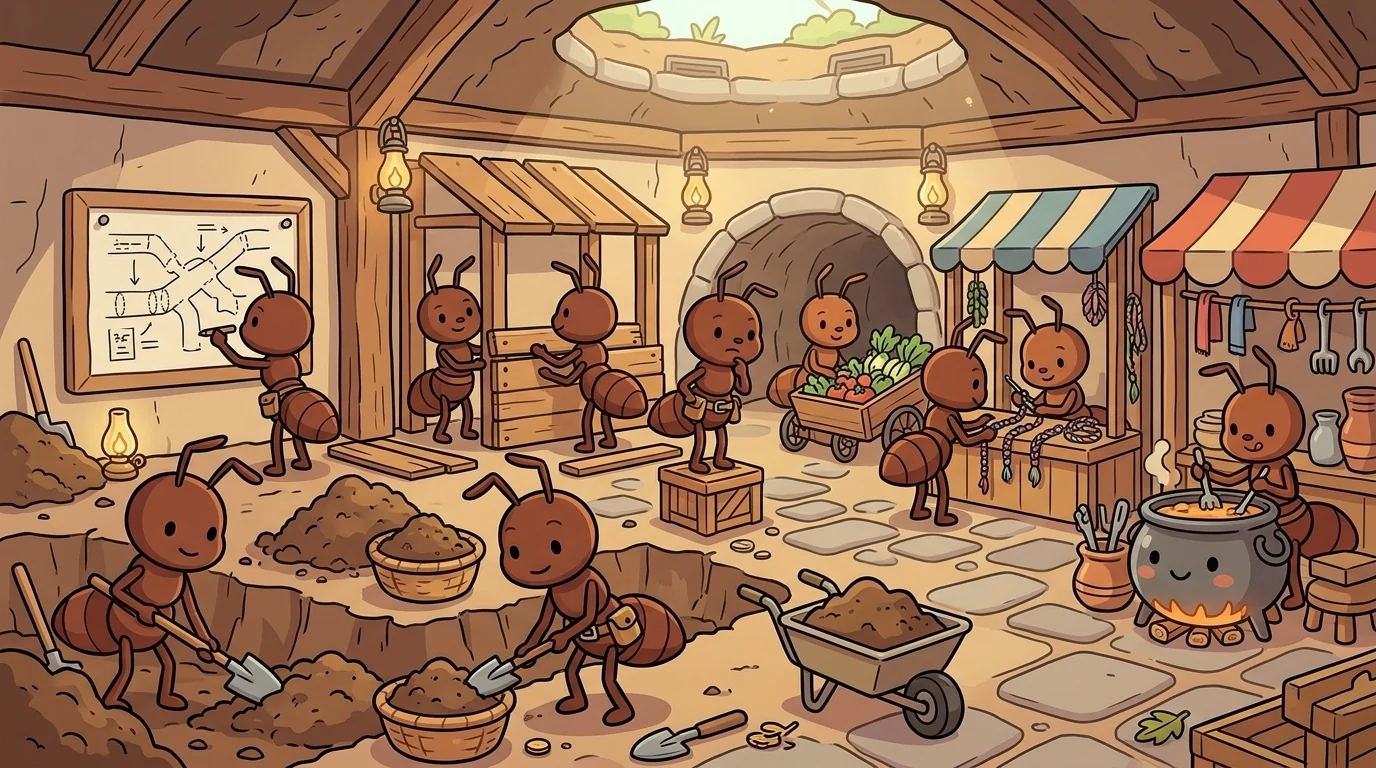
Her colony built the whole underground market — the tunnels, the storerooms, the little stalls — and every ant carried her share. Small Earn once decided some jobs were grander than others: the ant who designed the tunnels was surely worth more than the ant who just hauled the dirt.
Old Penny, the mentor who ran the market, overheard her. "Watch what happens if the haulers stop," Penny said mildly. And for one day, the haulers rested — and the grand designs went nowhere, because no dirt moved, and nothing got built. "The designer needs the hauler needs the digger needs the cook," Penny said. "Take any one away and the market falls. Some jobs pay more coins than others, and that's a real thing to understand — but never once mistake coins for worth. Every ant doing honest work is holding up the whole colony, and every one of them deserves respect." Small Earn held that: the pay can differ; the dignity of honest work never does.
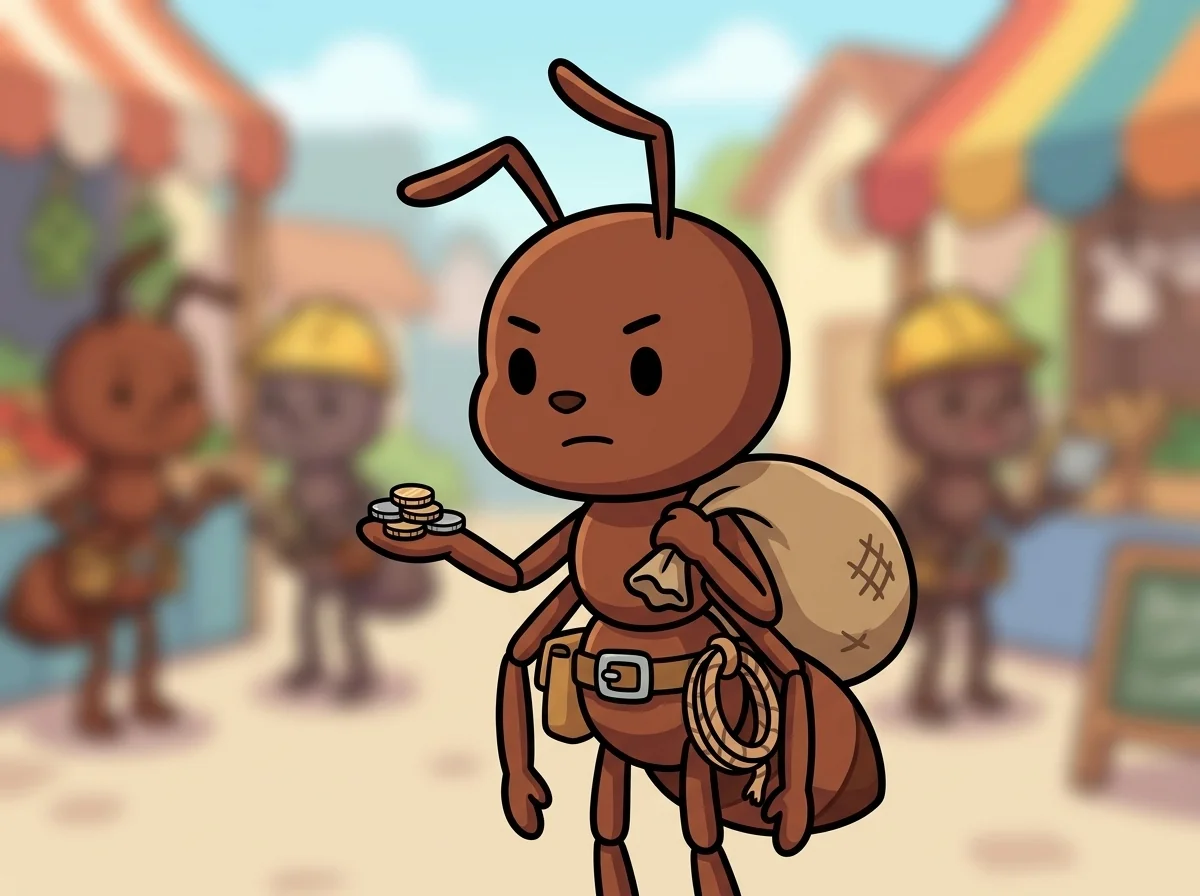
She walked into MintForge grown, still carrying something, and Penny met her at the market gate.
Instead of a quiz, Penny pointed at three ants at work — one selling bread, one mending shoes, one sweeping the market floor — and asked, "How does each one earn, and which one's work matters?"
Earn didn't hesitate. "The baker earns by making bread people need. The cobbler earns by fixing shoes people can't fix themselves. The sweeper earns by keeping the market clean enough that anyone comes at all." She looked at Penny steadily. "They earn different amounts. But every single one is doing something useful someone will pay for — and the market needs all three. There's no such thing as work that's beneath respect."
Penny nodded slowly. "Most young ones think earning is about being clever or lucky," she said. "You understood it's about being useful — and that useful comes in a hundred honest shapes. Stay. You've got the heart of it."
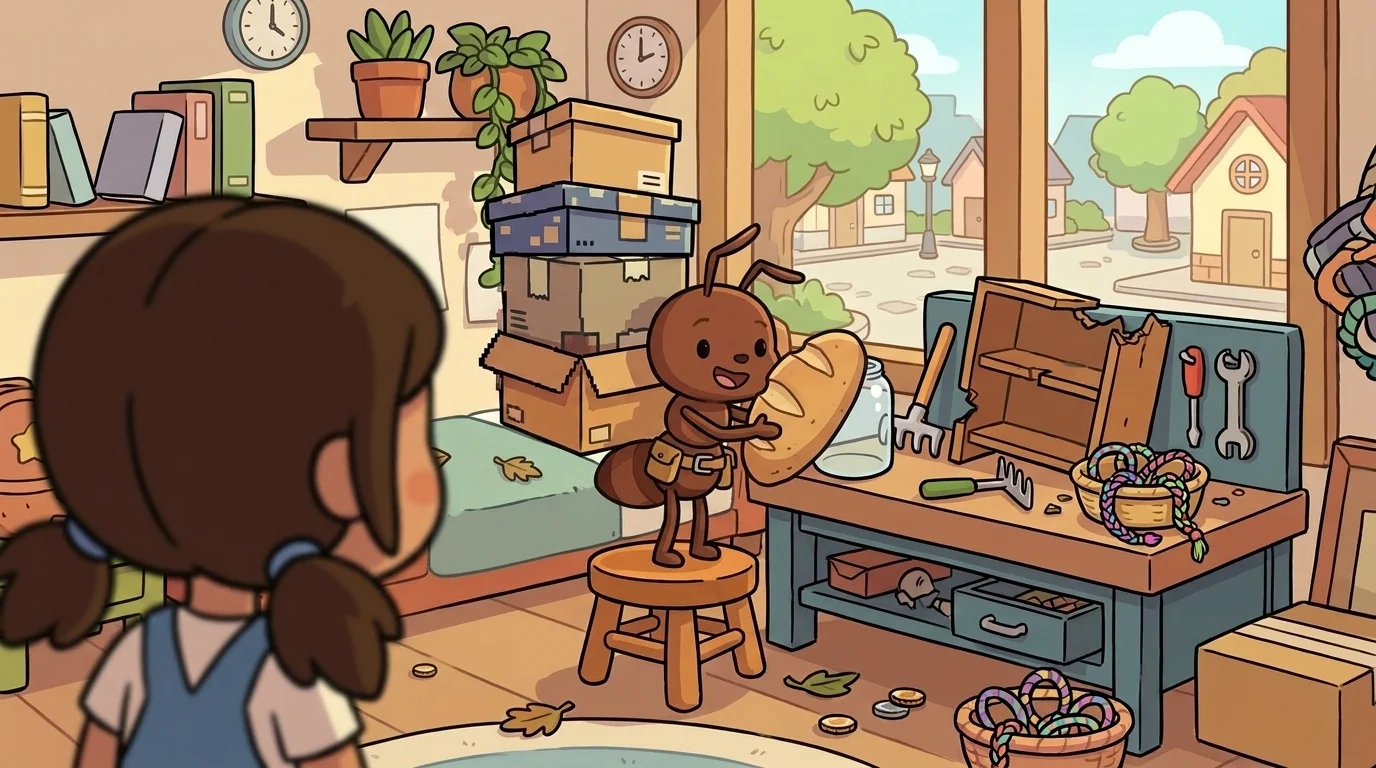
Weeks later, that same student stood at a little table, unsure how to fill her empty jar.
"Watch how you turn effort into income," Earn said warmly, hoisting a crumb. "First — what can you do that someone needs? You braid friendship bracelets, and other kids want them. That's your useful thing." She set the crumb down. "Now you make them well — because sloppy work is worth less, and careful work is worth more. Then you trade: a bracelet for some coins, fair price on both sides. The value you gave — a nice bracelet someone wanted — comes back to you as money in the jar."
The student brightened. "So I don't wait for money. I make it, by making something useful?"
"That's exactly it," Earn said. "And notice —" she grew gentle "— your bracelets aren't 'less real' income than someone's fancy job, and they're not 'more real' either. It's all the same honest trade: useful thing, fair pay. A kid braiding bracelets and a grown-up building bridges are doing the same deep thing — giving value, getting value back." She caught the student about to feel small about "just bracelets." "Never let anyone tell you your honest work is beneath them. Big job, small job — the dignity is identical."
The student picked up her half-finished bracelet with new respect for it. "So earning is just... being useful to someone, on purpose, and being paid for it."
"Now you've got it," Earn said. "Find the useful thing. Do it well. That's where money comes from — your own two hands."
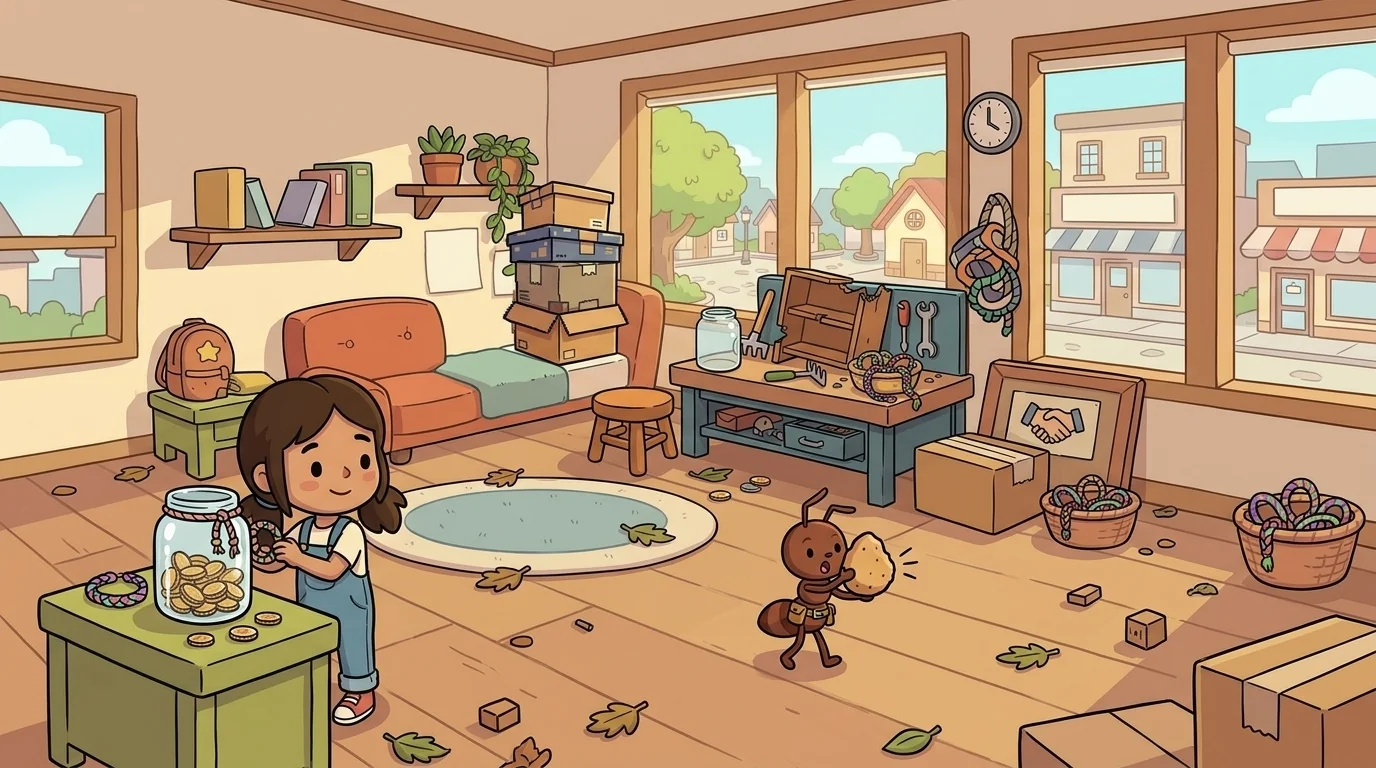
The student finished a batch of bracelets, sold a few at the school fair, and watched the first coins clink into her empty jar — coins she'd made, not waited for. There was a small settled feeling in her chest: the quiet pride of having been genuinely useful.
Earn hoisted her crumb again and marched off, tireless and content — the satisfaction of a creature who'd spent her life knowing that honest work, of every kind, holds the whole colony up. Somewhere in the memory of it, a day of resting haulers proved that no useful job is ever small.
"Money comes from being useful to someone, on purpose," she said, over her shoulder. "Every honest job has worth, and every worker deserves respect. That's the true part. That's the part worth carrying."
The MintForge ensemble
Earn is part of MintForge's distributed-narrative cast. Each character embodies a different curricular primitive; together they teach the full subject.
-

Coin
Currency + exchange — what money is, what it does, what it can't measure
-

Tag
Percentage + markup — the transparent math of how prices are built
-

Grow
Compound interest — patient math of money over time
-

Plan
Budget allocation + opportunity cost — the math of choosing with limited resources
-

Tilt
Risk + variability — the math of uncertain outcomes, distributions over destinies
-
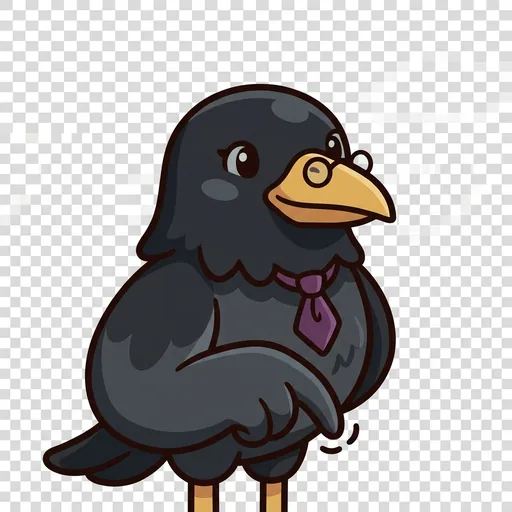
Due
Borrowing and debt — money owed carries a cost; what does it really cost to borrow?
-

Give
Generosity — giving is part of a budget; deciding what to share
-

Nest
Saving — setting money aside toward a goal, a little at a time
-

Wary
Money safety — spotting scams and keeping your money safe
