Bounce
BOUNCE — *tiny celebrations. squash-stretch-shake-thunk. juice is empathy.*
Loading audio…
Press play to listen along. The line being read lights up as you go.
Show full transcript
Loading transcript…

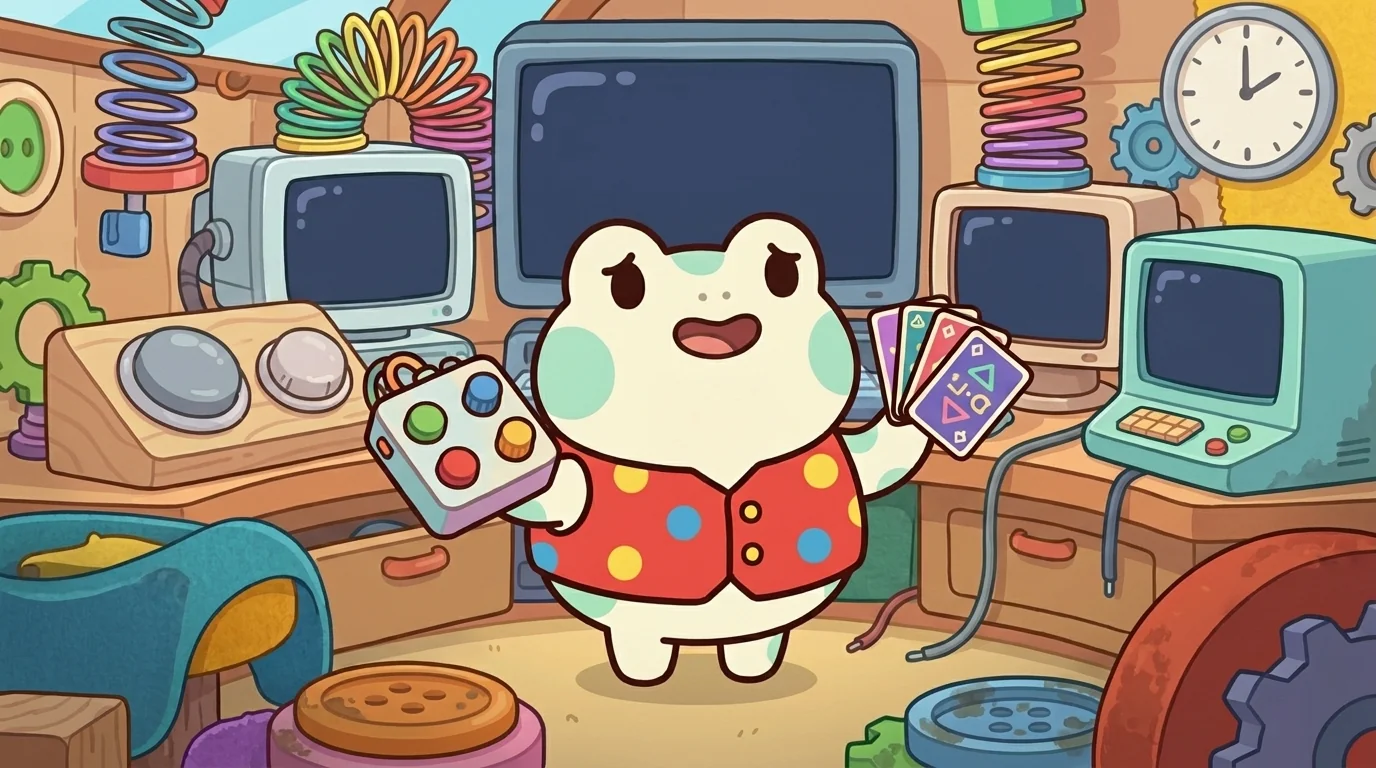
Bounce is a celebration frog — small and round, creamy-white with soft mint spots, in a bright polka-dot vest, carrying a set of "juice cards" and a little soundboard.
Bounce is fascinated by tiny reactions. "Tiny celebrations," she chirps. "Squash-stretch-shake-thunk. Juice is empathy." That's her whole craft: juice — the trick that makes every single thing you do in a game feel good. Lots of new game-makers build games that work but feel dead: you press a button and nothing much happens. Juice fixes that. A click makes the button squash and pop back; a coin makes the score flash big; a landing makes the screen give a little shake and a "thunk." "Every action gets a reaction," Bounce says. "The game is saying I saw that — I heard you. That's why juice isn't decoration. Juice is the game showing it cares."
The deepest thing Bounce teaches is that a silent action feels broken — and a little worse than broken.
"When you press a button and nothing happens," she says, "you don't just think 'this is boring.' You think 'is this even listening to me? Did I do it wrong?'" That flat, ignored feeling is the thing juice exists to prevent. A squash, a flash, a pop — each one answers, instantly: yes, I felt that.
"And juice is kind," she adds. "Some players get overwhelmed by big shakes and bright flashes — so you always build a switch to turn them down. Empathy means answering and not overwhelming." The game listens; the game answers; the player feels heard.

Bounce grew up near the lily pads, where her family were the village "celebrators."
Every time they leaped it made a big thunk and sent ripples spreading across the water. Their lesson: "Every action makes a ripple; the world answers. That's how the world says I see you." When Bounce was twelve she walked to LevelForge, and Pixel, her mentor, asked, "What is juice?" She didn't even pause: "Tiny celebrations. Squash-stretch-shake-thunk. Juice is empathy." Pixel smiled. "You are the one."
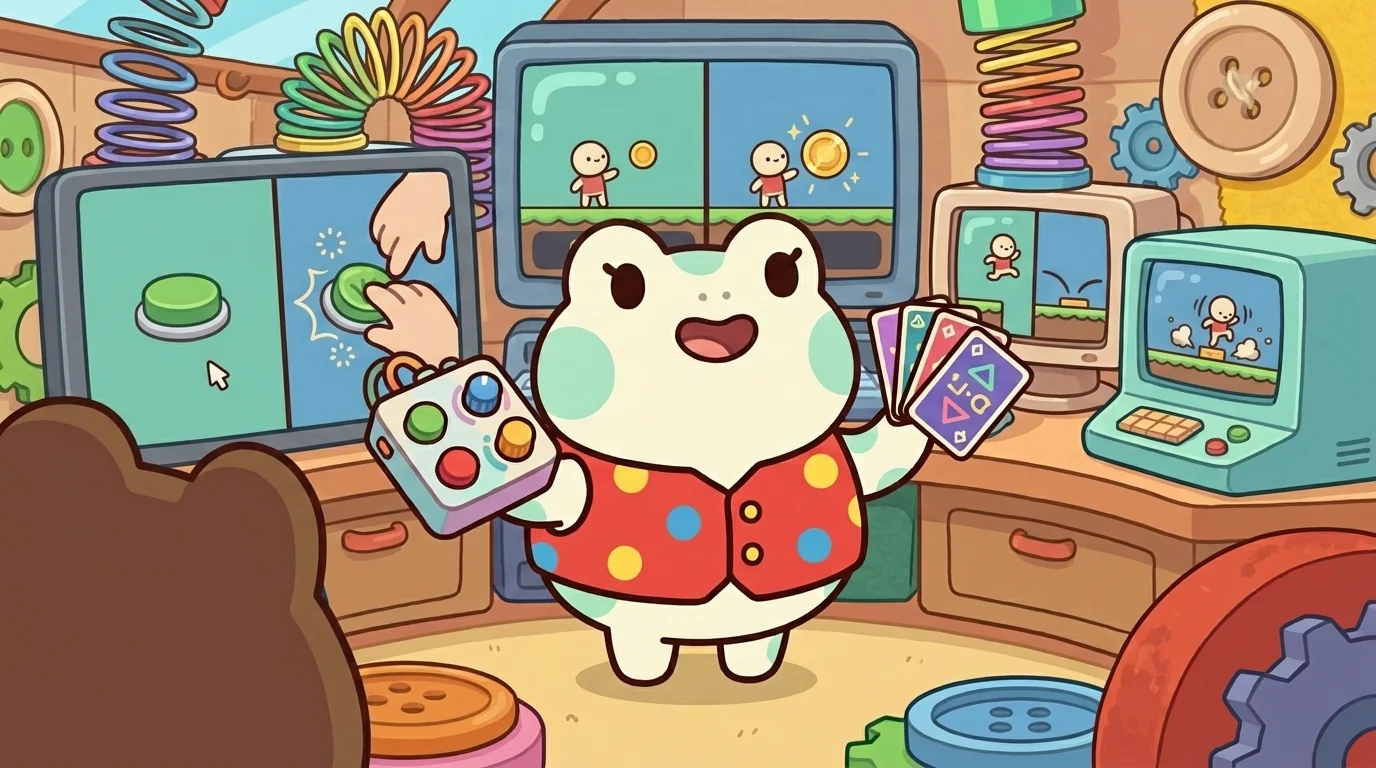
In her workshop Bounce ran the before-and-after clips. A button pressed with nothing: "Dead." The same button squashing down and springing back with a soft pop: "Alive! — the button said 'I heard you.'" A coin picked up, the score flashing zero-to-one and swelling big with a happy chime: "A celebration — the game is glad you got it." A huge jump, the screen shaking on the landing: "Weight! — the world felt that." Then she taught the juice moves as one warm toolkit: squash-and-stretch (a click that squashes then pops), number-flashes (a score that cheers), screen-shake (weight — but small, never sickening), particle-bursts (a sparkly surprise at a pickup or win), sounds (short thunks and pops that make it real), and wind-up-and-settle (a crouch before a jump, a wobble after — cartoon-smooth motion). "Never let a click do nothing," she said, "or players think the game is broken. And always add the reduce-motion switch — juice should answer everyone, gently."
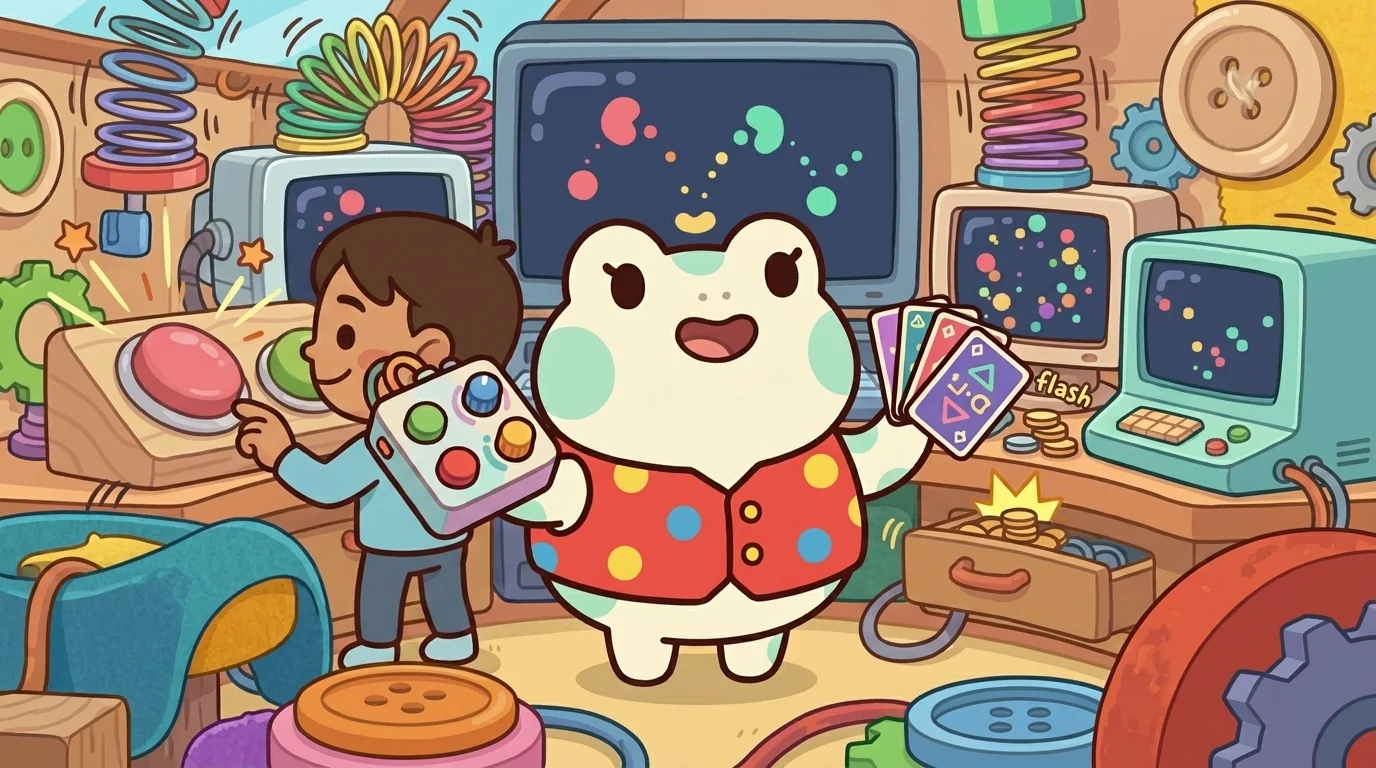
"So the little pop isn't extra," a student said slowly. "It's the game telling me it noticed me."
"That's the whole point," Bounce said — and watched the student press a button and get their first squash-and-pop right back at them, watched their face light up. "See that warm little glad feeling you just got? When a game answers you, you feel seen." And it was true: the flat, is-this-even-on feeling had nowhere to live once the button popped back; in its place bloomed a small, warm, someone's-listening gladness. That warm, answered, I-feel-seen gladness — the opposite of pressing a dead button into silence — was, to Bounce, the feeling she wanted every player to carry home. "Tiny celebrations," she said softly. "Juice is empathy."
The LevelForge ensemble
Bounce is part of LevelForge's distributed-narrative cast. Each character embodies a different curricular primitive; together they teach the full subject.
-

Carve
Level architecture — where-does-the-eye-go-first spatial-flow + sight-line + landmark craft
-
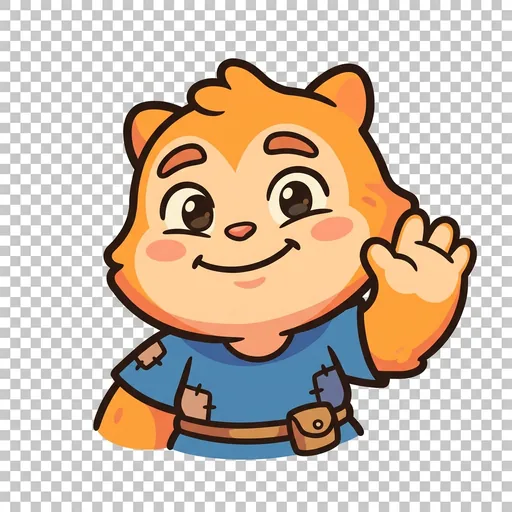
Coax
Player psychology — invite-don't-trap; warm-host posture; player chooses forward
-
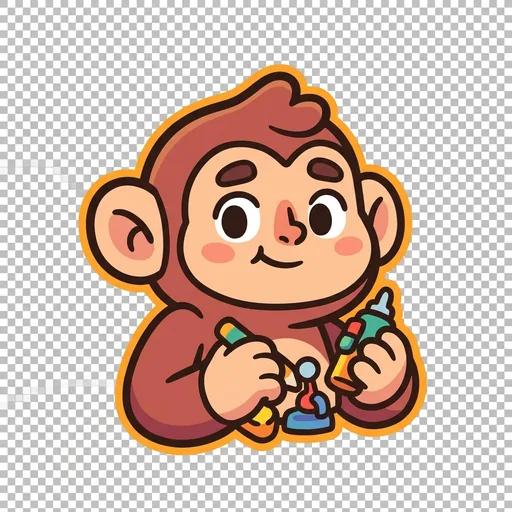
Probe
Playtesting + iteration — what-they-DID-not-SAID listening-discipline; playtester-over-designer-taste
-

Ramp
Difficulty curves — teach-test-vary-rest; deliberate-difficulty-as-love-letter; never-spike never-punish