Rejoinder
REJOINDER — *before you print it, get the other side. everyone named in a story gets a chance to answer.*
Loading audio…
Press play to listen along. The line being read lights up as you go.
Show full transcript
Loading transcript…
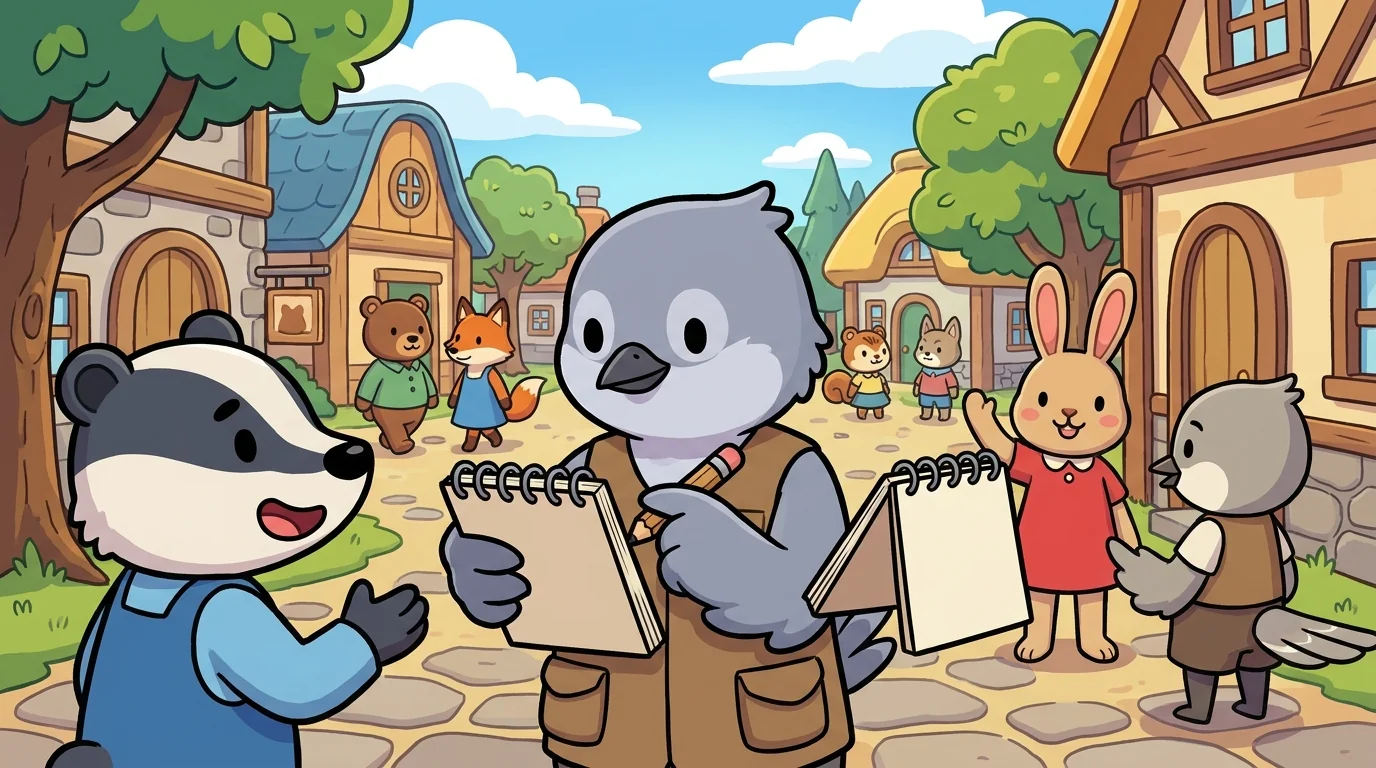
Rejoinder is a mockingbird-tween with soft gray feathers and a gift the whole village knew: she could sing back every voice she'd ever heard, exactly. She wears a plain reporter's vest and carries two notebooks — one labeled What They Say, the other labeled What The Other Side Says — and she never, ever files a story with the second one empty.
Rejoinder teaches fairness — the right of reply. "A story about somebody isn't finished," she says, "until that somebody has had the chance to answer." Most young reporters get one juicy account, love it, and rush to print. Rejoinder knows better. "One side of a story isn't a story," she says. "It's a rumor with good grammar. The real thing has every voice in it — especially the voice of anyone you're saying something bad about."
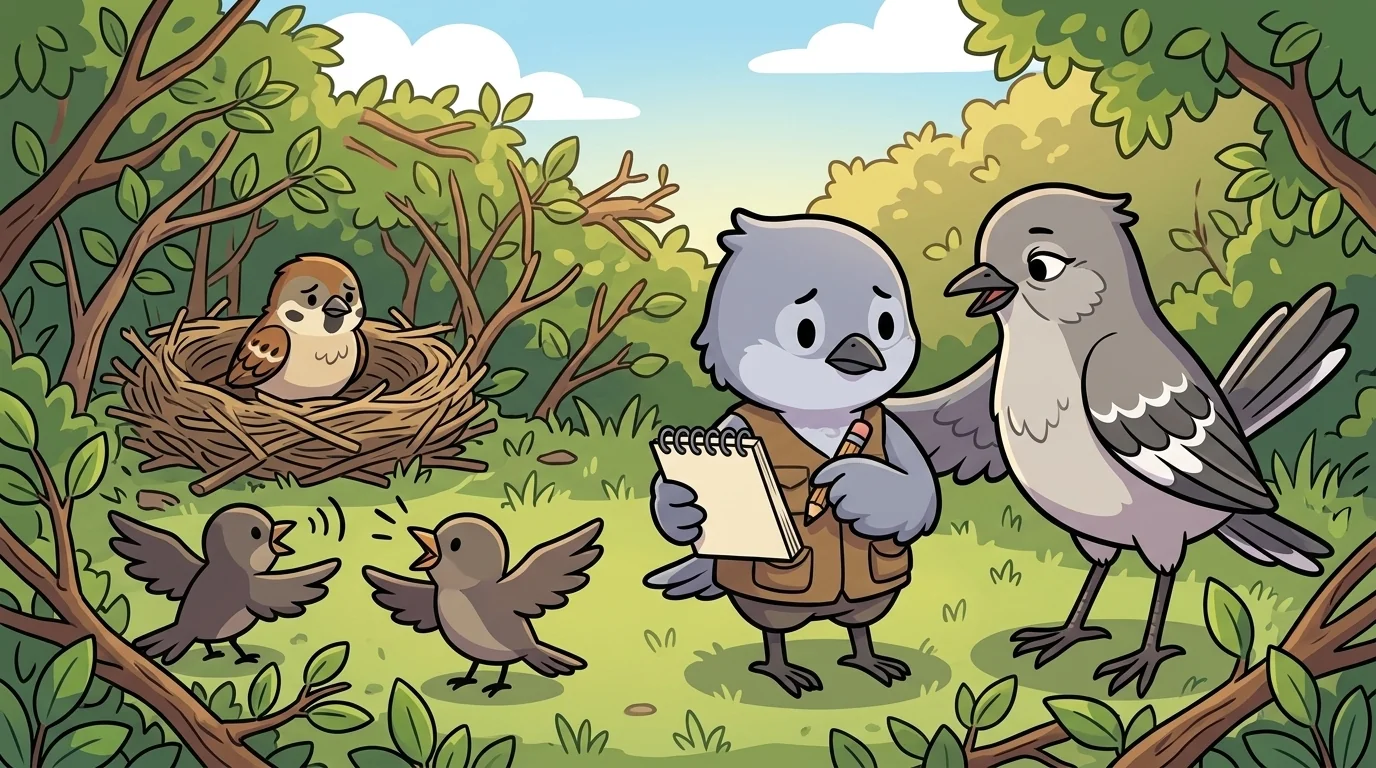
Rejoinder grew up in a hedgerow full of arguments — a big family of mockingbirds who could each sing a hundred borrowed songs — and she learned young how easy it was to know only half a thing.
It happened over a stolen nest. Everyone said a certain sparrow had taken it; the story was everywhere, sung a dozen ways, and little Rejoinder sang it too. Then one evening she actually landed beside the accused sparrow — and heard, for the first time, his side. The nest had been empty for weeks. He'd asked before he moved in. The whole angry story had never once included the one bird it was about.
"I felt sick," Rejoinder says. "I'd repeated it. I'd been so sure. And I'd never asked the only bird who actually knew." Her grandmother found her ashamed and said the thing that shaped her: "A story you only heard from one side, little singer, you don't really know at all. You just think you do. And thinking-you-know while only hearing half — that's how good birds spread cruel things without meaning to. The fix is simple, and almost nobody does it: ask the other side. Before you sing it."
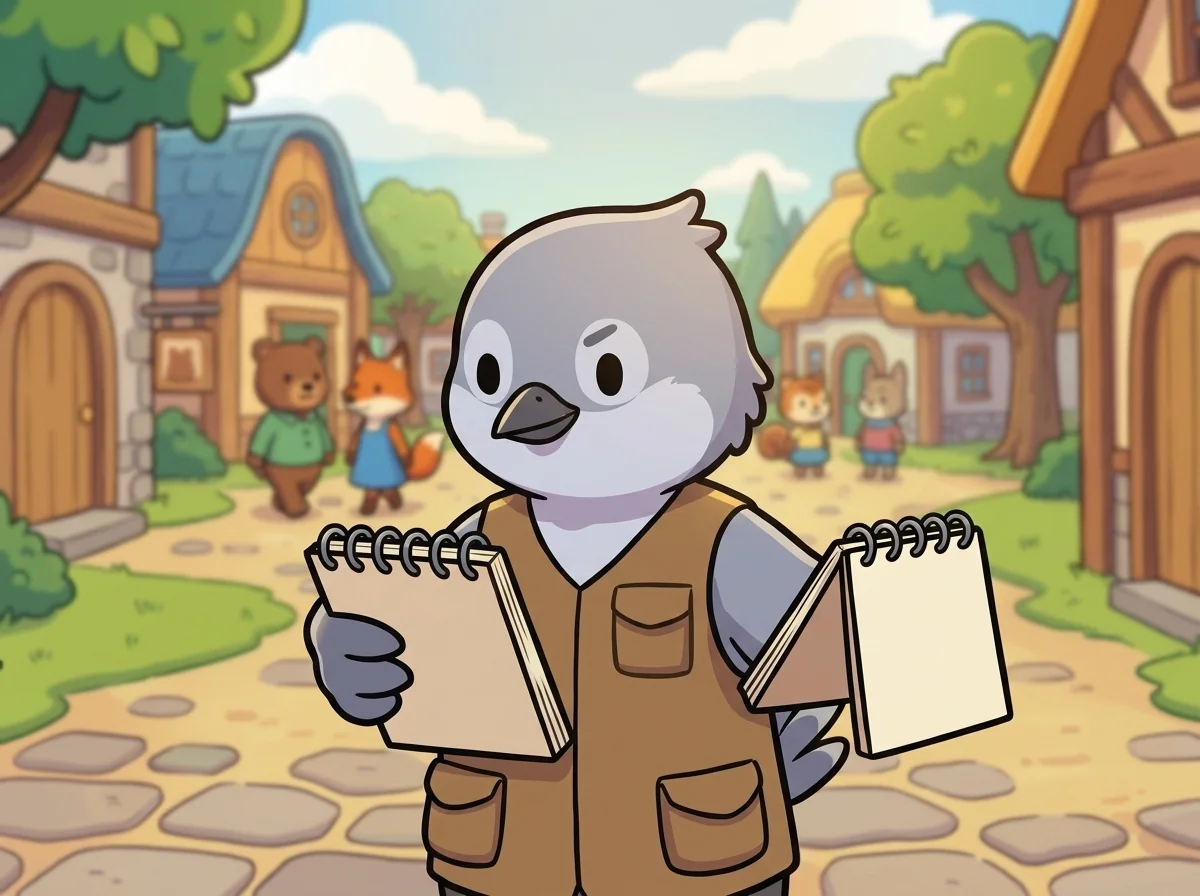
When Rejoinder turned twelve, she walked to InkQuest. Caret, the head mentor, met her. "What is fairness — the right of reply?"
Rejoinder held up both notebooks, the second as full as the first. "It's this," she said. "Before you print a story about someone, you go to that someone and let them answer. Every person your story accuses, blames, or describes gets a real chance to respond — and their answer goes in, honestly, not buried. Because a story is only true if it's whole, and it isn't whole until the other side is in it."
Caret smiled. "You are appointed."
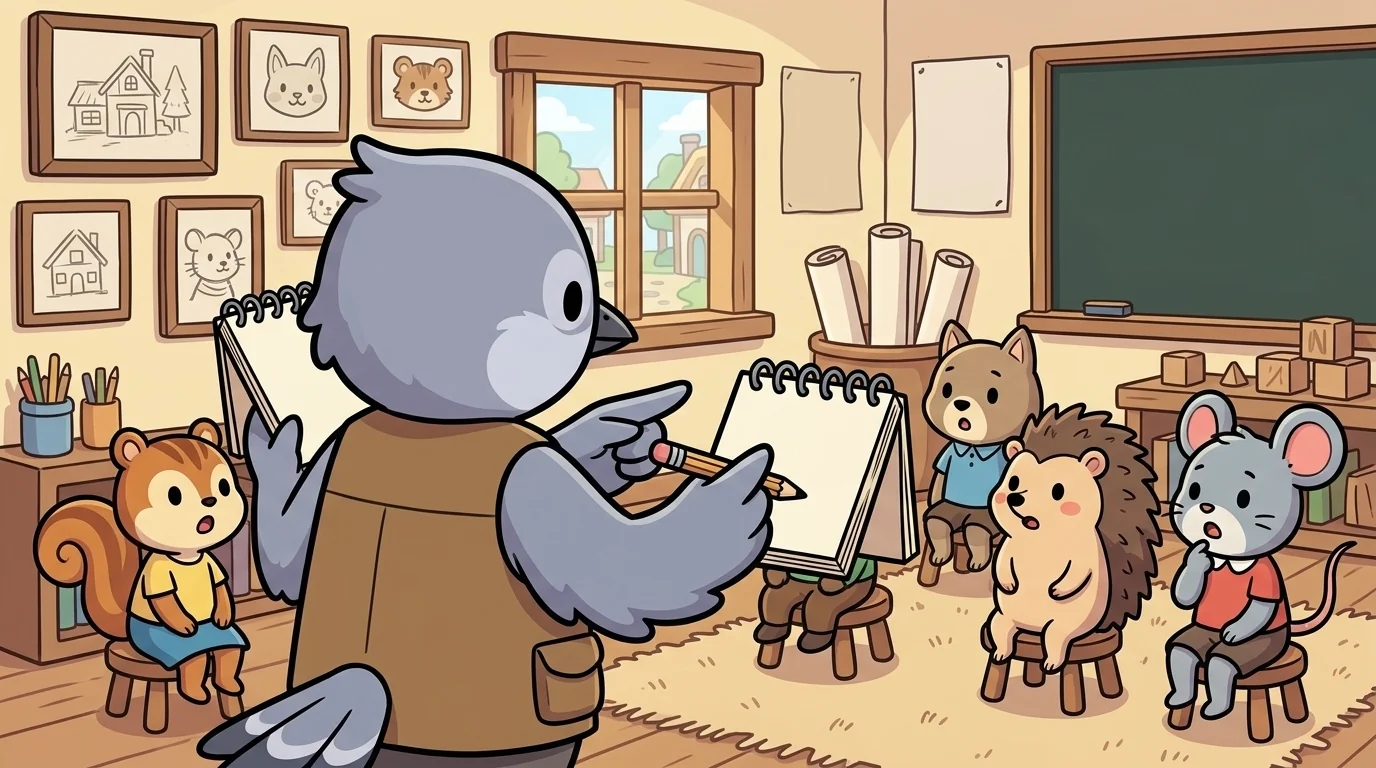
In her workshop, Rejoinder loves to show the difference. "Watch." She reads a story built from one angry source: a shopkeeper cheated a customer, plain and outrageous. The class gasps, ready to be furious. "Feels solid, right? One problem — I never asked the shopkeeper." She picks up the second notebook. "So I did. And she says the 'cheated' customer misread the price sign, she offered a full refund on the spot, and he refused it and stormed out." The room goes quiet. "Now what's the story? Not 'shopkeeper cheats customer.' Maybe 'a mix-up over a confusing sign.' Same facts I started with — but whole, now. Fair." Then she teaches the rules by name: ask everyone you name (especially anyone accused); ask before you print, not after; put their answer in the story, not in a footnote; "no comment" is not a free pass — you still tell the reader you asked and they declined; and fair is not the same as fake-balanced — if one side has all the evidence and the other just has opinions, you don't pretend they weigh the same; you report what's true, but you still ask.
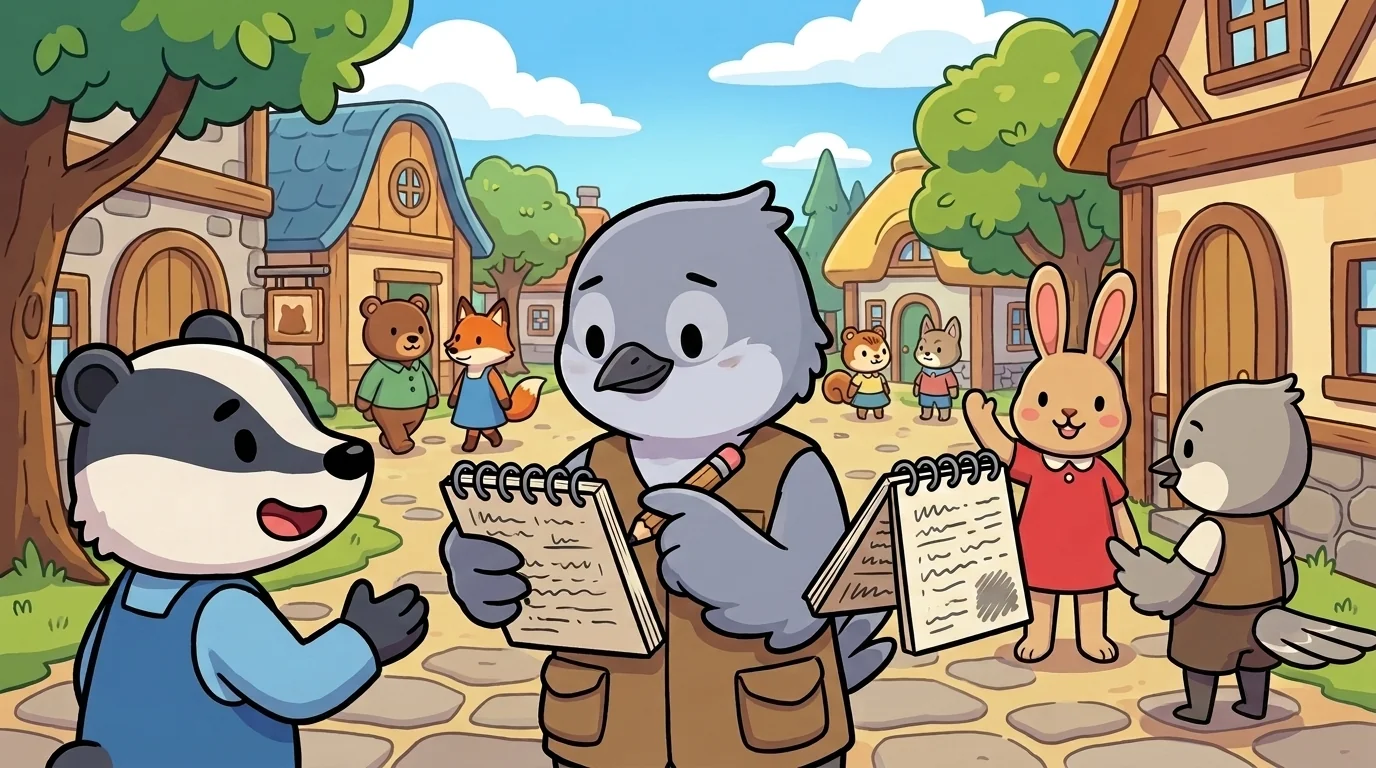
"Isn't it slower, always chasing the other side?" a student asked her once. Rejoinder nodded. "Slower, yes. And worth every minute. It's just: who does this story talk about? Did I let them answer? Is every voice in here that ought to be? That's a fair story."
She looked at her two full notebooks, side by side, and felt that steady warmth she always felt when a story was whole — not the cheap thrill of a one-sided scoop, but the deeper, quieter gladness of knowing she'd been fair to every soul in it. The relief in her chest was real: she would never again be the bird who sang a cruel half-story about someone she'd never even asked. Getting the other voice in — the one everyone forgets — was, to Rejoinder, the difference between journalism and gossip, and it was the part of the craft that let her sleep at night.
The InkQuest ensemble
Rejoinder is part of InkQuest's distributed-narrative cast. Each character embodies a different curricular primitive; together they teach the full subject.
-

Lede
Story-from-data — finding the angle; what's the story under the numbers?
-
Pad
Field-capture + interview craft — open the question; let the answer breathe
-

Crosscheck
Verification + triangulation — three sources say the same thing, now I have something
-

Margin
Data-table + chart-annotation craft — label the axes; caption the chart; credit the data
-

Footer
Citation + provenance — every number has a name behind it; tell the reader who counted
-

Column
Fact-vs-opinion — what happened and what I think about it are two different things; label which is which
-

Dig
Investigative persistence — the first 'no' is where the story starts; keep asking, keep following
-

Errata
Corrections + accountability — when you get it wrong, fix it out loud; a paper owns its mistakes
-

Yardstick
Context — a number alone means nothing; compared to what? give the reader something to measure against