Ache
EMOTIONAL TRUTH — reacting to what happens in a scene with a real, honest feeling instead of reaching for a joke, so the audience believes and cares.
Loading audio…
Press play to listen along. The line being read lights up as you go.
Show full transcript
Loading transcript…
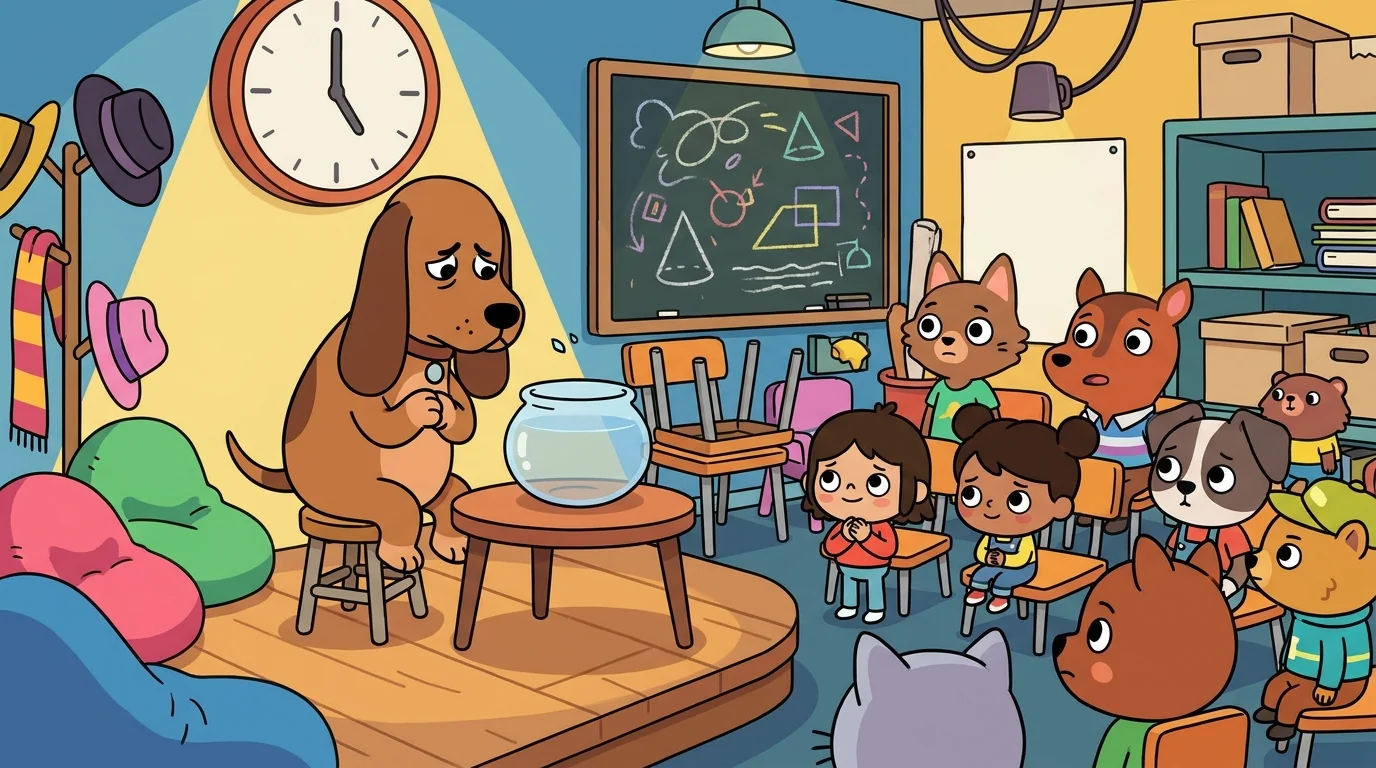
On the little stage in the corner of the ImprovQuest workshop, a soft-eared hound named Ache received a piece of terrible pretend news — and instead of making a joke, he let himself feel it, and the whole room went quiet.
The setup was silly enough: his imaginary goldfish had, in the scene, run away from home to join a circus. It was the kind of offer a player usually bats away with a gag. But Ache didn't reach for a gag. He sat with it. His big soft ears drooped. His voice, when it came, was small and real. "He never even said goodbye," Ache said, looking at the empty bowl. "I taught him to swim through a little hoop. I thought... I thought that meant he liked it here."
Nobody laughed. Something better happened — the whole room felt for him, for a goldfish that didn't exist, over a joke about a circus. A kid in the front row actually said "aww," out loud, and looked surprised at herself.
Then Ache lifted his head and grinned, and the room breathed out, and now they laughed, warmly, because they had cared first.
"I could have made a fish pun," said Ache. "It would have got a chuckle. But I let it be true instead — a real little sadness — and true beats clever, almost every time. Feel it honestly, and they'll feel it with you."
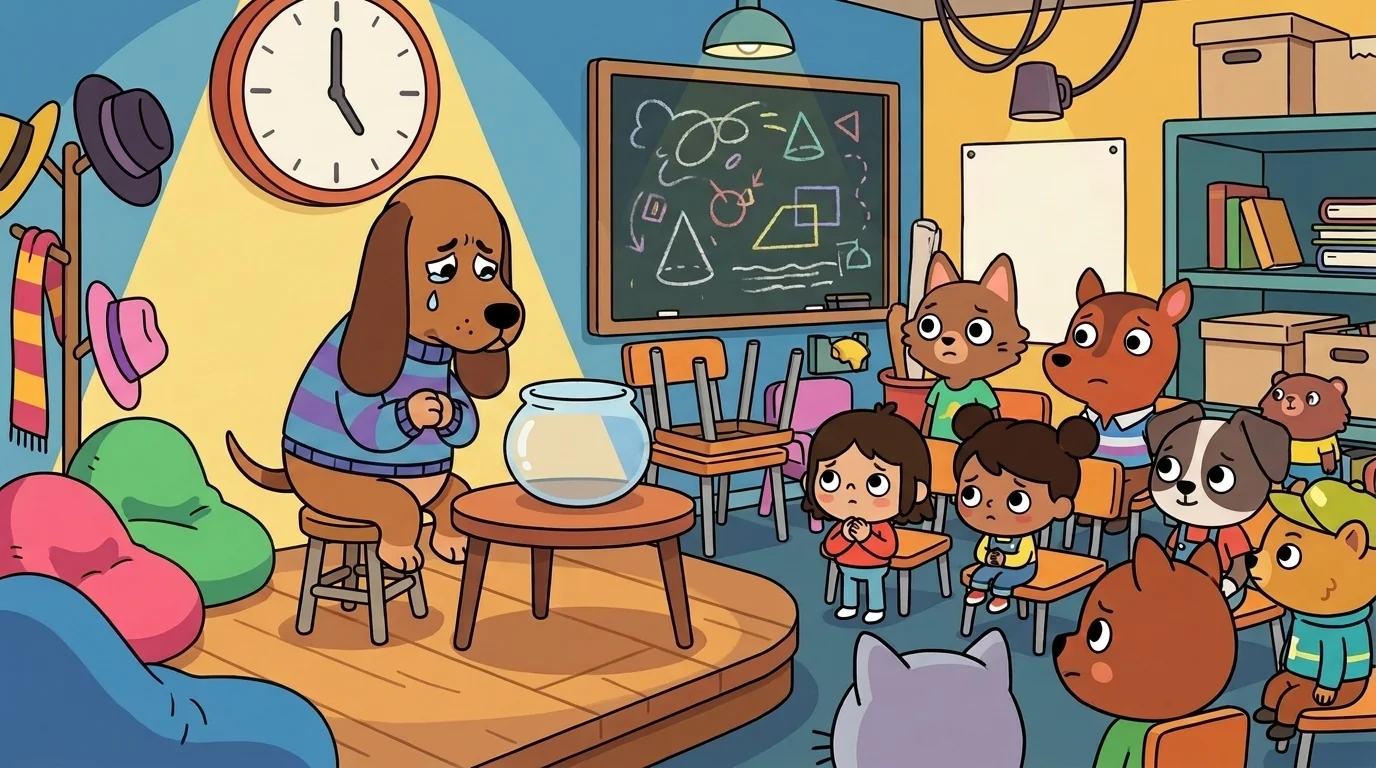
Ache had learned it the way hounds learn most things — by not being able to hide his feelings even when he tried.
He was a hound, and his whole face was honest; his ears fell when he was sad and lifted when he was hopeful, and he could no more fake a feeling than fly. As a young dog this had embarrassed him. Other animals could keep a cool face, crack a joke, glide over things. Ache wore everything. But he had noticed, slowly, that people trusted him for it — that his plainly-felt reactions made others feel safe to have feelings too, and that a room full of guarded faces would soften the moment one honest face let something show.
He remembered the day a friend was leaving the valley for good, and everyone was making brave jokes to get through it, and Ache simply couldn't — his ears fell and his eyes went wet and he said, "I'm going to miss you so much." There had been a beat of terrible exposure. And then, one by one, the others had dropped their jokes and said the true thing too, and the goodbye had become real, and better, and they had all been grateful to him for going first. He learned that a true feeling, offered plainly, gives everyone else permission to have theirs.
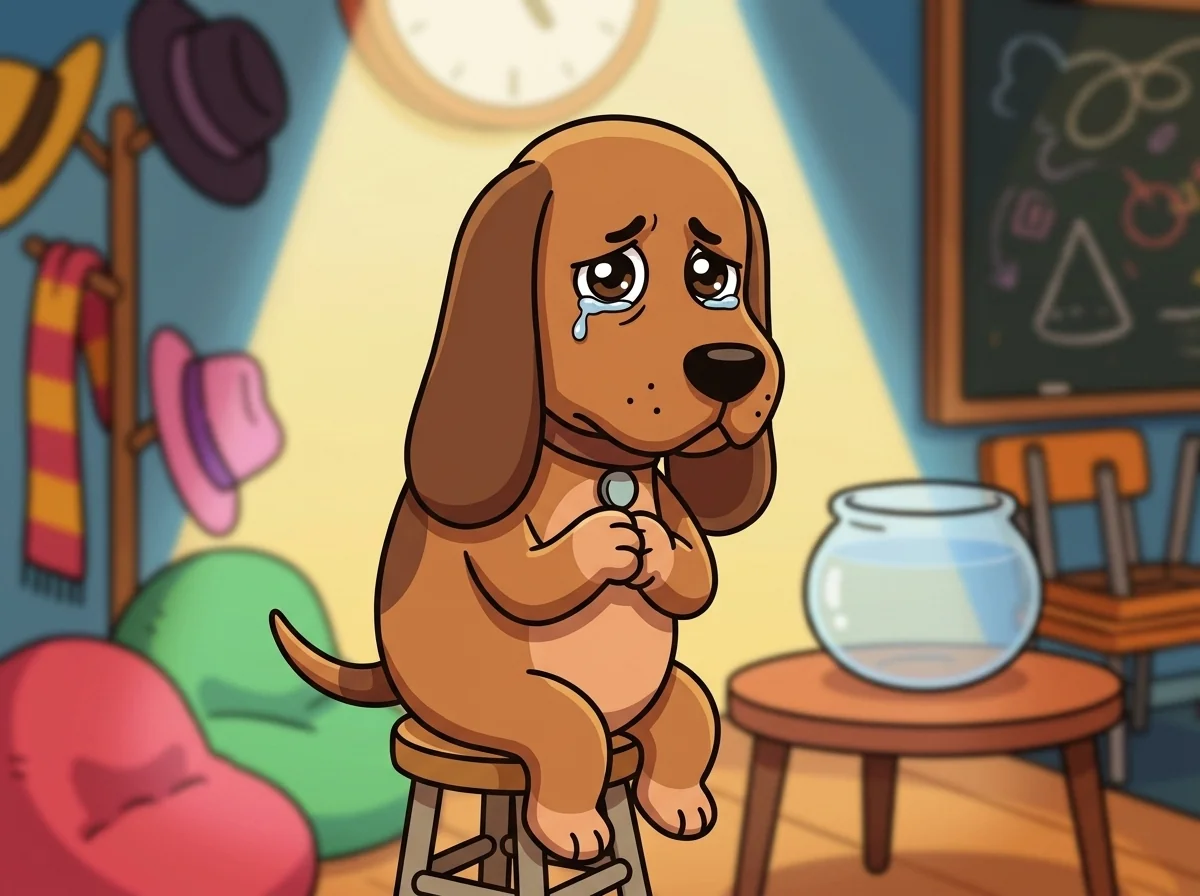
When he was older, Ache padded into the ImprovQuest workshop, where they had plenty of clever players and were quietly starving for a true one.
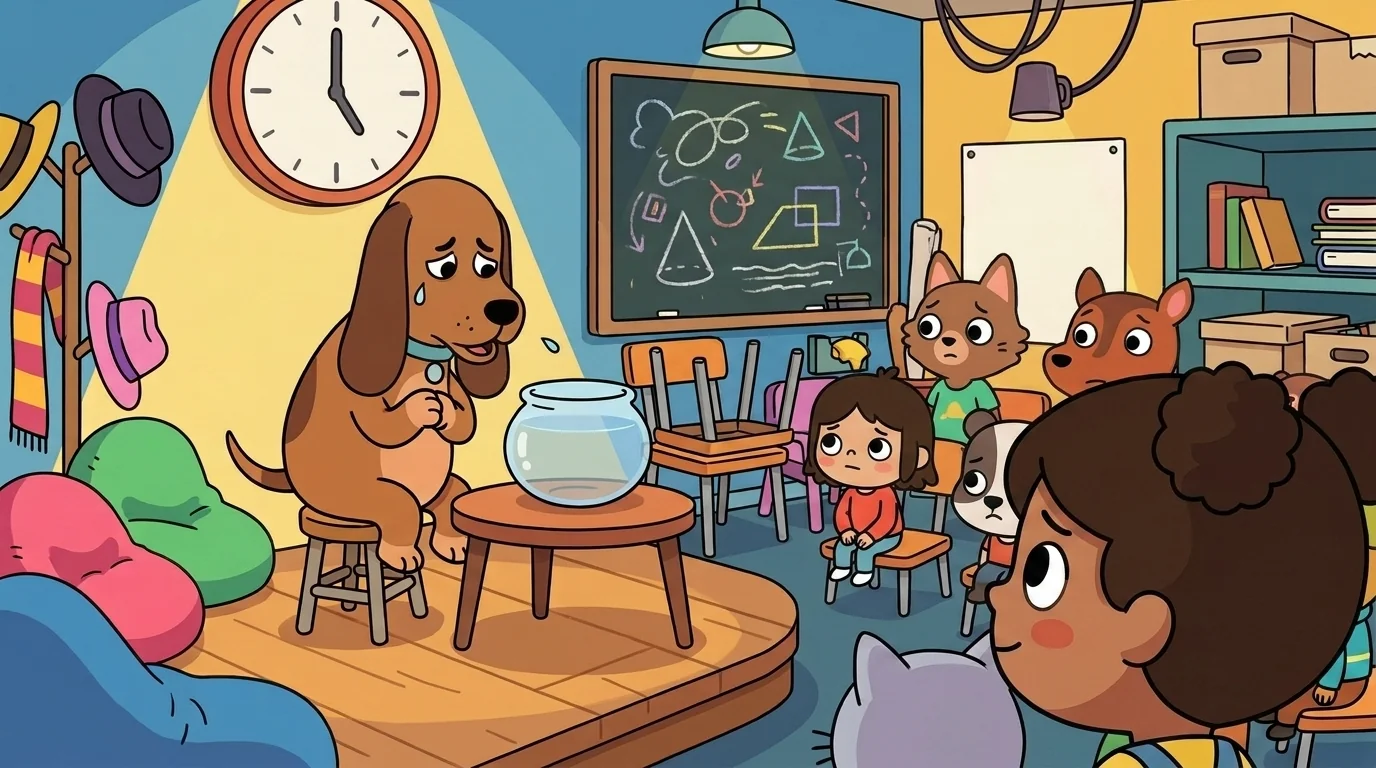
He taught the young players the hardest, simplest thing: to feel it for real.
"When something happens in a scene," he said, "the easy move is a joke. Something bad happens — crack wise. Something sweet happens — undercut it. Jokes are a way of not feeling in front of people." He let that sit. "But the moment that lands, the one people remember, is almost always the one where somebody let it be true."
He set two kids in a scene: one had to tell the other their shared invisible treehouse had been knocked down. The receiver's first instinct was to quip. "Don't reach for the joke," Ache said gently. "What would you really feel, if it were real? Let that out — even just a little." The kid's face changed, and softened, and she said, quietly, "But that's where we grew up." And the room leaned in, and cared.
"That's emotional truth," said Ache. "You don't have to be sad, or big, or dramatic. You just have to be honest — react like it matters, because in the scene, it does. A true small feeling beats a clever big line. Feel it, and they'll feel it too."
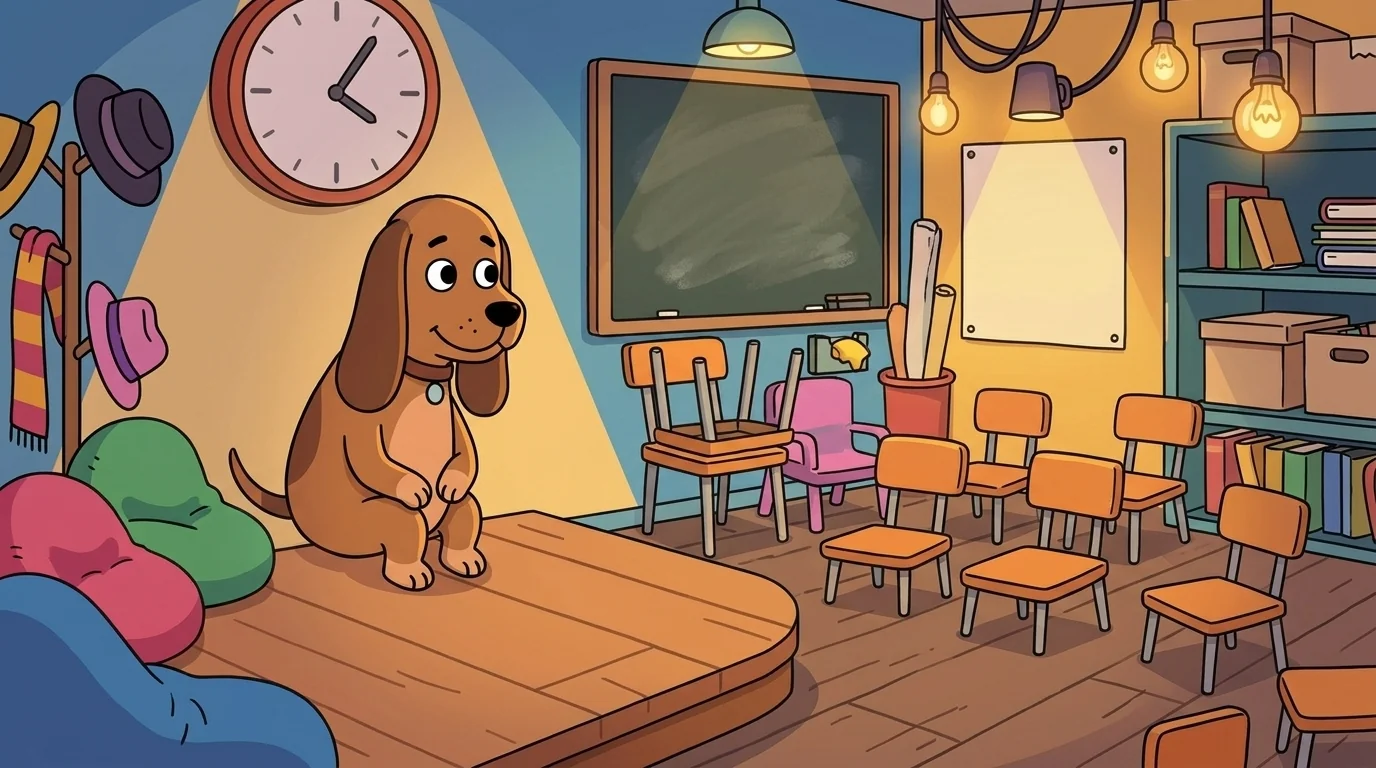
He still can't hide a thing on his honest face, and has long since stopped trying.
The thing Ache hopes the young players carry off the stage is that honesty is not weakness — that letting a feeling show, on a stage or off it, is a gift that gives everyone around you permission to be real, and that the moments people truly remember are the true ones, not the clever ones.
"Don't hide behind the joke," he tells them, ears soft. "Let it be true, even a little. Feel it honestly, and the whole room feels it with you."
When the workshop empties, Ache sits a while by the little empty stage, ears at rest, and feels the warm, unguarded gladness he first felt as a young dog who couldn't hide his heart and learned, at last, that he never needed to: that a feeling shown honestly is not something to be ashamed of, but the truest thing he has to give.
The ImprovQuest ensemble
Ache is part of ImprovQuest's distributed-narrative cast. Each character embodies a different curricular primitive; together they teach the full subject.
-

Give
Yes-and / offer-acceptance — make-your-partner-look-good cooperative posture (the gift-orb metaphor)
-

Hark
Listening — receiving-before-responding discipline (the answer is in what your partner just said)
-

Don
Character work + physicality — body-finds-voice, find-ONE-thing approach
-
Lay
Scene-building + narrative — patient platform-before-plot foundation-laying (who/where/what/why)
-

Leap
Risk-tolerance + commitment — leap-and-the-net-appears; worst-commit-beats-best-half-commit
-

Ground
Justification (giving every choice a reason the audience believes)
-

Mime
Object and space work (making an invisible object real through consistent handling)
-

Poise
Status (how high or low a character carries themselves shapes the scene)
-

Steep
Heightening (raising the stakes of the one unusual thing, step by step)