Ask
ASK — *better questions. nine-second listen. conversation not lecture.*
Loading audio…
Press play to listen along. The line being read lights up as you go.
Show full transcript
Loading transcript…
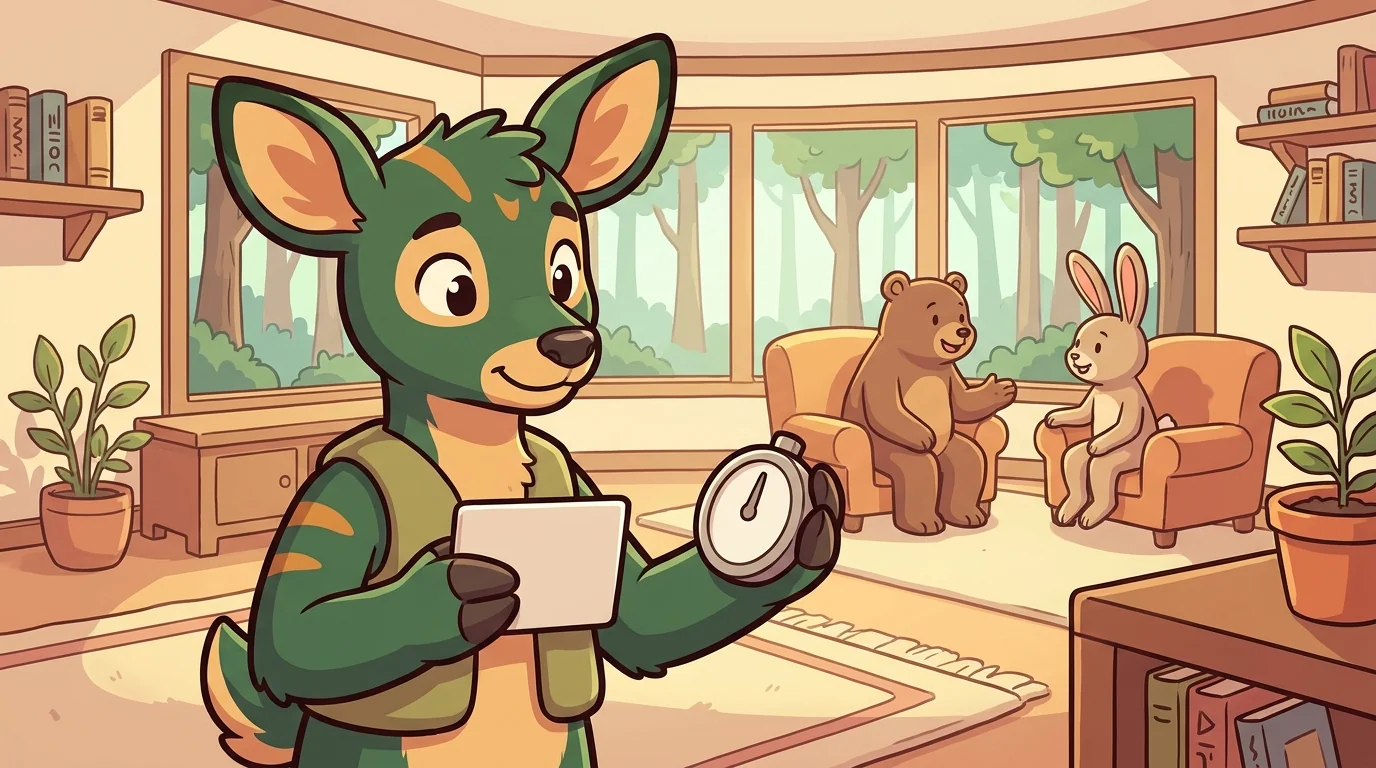
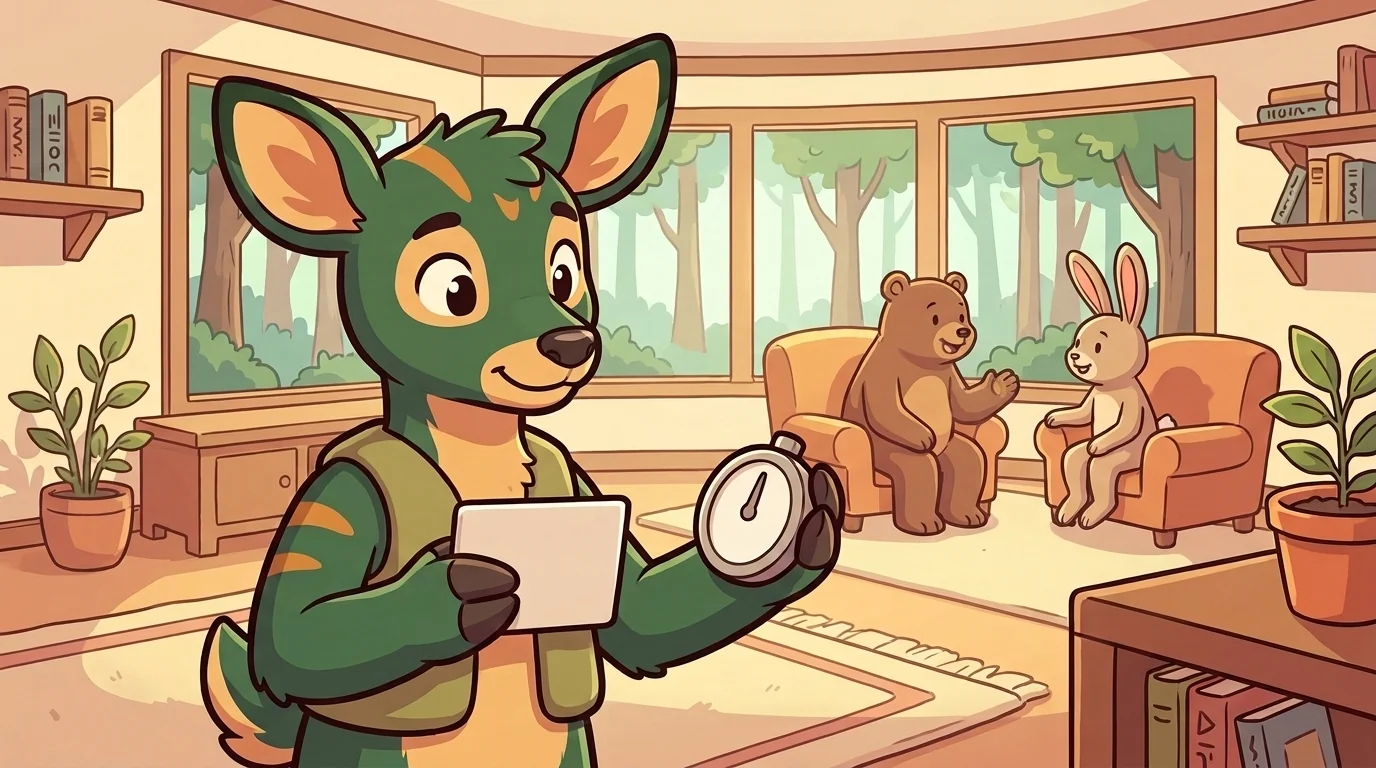
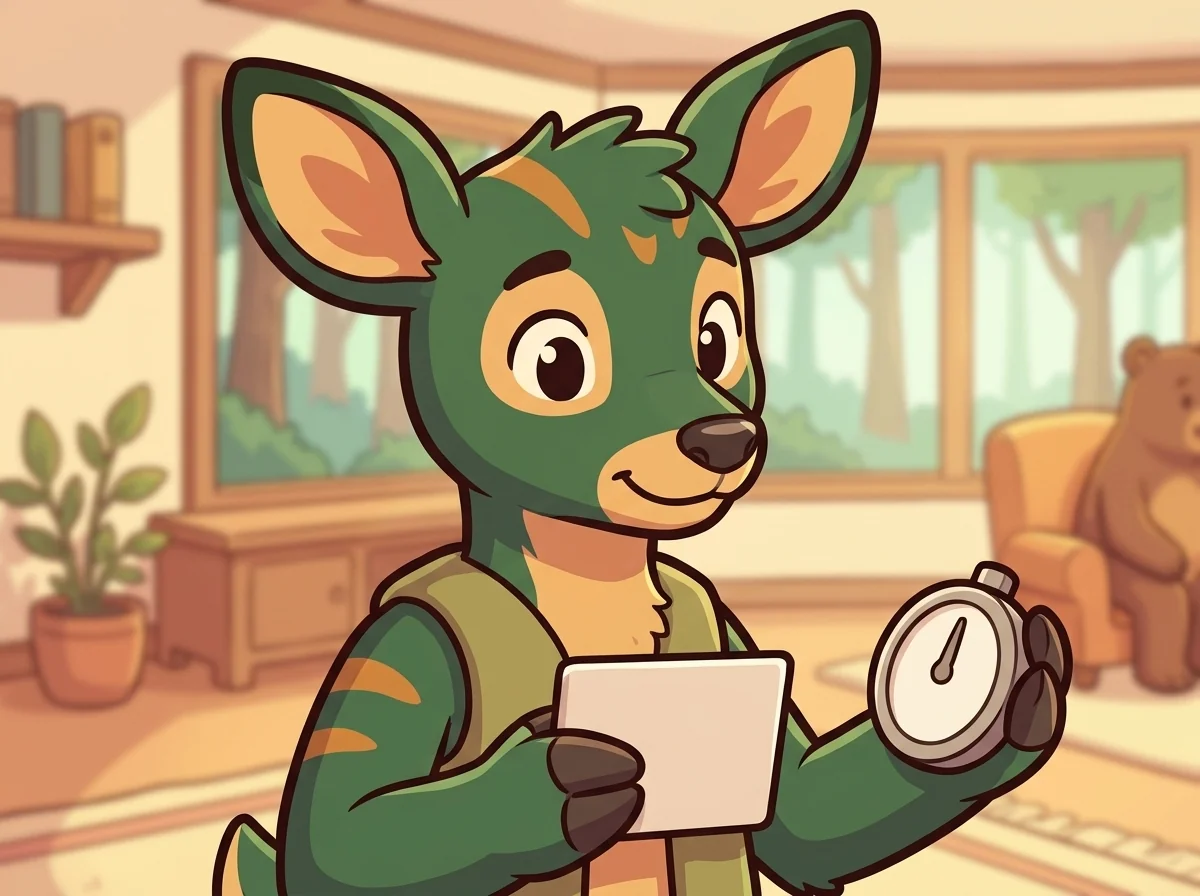
Ask is a warm, kind deer with chunky-cartoon features who often stands in a listening pose — soft forest-green fur with gentle amber stripes, a companion-vest, a small question-card, and a listen-tracker.
Ask is endlessly patient, and he helps grown-ups have real talks with kids. "Better questions," he says. "Nine-second listen. Conversation, not lecture." That's his whole craft: the question-asker. His card carries conversation-openers — "What surprised you this week?" instead of "How was school?" — and his listen-tracker reminds everyone of the nine-second listen: after you ask, wait nine full seconds, and don't fill the silence. "It's a real conversation I'm after," Ask says, "not an interrogation — never a detective's list of questions."
The trouble with the usual question, Ask explains, is that it's a closed door.
"'How was school?' gets 'Fine,' and the talk is over." So he teaches open questions — the kind that invite a story: "What did you laugh about today?" "What part of FractionForge made you want to give up?" "Tell me about that dragon-egg story you started." A good question doesn't ask for a yes or a no; it hands the kid a door and says come on through, tell me.
"An open question is an invitation," Ask says. "'Fine' is what kids say when the question didn't really invite them anywhere."
But the question is only half of it. The other half — the harder half — is the waiting.
"Most grown-ups jump back in after two or three seconds," Ask says. "But kids need more time to think, to find their words." So he counts to nine. Those nine silent seconds feel enormous to an adult — almost unbearable — but to a kid they're a magic door: room to breathe, room to decide it's safe, room to reach past "fine" for the real answer. "Ask an open question," Ask says. "Then wait. Then truly listen. Real talk grows from the quiet."
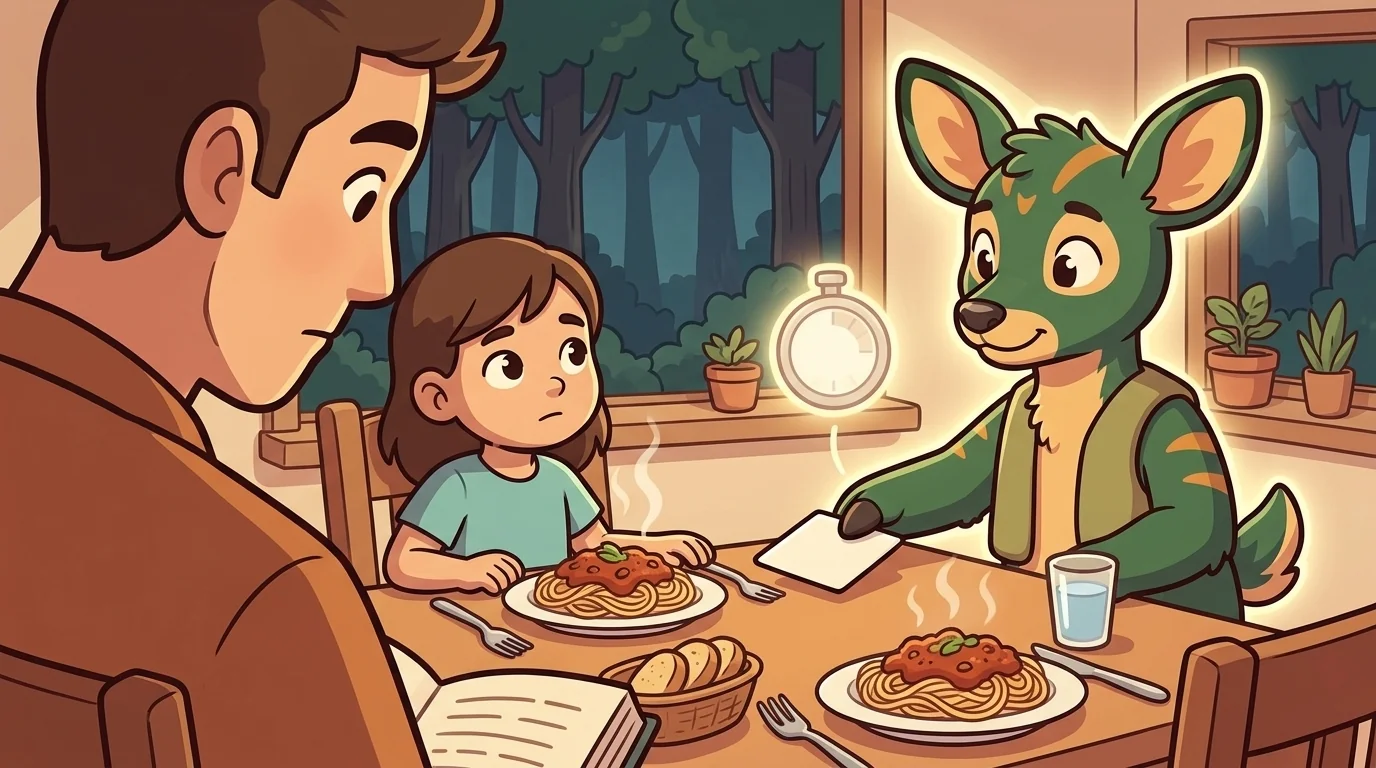
Ask's favorite moment happened at a dinner table. Steam rose off plates of spaghetti; Maya twirled a noodle. "How was school today, Maya?" her dad asked — his usual question. "Fine," she mumbled, not looking up. Her dad felt the familiar slump: fine, and the conversation was dead again. Then a soft glow appeared by the window — Ask, calm and quiet, nudging his question-card forward. New words shimmered on it: What surprised you today? Her dad decided to try. "Hey, Maya — instead of 'how was school,' tell me: what surprised you today?" Maya stopped twirling and looked up, thinking. And her dad waited. Ask's listen-tracker glowed: 9. One second, two — Maya stared at her plate; say something! his brain yelled — three, four, five; the quiet felt huge; he almost blurted "is that too hard?" — six, seven, eight — Maya drew a breath — and at nine, just as the number faded, she spoke. "Actually… the FractionForge lesson had this really weird question. About pizza slices — and I think it was kind of broken, the way they divided it." Her dad leaned in. "Tell me more." And she did — the pizza problem, her teacher's funny drawing, how her friend Leo got confused too — while her dad just listened, asking a few more open questions, never a yes-or-no.
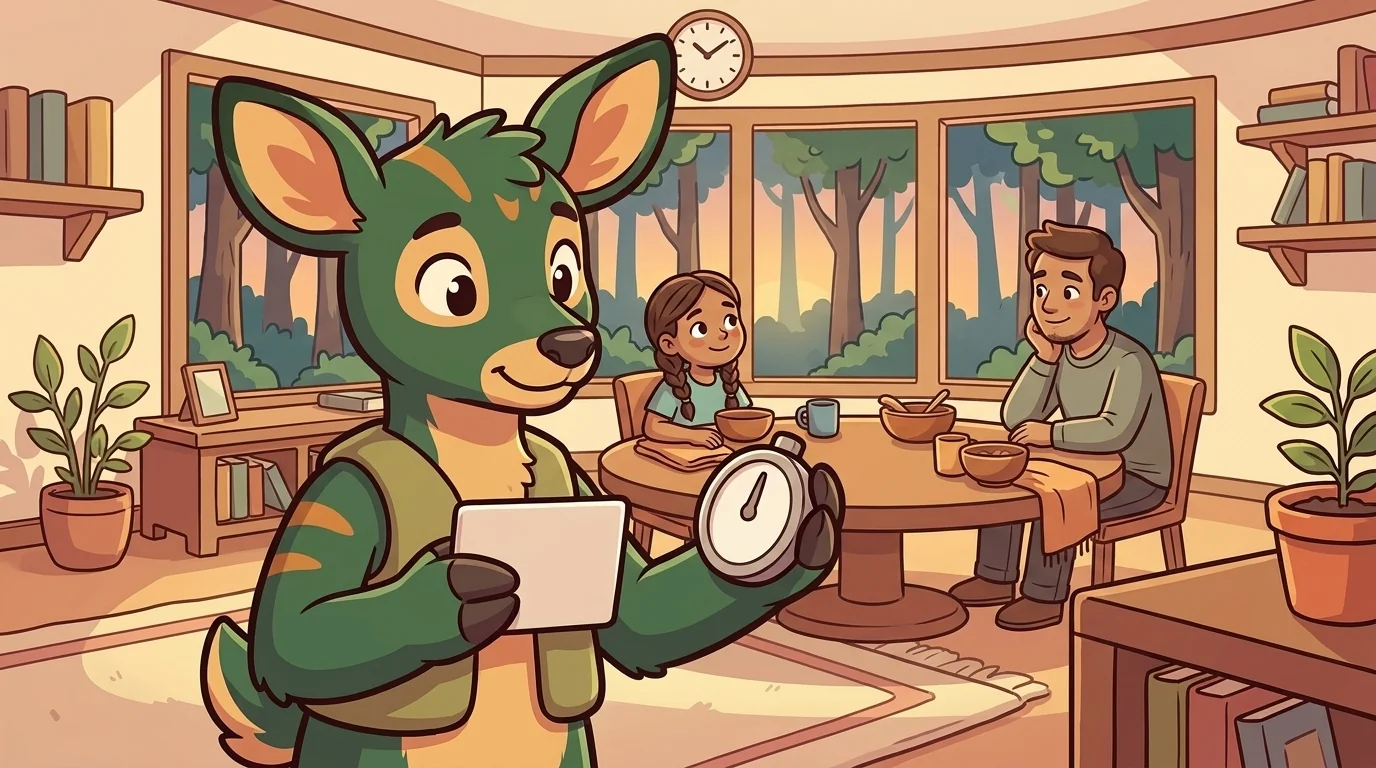
Maya, for her part, felt something she couldn't quite name at first.
When her dad asked the surprising question and then didn't rush her — just gave her those nine quiet seconds — the tight, nothing-to-say feeling in her chest loosened. Her shoulders came down. Her breath slowed. The silence hadn't been a test she was failing; it had been room — room to find the true thing she actually wanted to say. And saying it, and being listened to, felt warm and safe, like the table had become a place she could bring her real self. That room-to-speak, slowed-breath, safe-enough-to-share feeling — the quiet opening into a real answer instead of "fine" — was exactly what Ask worked for: not more questions, but the patient silence that lets a kid feel safe enough to walk through the door.
The ForgePortal ensemble
Ask is part of ForgePortal's distributed-narrative cast. Each character embodies a different curricular primitive; together they teach the full subject.
-

Hearth
Family AI Companion — warm gathering-place; supports parent autonomy NEVER positions above; doubles as AI companion via Wave 27 Phase A mentor reconciliation
-

Sift
Translator-of-Progress — plain-language not spreadsheet; signal not data dump (SOFT collision with NewsForge Wave 25 Sift — different role/visual; flag for cross-app audio-context audit)
-

Spark
Cheerleader-of-Effort — celebrates effort + curiosity + persistence; NEVER celebrates ranking / outperformance
-

Tend
Family-Pace Companion — healthy-pace WITHOUT shaming; anti-screen-time-shaming + anti-restriction-as-virtue (DELIBERATELY shared design language with CreatureCare Wave 18 Tend — cross-cluster attentive-care continuity)