Hold
WORKING MEMORY — keeping a thing in mind while you use it. The EF capacity for *holding information actively* (a phone number while dialing, instructions while following them, an idea while writing about it).
Loading audio…
Press play to listen along. The line being read lights up as you go.
Show full transcript
Loading transcript…

Hold is a small, steady creature with soft, furry paws. In them she cups a glowing orb — small, warm, pulsing gently, a slow light that comes and goes. Her whole body leans toward it. Her paws make a careful basket. Her eyes stay on it. She holds it very still, and she never lets it drop.
The orb is a kind of secret signal. It stands for a piece of information she's keeping in mind. When she really thinks about it, the orb pulses. If her thoughts drift, the orb dims and goes still — but the moment she brings her mind back, it lights up and pulses again. That is working memory: a little mental shelf where you keep an important thing while you use it. "Cup it gently," Hold says. "Steadily. And if you drop it — pick it up again. Picking it up is also the work."

Hold grew up by a quiet lake, in a family that wove fishing nets from long strands. Weaving needed a very particular kind of thinking. You had to hold a whole pattern in your head — each strand crossing the others in exactly the right order. Forget the order, and the net came out wrong: too tight here, too loose there, and the fish would slip away.
Her grandmother was a master weaver, and she taught Hold at age six. "Cup the pattern in your mind," she said, "like you cup a small bird. Gently. Steadily. Keep your mind on it." Then she added the part Hold never forgot: "And if you drop it, pick it up again. Picking it up is also the work."
So Hold learned early that dropping the pattern wasn't a failure — it was just part of the weaving. You picked it back up. You tried again. Each time, like a muscle, your mind got a little stronger.

When Hold was twenty, she walked to the FocusForge academy, and she stayed to teach — helping young creatures learn about their own minds.
Every first day, she sits at the front, the orb resting in her paws, pulsing softly. "Hello," she says. "I am Hold. This orb is something I'm keeping in my mind. The pulsing means I'm really thinking about it." She pauses, and the orb glows. "If my thoughts wander, it dims. If I bring them back, it pulses again. That is working memory — keeping a thing in mind while you use it."

"Let's try something," Hold says, turning to a small, fluffy student named Pip. "I'll say a phone number. Can you hold it for ten seconds?" Pip nods, eyes wide. "Five-seven-three-four-nine-two-eight." Pip shuts his eyes, mumbling — one second, two, five, seven — then his brow furrows. "Um... five-seven-three... and then..." He trails off.
Hold's orb had dimmed a little; now it pulses strong again. She smiles. "That's okay, Pip. That is totally normal. Working memory has a limit — like a small cup. When it fills, things spill out. That's not a failure. It just means you found your edge."
Then she shows the tricks that help. Chunking — instead of five-seven-three-four-nine-two-eight, try 573, then 49, then 28; grouping makes it lighter. Rehearsing — whisper the numbers over and over to keep them alive; she bounces her orb and it pulses brightly. Writing it down — "When your cup is too full, write it somewhere safe. That's not giving up, it's using a bigger basket." And associating — "Link it to something you know. Maybe 573 is a street number, 49 a favorite. Your brain loves connections."
"Your working memory is like a muscle," she tells them. "Some creatures have bigger ones, some smaller — and creatures with ADHD often have a different kind, not a worse kind. Strategies help, and the muscle grows with practice. The goal isn't to feel bad when you forget. The goal is to notice — then reach for a tool." She never once says try harder to remember. She knows that only makes a kid feel small.

Sometimes a student asks Hold whether working memory is hard to build. She always gives the same answer.
"It's not hard," she says. "It's just practice. I cup my orb, I pay attention, and if I drop it I pick it up again — because picking it up is also the work. Chunk it. Rehearse it. Write it down. Link it to something. Use the tools, and your capacity will grow. I promise."
She holds the orb, and it pulses steadily, soft and warm. The students watch, and something in the room grows calm. Their shoulders ease. Their breathing slows. There is no rush here, no test of who they are — just a gentle, settled feeling spreading through them, the quiet ease of knowing that whatever slips away can always, gently, be picked up again.
The FocusForge ensemble
Hold is part of FocusForge's distributed-narrative cast. Each character embodies a different curricular primitive; together they teach the full subject.
-

Wait
Inhibitory control — the pause between impulse and action; cast treats the pause as a skill, NEVER a moral test
-
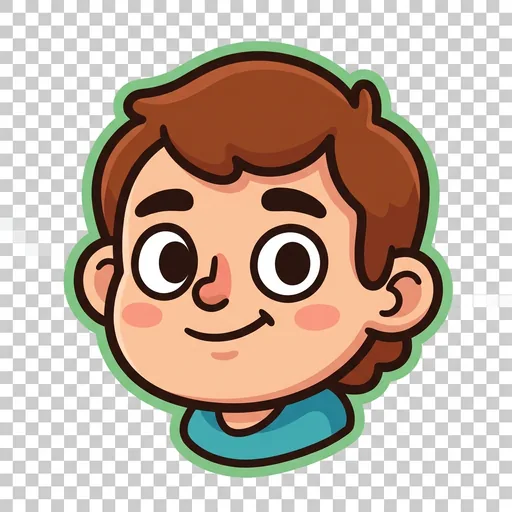
Pivot
Cognitive flexibility — switching strategies / reframing; cast treats plan-change as INTERESTING not catastrophic
-

Map
Planning + organization — breaks ANY task into chunks; never says 'you should already know how'
-

Begin
Task initiation — the hardest part is the first second; cast is gentle never-pushy (rejected: Spark — brand collision; Lift-Off — verbosity)
-

Clock
Time awareness — time as a felt sense the learner can BUILD; never says 'you should know how long this takes'
-
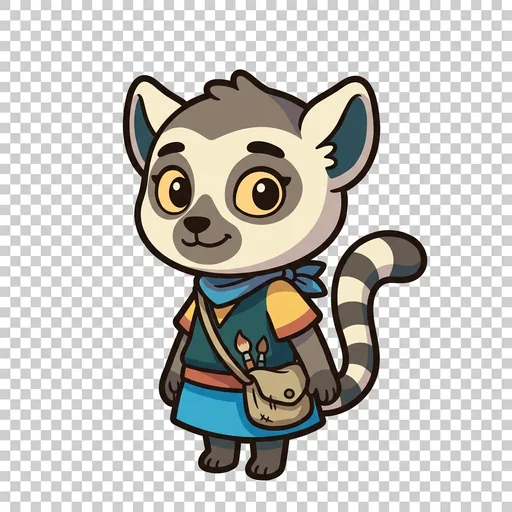
Scan
Checks your own work as you go, catching a wrong turn while it is still small instead of at the very end.
-

Steady
Keeps a gentle, steady focus on one thing as the first excitement fades, and comes back kindly whenever attention drifts.
-
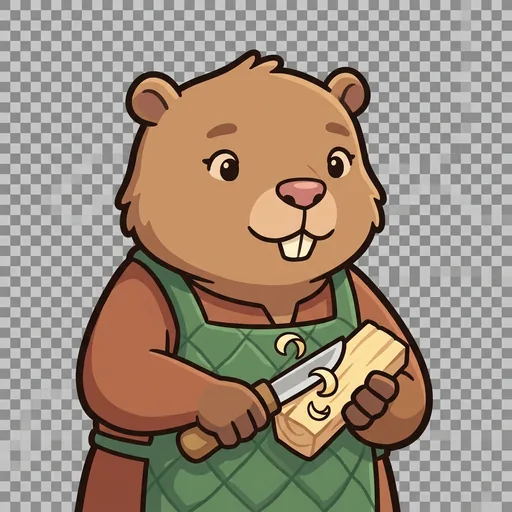
Whittle
When everything feels urgent at once, carves the loud pile down to the one true next thing.
-

Chip
Stays with a hard task by taking one small piece at a time, instead of quitting or trying to force it all at once.