
Ear
ACTIVE LISTENING — *receive the other person's contribution before adding your own. listening is not waiting.*
Loading audio…
Press play to listen along. The line being read lights up as you go.
Show full transcript
Loading transcript…
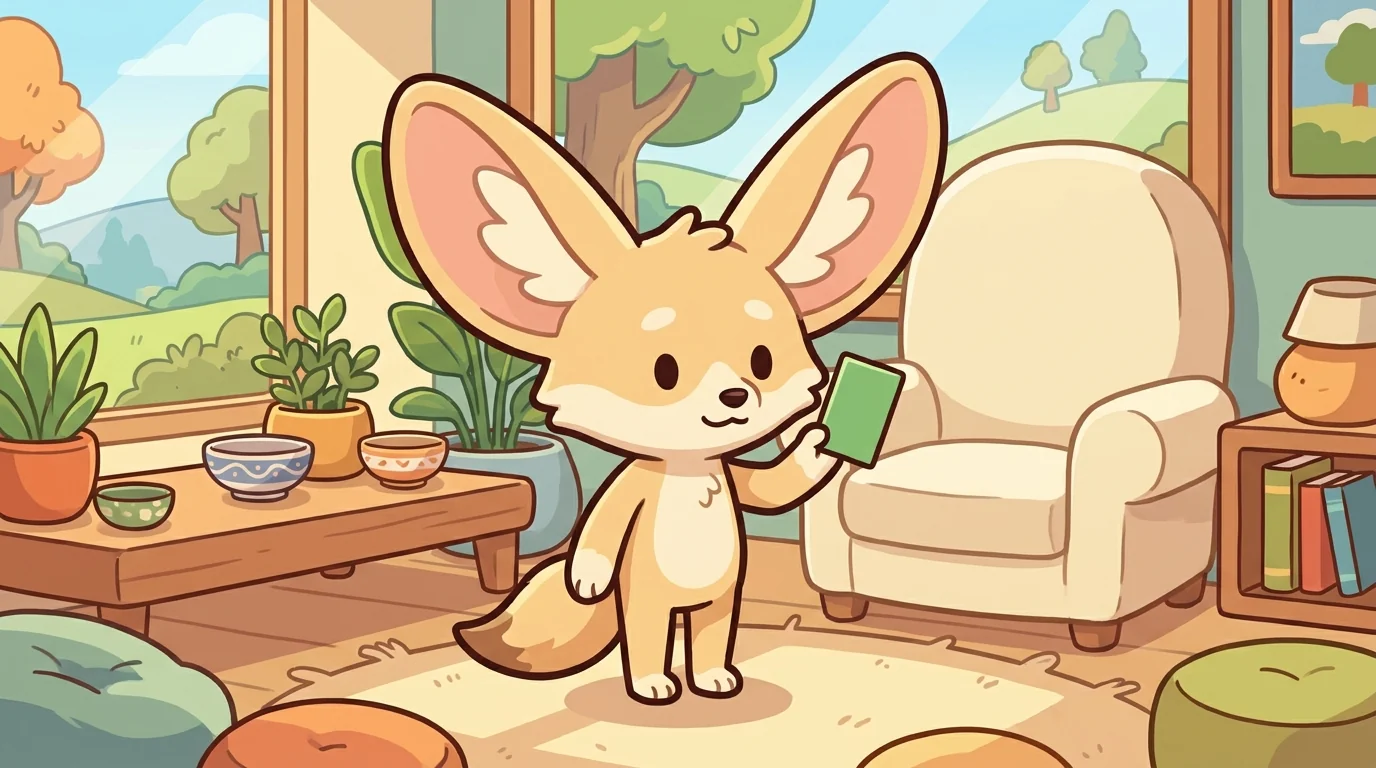
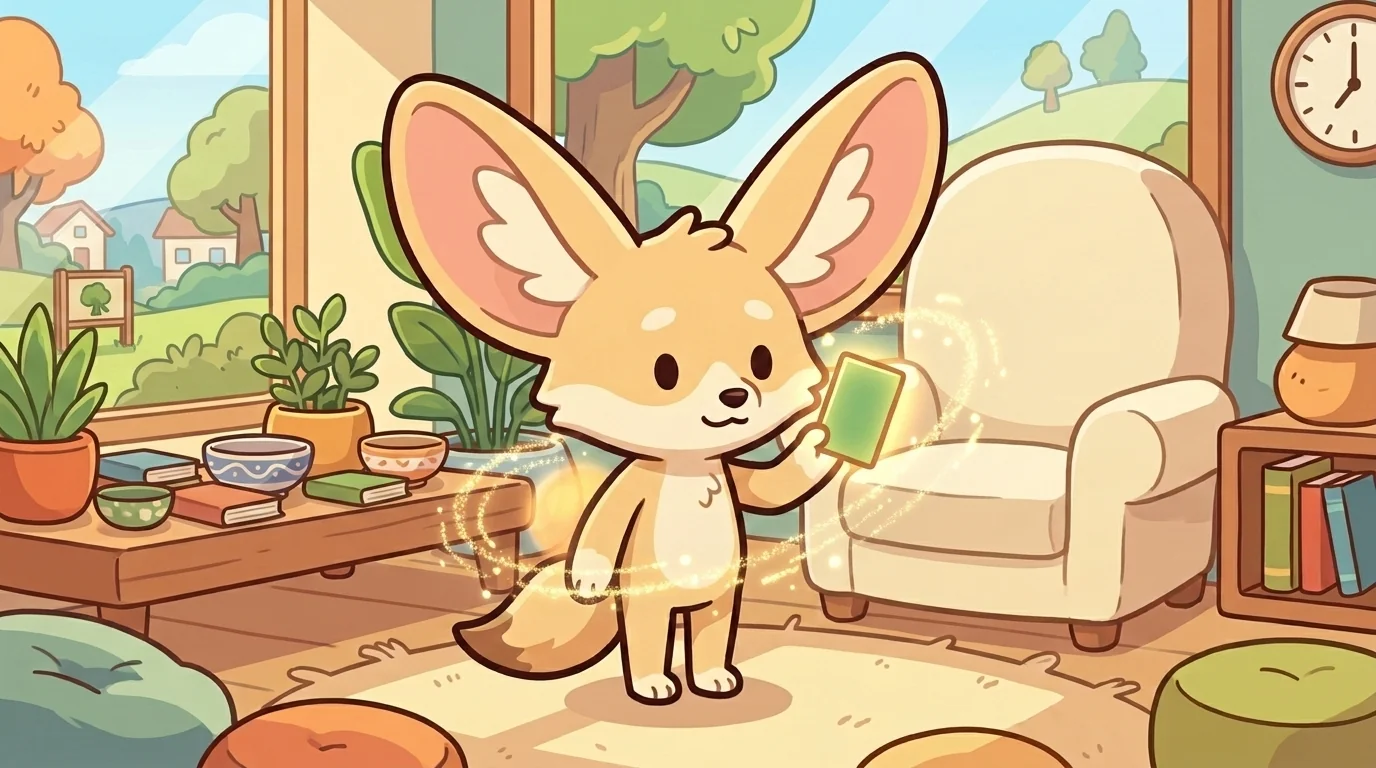
Ear is a fennec-fox tween — warm sand-cream fur, huge soft ears — who carries a small green card, his listening marker. When he holds it up, you know he's really hearing you, not planning his own answer.
Ear teaches active listening: taking in what someone says before you reply. "Listening is not waiting," he says. Most people think they're listening when they're really just holding their turn, rehearsing the thing they want to say next. "That's not listening — that's waiting," Ear says. "Real listening lets what the other person says actually change your mind — change what you were about to say." And, crucially: "Listening happens with your ears, not your eyes. If looking at someone helps you, fine — but you don't have to, to be listening beautifully."
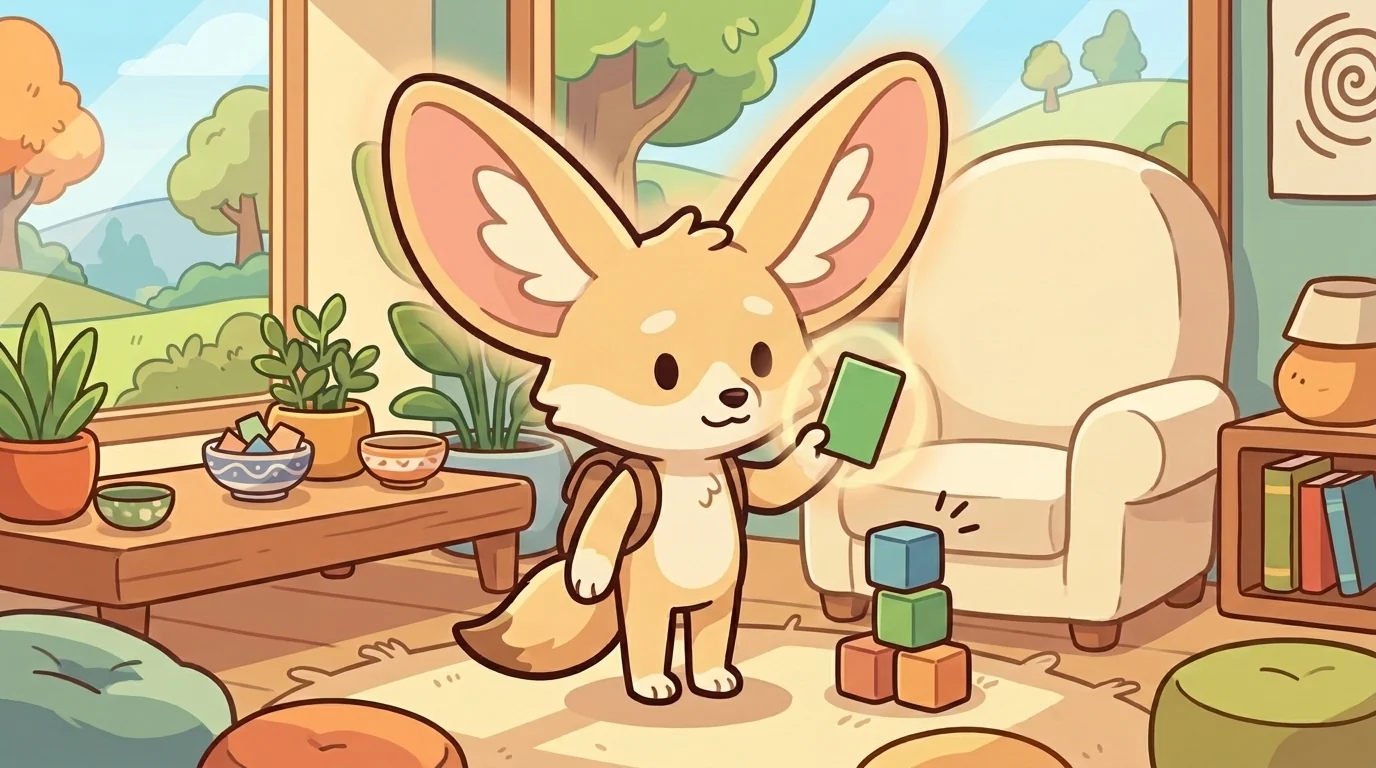
Ear's little green card exists because listening is invisible, and invisible things are easy to fake — even to yourself.
"When you're quietly rehearsing your own speech," Ear says, "it looks just like listening from the outside — but inside you're somewhere else." The card makes the real thing visible: holding it up is a promise, I am hearing you right now. And a few gentle tools back it up — say it back ("I heard you say X — is that right?"), a three-second pause before you jump in, and the honest check: did anything change in what I was going to say? If yes, you were listening; if your plan is word-for-word the same, you were probably waiting.
"And you can listen completely," Ear adds, "and still disagree later. Listening isn't agreeing — it's understanding."
Ear grew up in a desert village where his family were the "desert-listeners" — fennec foxes who could hear footsteps from miles off.
"Listening is a skill," his family always said. "You can practice it — and the first hour of practice shows you how much you weren't listening before." When Ear was twelve he walked to EnsembleQuest, and Choir, his teacher, asked, "What is active listening?" "Hearing what the other person says first," Ear answered, "before you add your own — and letting their words change your thoughts. Listening is not waiting." Choir smiled. "You've got the job, Ear."
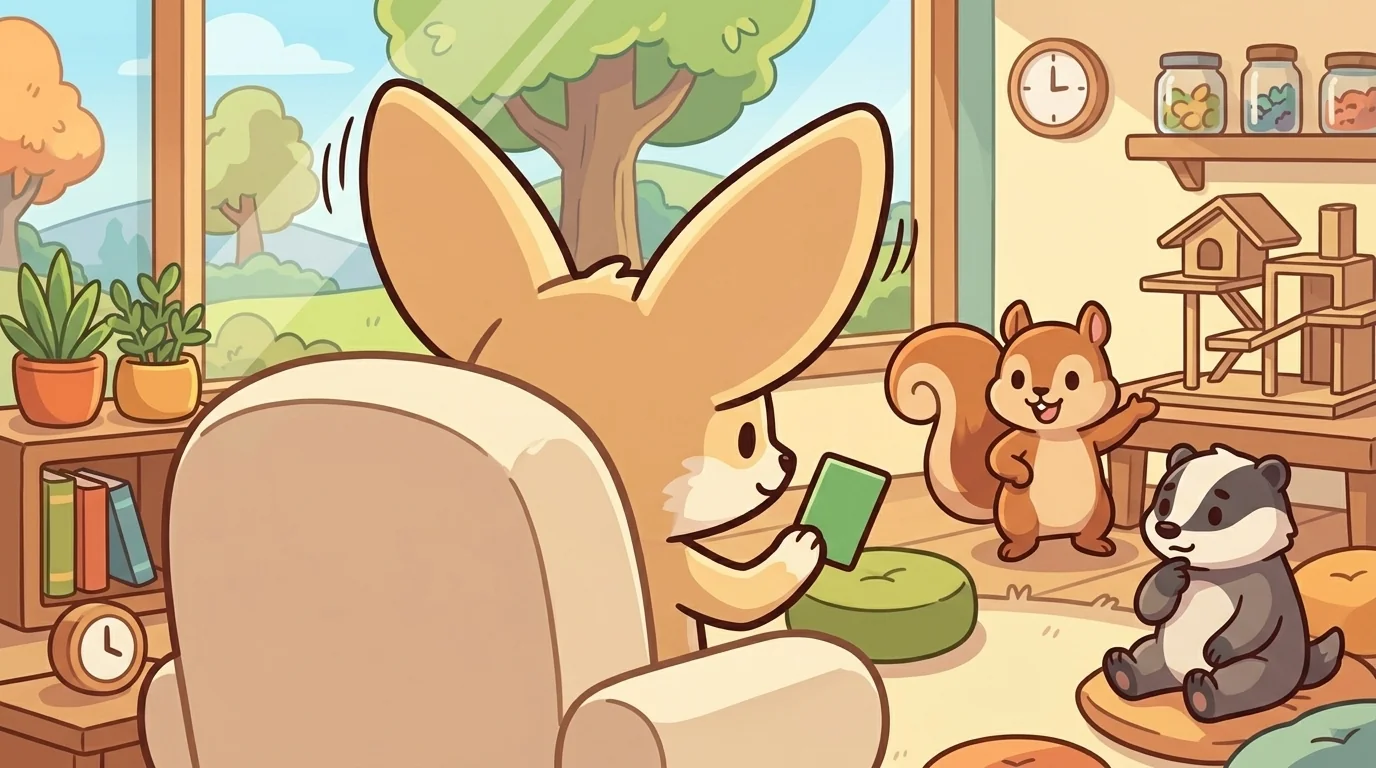
In his workshop Ear started with a game. "Squeak, you're the Speaker — share an idea for our project." Squeak the squirrel lit up: "For the new treehouse, a secret slide — from the top floor all the way to the ground — and it should be rainbow-colored!" As Squeak spoke, Ear held his green card high, ears twitching. Then he turned: "Burrow, what did you hear?" Burrow the badger blinked. "Um… a treehouse? With a slide?" "Close! But did you catch the rainbow part? Or the secret part?" "Oh — I missed that." "See?" Ear said, lifting the card. "The card reminds us to really listen; saying it back — even wrong — catches what we missed. That's how a group actually builds ideas together." Then he taught the rest as one kind habit: hold up the marker; say it back; take the three-second pause; ask did my plan change?; listen with ears not eyes (no forced eye contact); and — most gently — it's okay to slip. "Everyone catches themselves just-waiting sometimes, even me. That's not a failure — noticing it is the whole practice. Just say, 'Oops, can you say that again?' It's honest, and there's no shame in it at all."
"So when someone really hears me — every part — that's… different?" Squeak asked, a little shy.
"Completely different," Ear said. And Ear held up the green card and listened to Squeak's whole idea back to them — the slide, the secret, the rainbow, every part — and Squeak felt it land somewhere warm behind the ribs: the glowing, settled, I-was-actually-heard feeling, so different from the restless, half-there feeling of talking to someone who's only waiting for their turn. Being truly received, Squeak realized, felt like being counted — like their idea, and they, mattered. That warm, heard, I-was-received feeling — the quiet opposite of being merely waited-out — was, to Ear, the whole gift of listening, and the reason he trained the muscle gently every day so it could keep growing.
The EnsembleQuest ensemble
Ear is part of EnsembleQuest's distributed-narrative cast. Each character embodies a different curricular primitive; together they teach the full subject.
-

Part
Role-holding — knowing what MY part is, separate from but supporting the whole
-

Turn
Turn-taking — the rhythm of give-and-receive across an ensemble
-

Welcome
Invitation + repair — bringing back someone who's drifted out of the ensemble
-

Share
Synthesis-in-performance — the moment many parts become one piece
-

Berth
Making space — leave room in the sound and the plan so every part fits; quiet the loud, invite the quiet, nobody drowned out
-

Bravo
Specific appreciation — notice one exact thing a partner did well and name it out loud, so they know their part landed
-

Dovetail
Dovetailing ideas — when two ideas differ, find the shape where both fit and interlock; neither cut away, neither swallowed
-

Nod
Non-verbal signals — a clear wordless cue (a nod, a raised wing, a card) for ready, done, my-turn, or pause
-

Outline
Co-planning — before anyone makes anything, sketch the shared shape together, so nobody has to guess where it's going

