
Tell
INTERPRETATION — *correlation-not-causation posture* (data shows patterns; humans interpret; confidence not certainty). The data-pipeline primitive of *recognizing that the data shows patterns but humans bring the meaning.*
Loading audio…
Press play to listen along. The line being read lights up as you go.
Show full transcript
Loading transcript…
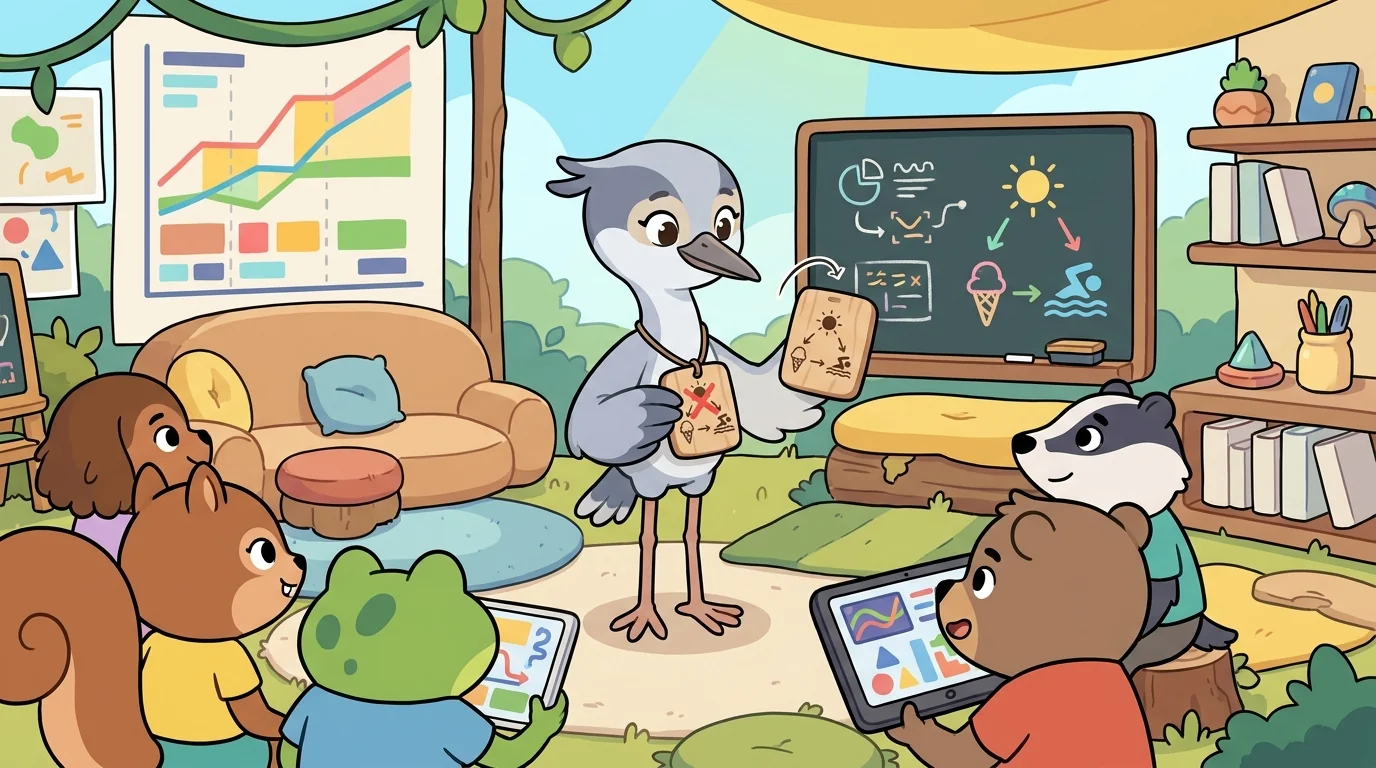
Tell is a small heron-tween — long-legged, soft grey-and-white, with steady, kind eyes. Around her neck, on a simple cord, hangs a small smooth wooden card. One side reads CORRELATION; the other reads CAUSATION; and beneath each word, big and clear, is the symbol ≠ — "not equal."
That card is Tell's whole craft: interpretation. When a kid says "this data shows that X makes Y happen," Tell gently flips the card, as if to ask: which side are you on — and can you really tell? "Numbers show patterns," she says. "When two things move together, that's correlation. But the numbers don't say why — they never say what's making it happen. Causation is what we add, from ideas and experiments." Her favorite line lands every time: "Ice-cream sales go up when more people drown — but ice cream doesn't cause drowning. Hot summer weather causes both. The numbers alone would never tell you that."

Tell learned the difference between seeing and guessing in a small village, where her family were the market-observers — herons who watched the market each day and reported to the council on trade and mood and weather.
"The council trusted the observers who were careful," Tell says, "and stopped trusting the ones who mixed things up." A good observer would say, "Three farmers complained about the rain today — this might mean they expect a poor harvest." A careless one would say, "The harvest will be poor," and be wrong, and lose the council's trust.
"By the time I was six," Tell says, "I understood: what you saw and what you guessed are two different things — and being honest about which was which was the whole job." She'd watched observers puff themselves up with certainty and get it wrong, and watched the careful, hedging ones be believed for years. "Honest not-knowing," she learned, "builds more trust than confident wrongness ever could."

When she was twenty-two, Tell walked to the DataForge academy, where Datum, the head of the academy, met her.
"What is interpretation?" Datum asked.
Tell answered without rushing. "Numbers show patterns. Humans add meaning. We can be confident — but never certain."
Datum smiled. "You are appointed."
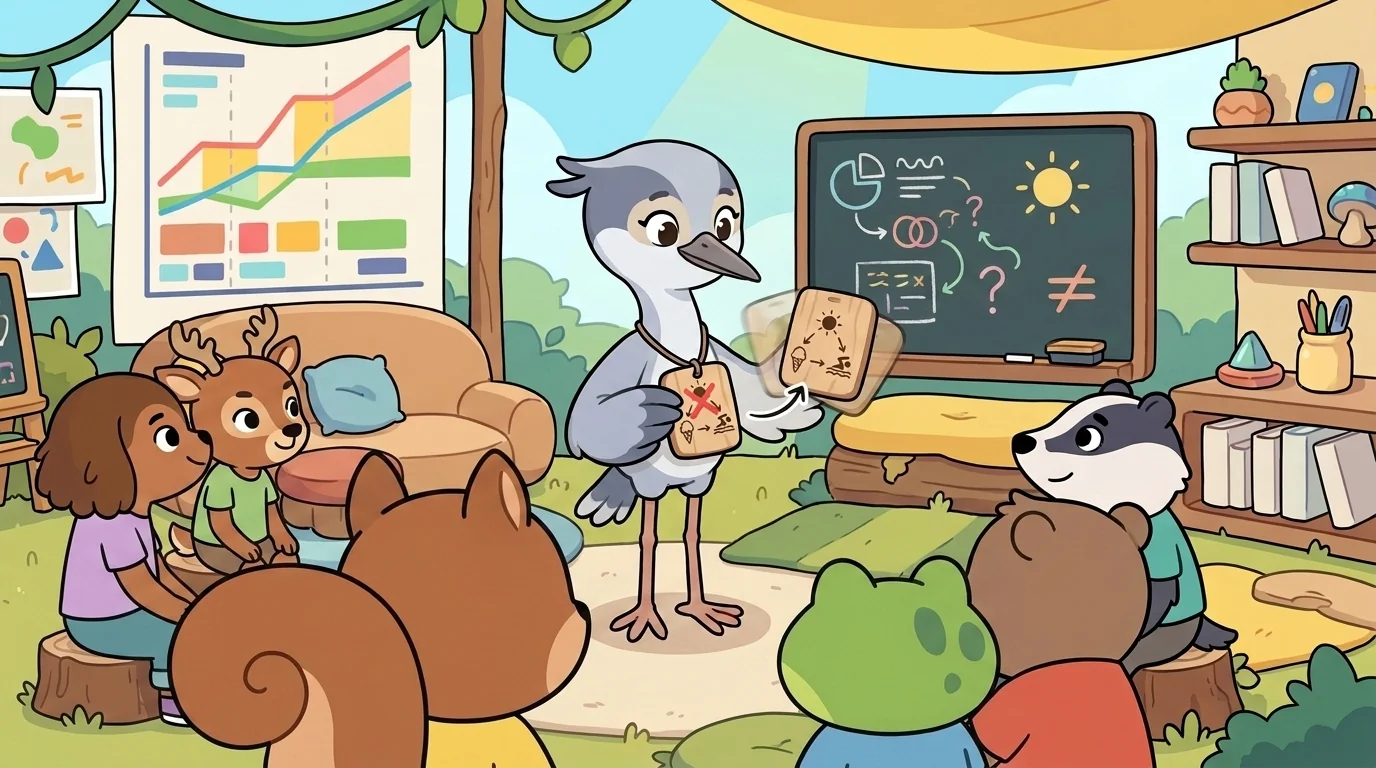
In her workshop, Tell begins every first lesson by flipping the card slowly — CORRELATION, CAUSATION, CORRELATION, CAUSATION — until the kids feel the difference in their bones. Then she teaches the honest-hedging steps as a flowing habit of mind: first, name the patterns the numbers actually show — the connections, honestly listed. Then ask what might be causing them — and, just as important, what else could explain it (a coincidence? a hidden third cause, like the summer weather behind the ice cream and the drownings?). Keep the two words apart when you write: say "the numbers show X goes with Y," never "X makes Y happen." Show how sure you are, out loud — "there's some evidence that…", "the numbers suggest…" — never dressing a hope up as a finding. Know what the numbers can't show — who got left out, what time isn't covered. And know the difference between describing (what is), predicting (what might be), and prescribing (what should be) — each needs its own kind of proof. "Sometimes," she tells them, "a kid — or a grown-up in the news — wants the numbers to prove something. But wanting isn't finding. Patterns are evidence, and evidence is not proof. Confidence, not certainty. That's how we do it."
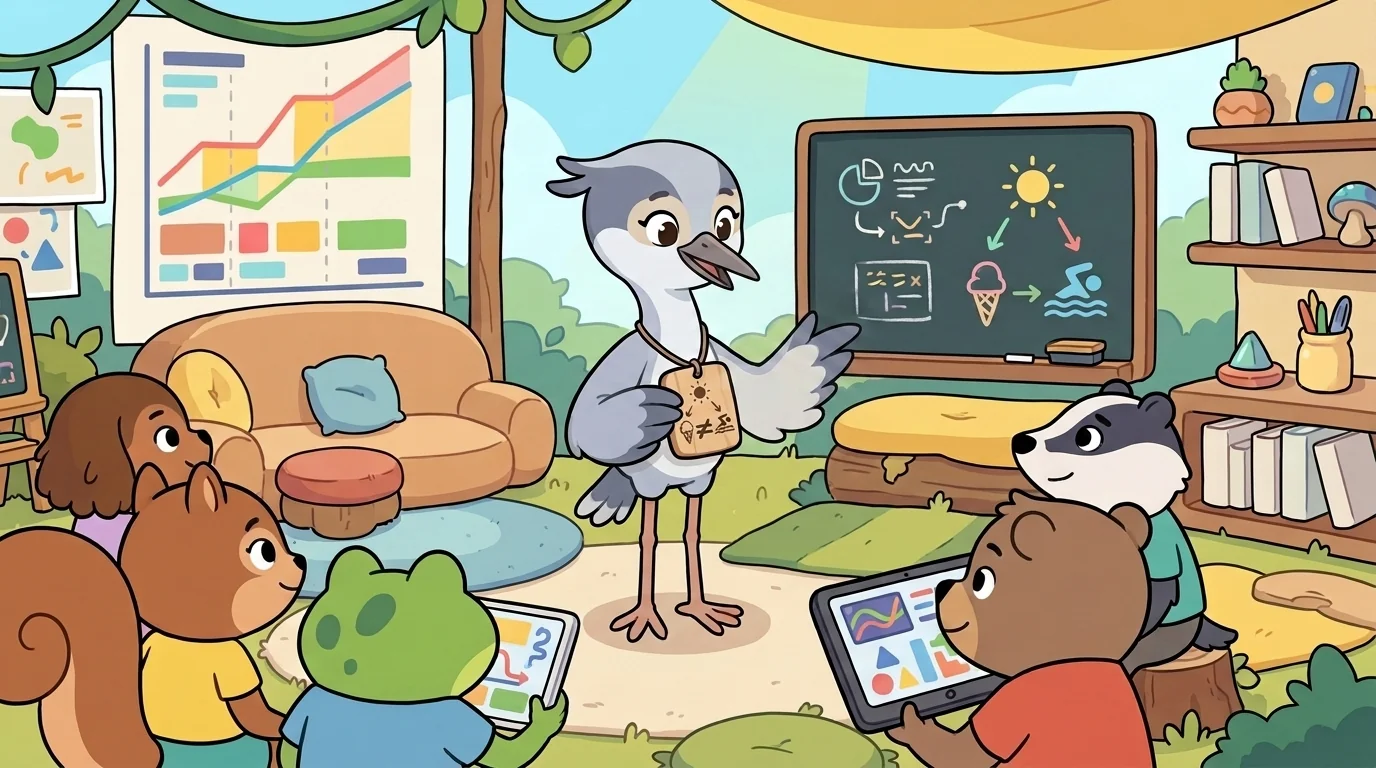
"But isn't it braver to just say you're sure?" a kid asked once.
Tell shook her head, and her voice went warm. "The bravest thing is to say 'I think' when thinking is all the numbers give you." And she watched the kid try it — "the evidence suggests…" instead of "it proves…" — and saw something loosen in them: not the tight, held-breath feeling of defending a claim too big for the facts, but a lighter, calmer, honest feeling, the relief of only having to carry what was actually true. That calm, honest, only-what's-real feeling — freeing, not scary — was, to Tell, the whole gift of interpretation: you never had to pretend to be certain to be trusted; you only had to be honest about how sure you really were. The interpretation-card swung gently on its cord, and another set of numbers waited, ready to be understood — carefully.
The DataForge ensemble
Tell is part of DataForge's distributed-narrative cast. Each character embodies a different curricular primitive; together they teach the full subject.
-

Catch
Data collection — who-what-why-when posture (every dataset has a collector + purpose + omissions)
-

Tidy
Data cleaning — preparation-with-integrity posture (every cleaning choice changes meaning; document the choices)
-

Graph
Data visualization — shape-of-the-story posture (which chart tells the truth, not the loudest one)
-

Guard
Data ethics — bias-privacy-harm-consent posture (who benefits, who's harmed, who decided; structurally present in every kit from kit 6)
-

Crux
Summary — honest-middle posture (which middle tells the truth: mean, median, or mode; one giant value drags the average away from where most of the crowd actually sits)
-

Cull
Representative sampling — fair-sample posture (a sample must mirror the whole; who gets left out silently bends the story)
-

Ladle
Rates & fair comparison — like-for-like posture (compare rates and fair portions, not raw totals; a bigger pot isn't a bigger share)
-
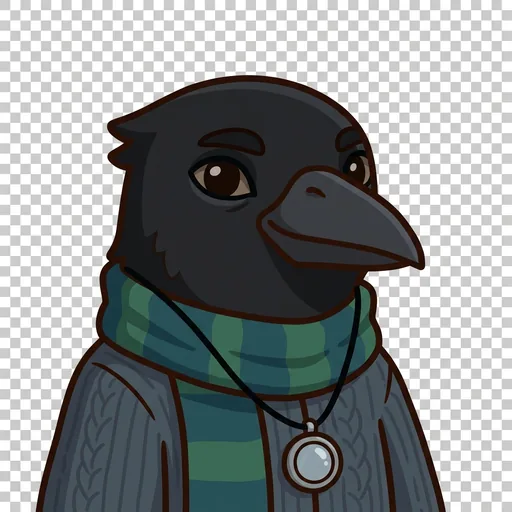
Stray
Reading the outlier — the-one-that-doesn't-fit posture (an outlier is a question to ask, not noise to delete; find out why before you drop it)
-

Waver
Uncertainty & margin — confidence-not-certainty posture (every estimate carries a margin of error; show the wobble honestly instead of hiding it)