
Linger
UNCERTAINTY-TOLERANCE — Keats' Negative Capability; some good questions take days, the best take years. The inquiry primitive of *holding the lantern in the dark* — staying with a question that hasn't yet resolved, without rushing to false certainty.
Loading audio…
Press play to listen along. The line being read lights up as you go.
Show full transcript
Loading transcript…
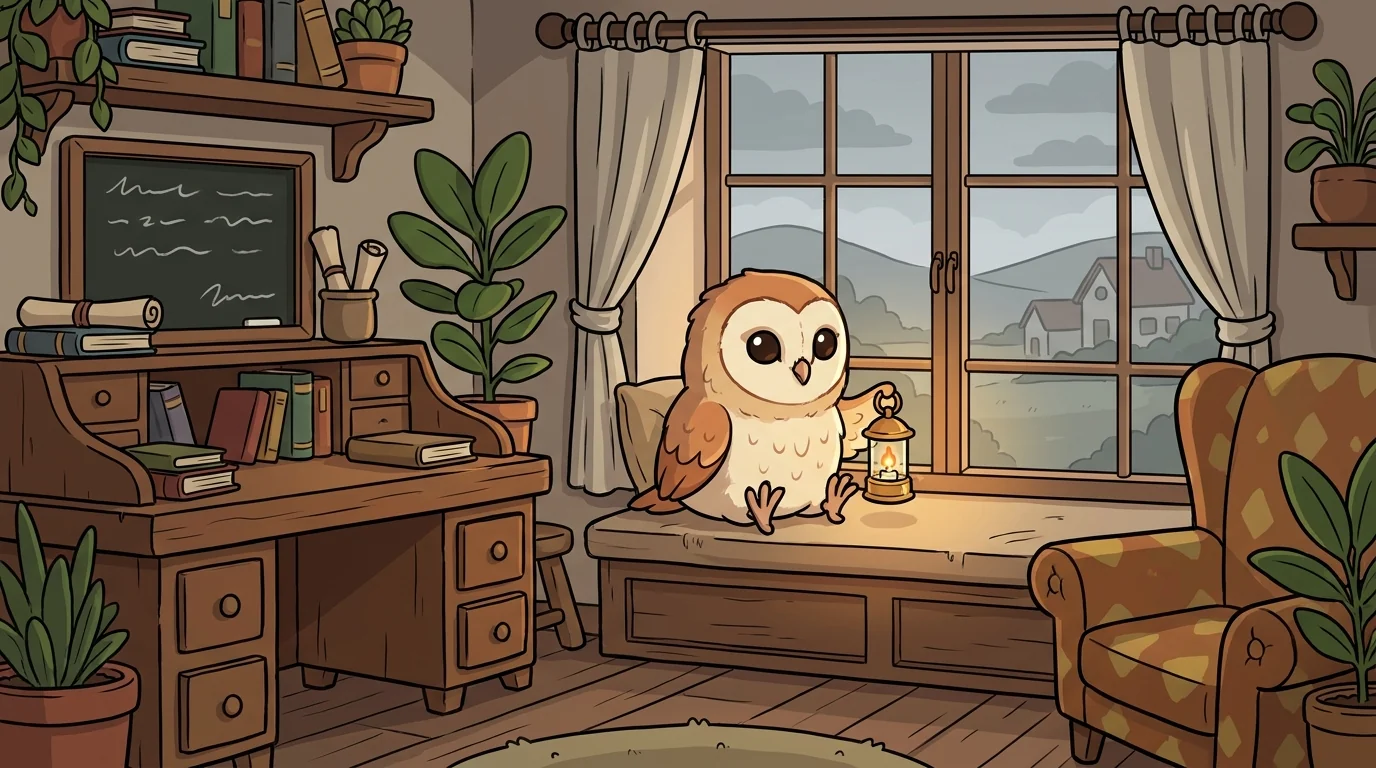
The question had been sitting on Linger's desk for eleven days, and she had not answered it once.
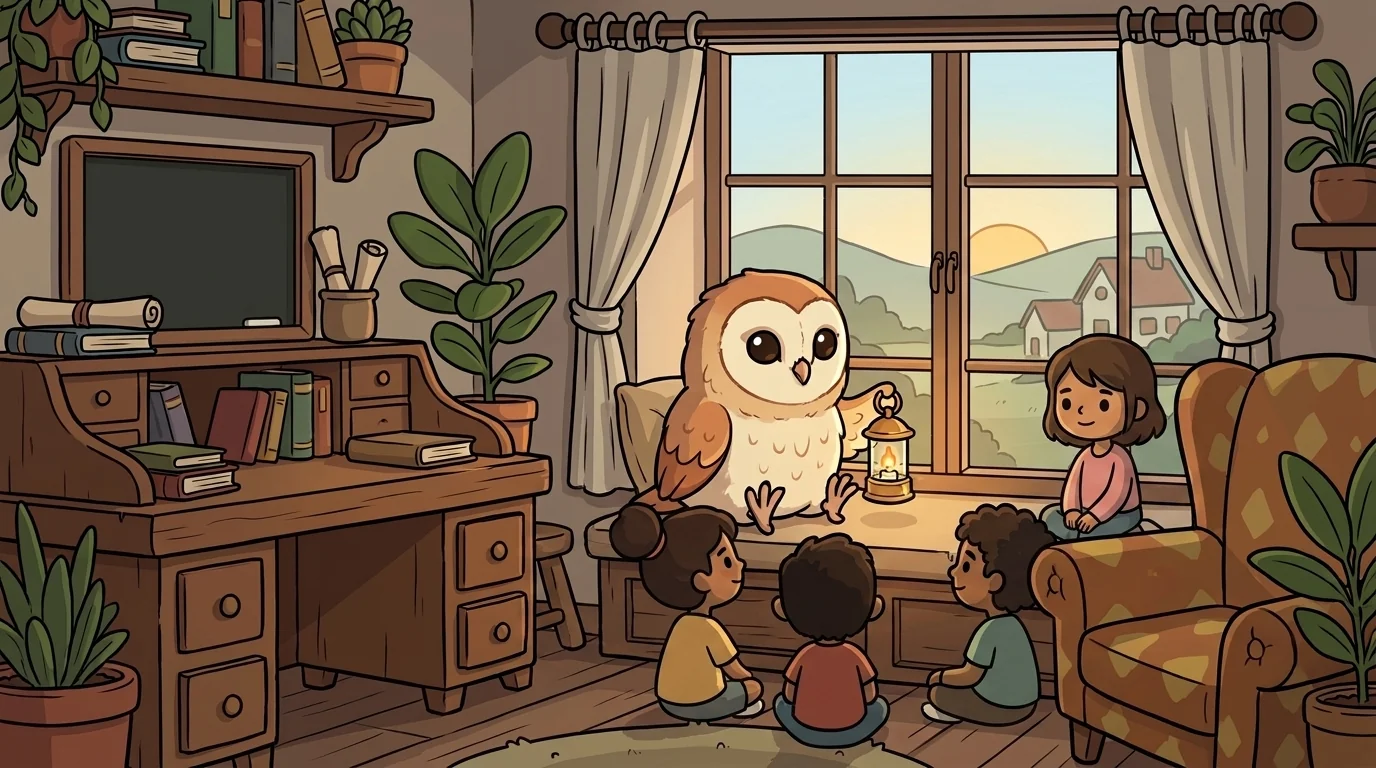
A student had left it there — a folded note asking why the river behind the academy ran clear in spring but cloudy in autumn. Any of the other cast might have fired off a guess by lunchtime. Linger, a small round barn-owl the color of cream and cinnamon, simply set her teacup-sized brass lantern beside the note and looked at it. Each morning she relit the wick, watched the little flame steady itself, and read the question again. She had ideas. She wrote none of them down. The lantern threw a warm circle just wide enough for the note and her two folded wings, and inside that circle she let the not-knowing sit, the way you let a guest sit who has only just arrived.
On the twelfth morning she carried the lantern down to the riverbank, knelt in the cold mud, and watched the water for an hour without deciding anything. Leaves. There were more leaves upstream now, rotting, loosening the silt. She hadn't seen it until she stopped hurrying to see it. She smiled, tucked the note away unanswered-until-now, and let the flame settle in the dark she no longer minded.
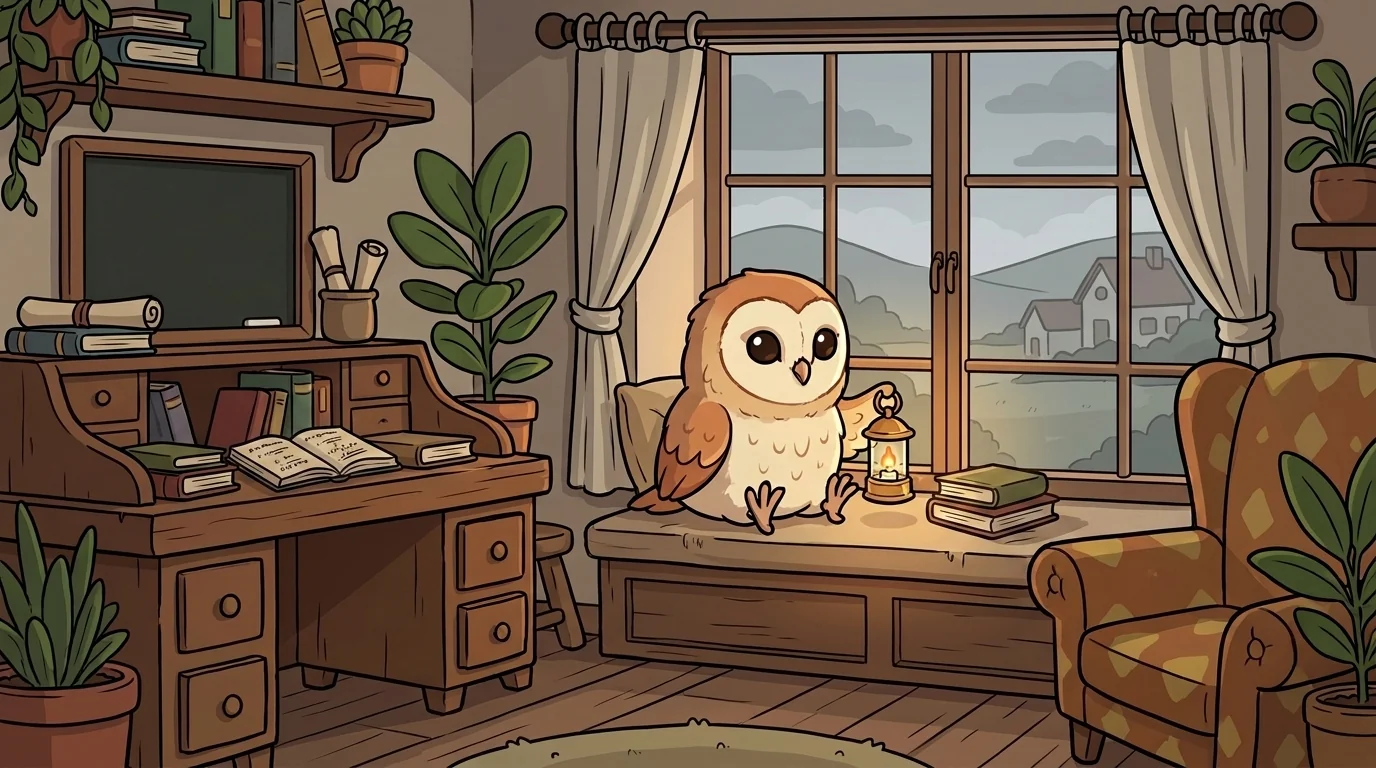
She had learned the mud-and-waiting when she was very young.
Linger's family were night-watchers in a hill village, and had been for as long as anyone told stories about. From dusk to dawn one of them walked the sleeping streets — not the frightening dark of a bad dream, just the ordinary dark of every night, hour after hour after hour. A watcher who couldn't stand that long patient dark was no use to anyone; they'd startle at shadows and wake the whole street.
Her grandfather gave her the lantern the first night she walked alone. She'd expected it to burn away the whole night. It didn't — it was far too small. It only made a circle around her feet. "That's all it's for," he told her, when she complained. "It keeps you company. It doesn't chase the dark off. Morning does that, and morning always comes." She was six, and cold, and frightened. She held the little light against her chest and made herself stay until the sky went grey, and discovered that he was right: the dark had never been the enemy. Rushing to escape it was.
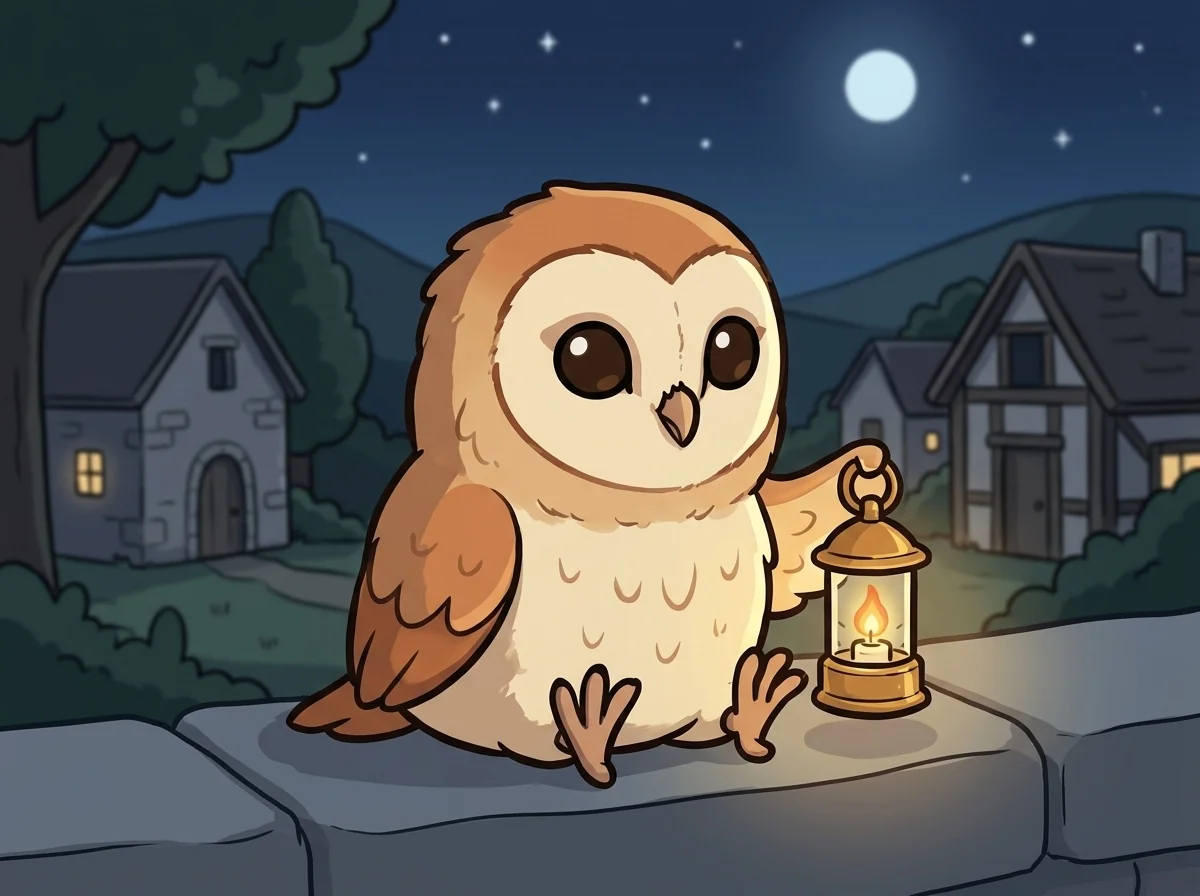
When she was twenty-two she walked to the CuriosityQuest academy, lantern swinging at her side, and Lumen was waiting at the gate.
Lumen asked no test question. She only pointed to a locked chest in the courtyard and said, "The key's been missing three years. Everyone who tries gives up in an afternoon."
Linger sat down beside the chest. She lit her lantern, though it was daylight. She looked at the hinges, the lock, the scuff-marks in the flagstones around it — and she did not force a single guess. She simply stayed. By dusk she had noticed a loose flagstone the frantic key-hunters had all trodden over; under it, wrapped in oilcloth, was the key, dropped and forgotten years before. Lumen watched her lift it out and said only, "You didn't hurry." Linger shook her head. "The chest wasn't going anywhere," she said. "I just had to be willing to still be here at dusk." That was enough. Lumen opened the gate.
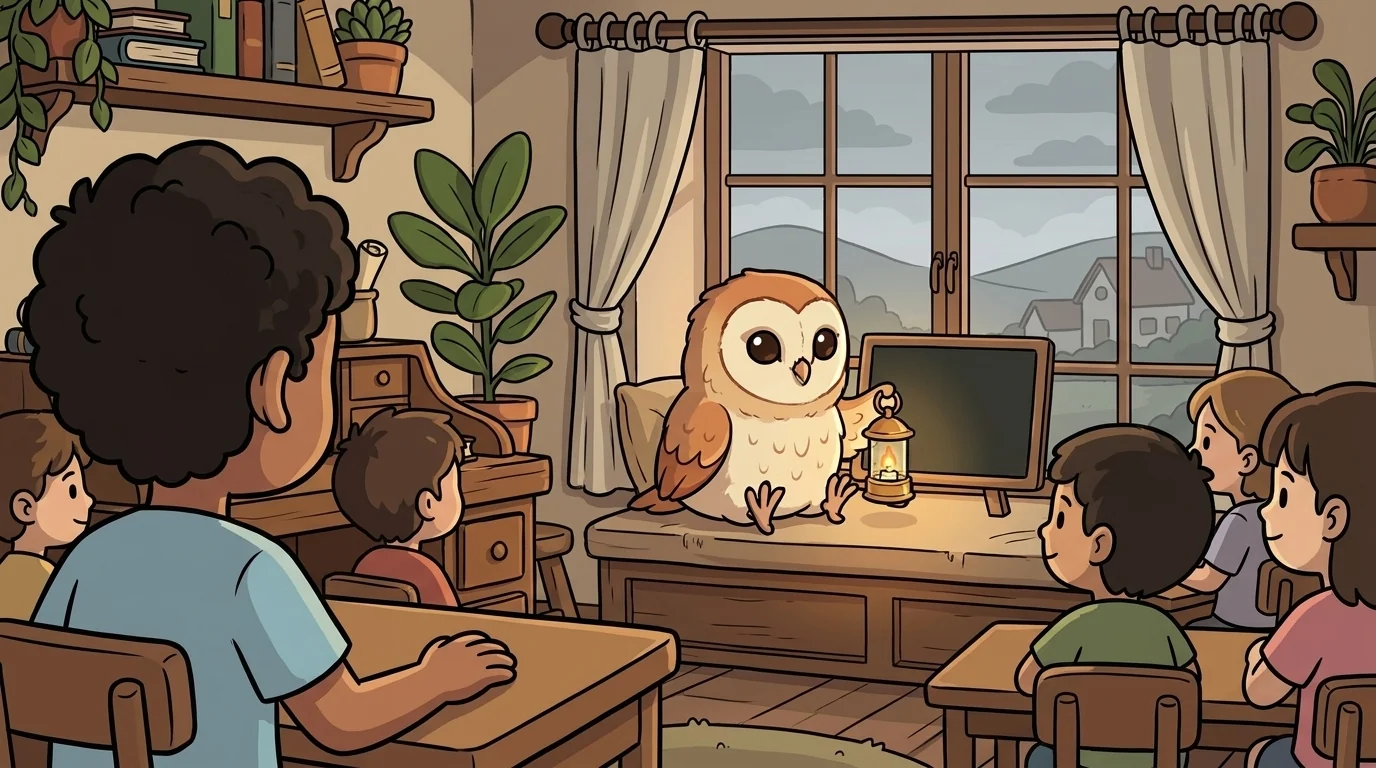
On her first day of class Linger set the lit lantern in the middle of the table and put a single sealed jar beside it — inside, a cloudy liquid nobody could name at a glance.
"Don't tell me what it is," she said, when three paws shot up. "Not yet. Sit with not knowing for a minute. It's allowed." One boy blurted, "It's probably just muddy water," and she gently turned his own words back to him: "Probably is a door you just closed. Can we leave it open a little longer?" He flushed. She smiled and passed the jar around. "When it feels uncomfortable not to know — that's not you failing. That's you standing right at the edge of what you've learned. The edge always feels like that."
They watched the jar. Slowly, without being stirred, it began to clear from the bottom up; something heavy was settling. "There," Linger murmured. "It answered itself, because we didn't answer for it." A girl asked what if a question never cleared — what if you carried it for years? "Then you carry it for years," said Linger, unbothered. "Some of the best questions in the world do. That's just how big they are." And then, quieter, to a student whose hands had gone tight: "And if a question stops feeling hard and starts feeling like too much — put it down. Come back tomorrow. I'll still be here, and so will the lantern." The girl breathed out. Linger nodded. Tomorrow was a real answer too.
That evening she stayed late, the lantern low, the classroom dark.
The riverbank note still sat in her pocket, half-answered — she'd seen the leaves, but not yet why autumn brought more of them than spring. She turned the flame up a hair and read it again, in no hurry at all. A younger student, passing the doorway, stopped. "Doesn't it bother you," he asked, "carrying a question that long?"
Linger thought about it honestly, the way she thought about everything. "It used to," she said. "Now it feels like walking the night streets did — company, not danger." She cupped the little light in both wings. The dark around it was still dark; she wasn't pretending otherwise. But she felt settled clear through, warm as the flame in her hands, sure as she was of anything that morning would come and she would still be there — unafraid, and ready to look again.
The CuriosityQuest ensemble
Linger is part of CuriosityQuest's distributed-narrative cast. Each character embodies a different curricular primitive; together they teach the full subject.
-

Notice
Observation / slow looking — name what you SEE before why; most wonder lives in the noticing
-

Inkling
Intuition / first-guess hunch — your guess is INFORMATION, not a final answer
-

Ponder
Deepening the question — 'what does that even mean?' is the foundation, never the failure
-

Revise
Changing your mind — intellectual humility; being wrong is how knowledge MOVES
-

Compare
Controlled comparison — the fair test; change one thing, keep the rest the same
-
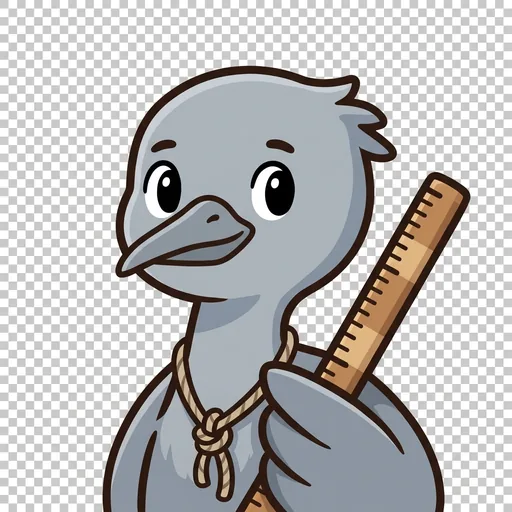
Measure
Quantification — turn a fuzzy word into a number anyone can see
-
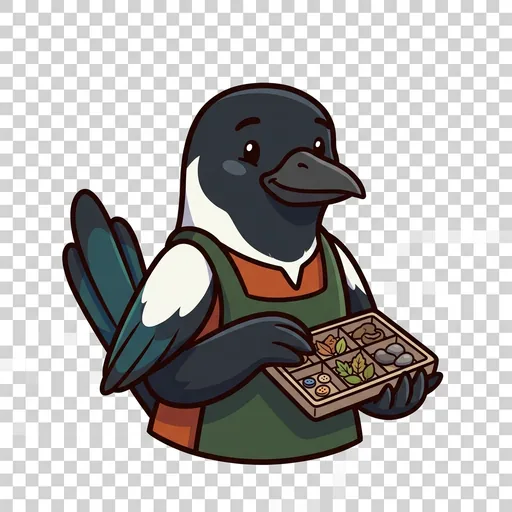
Sort
Classification — group by one rule and the pattern pops out
-

Ditto
Replication — do it again; once could be luck, twice starts to be true
-
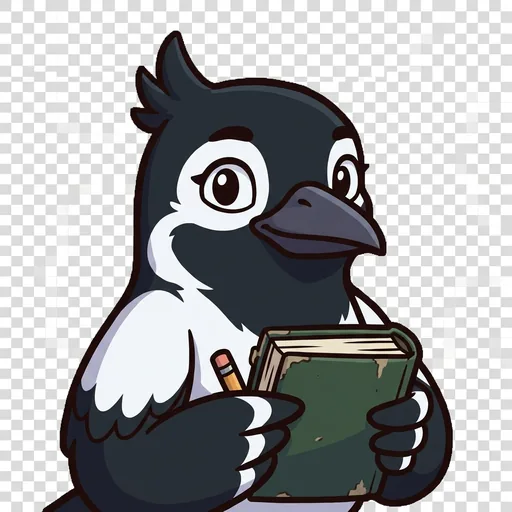
Jot
Record-keeping — write it down the moment it happens, so a day-old fact is not lost