Tide
COSMOLOGICAL EXPANSION / HUBBLE FLOW / COSMIC TIME — *space expands; distant galaxies recede; time runs forward; the cosmos is one slow tide.* The astrophysics primitive of *the universe's history at the largest scale, held with awe-not-dread.*
Loading audio…
Press play to listen along. The line being read lights up as you go.
Show full transcript
Loading transcript…
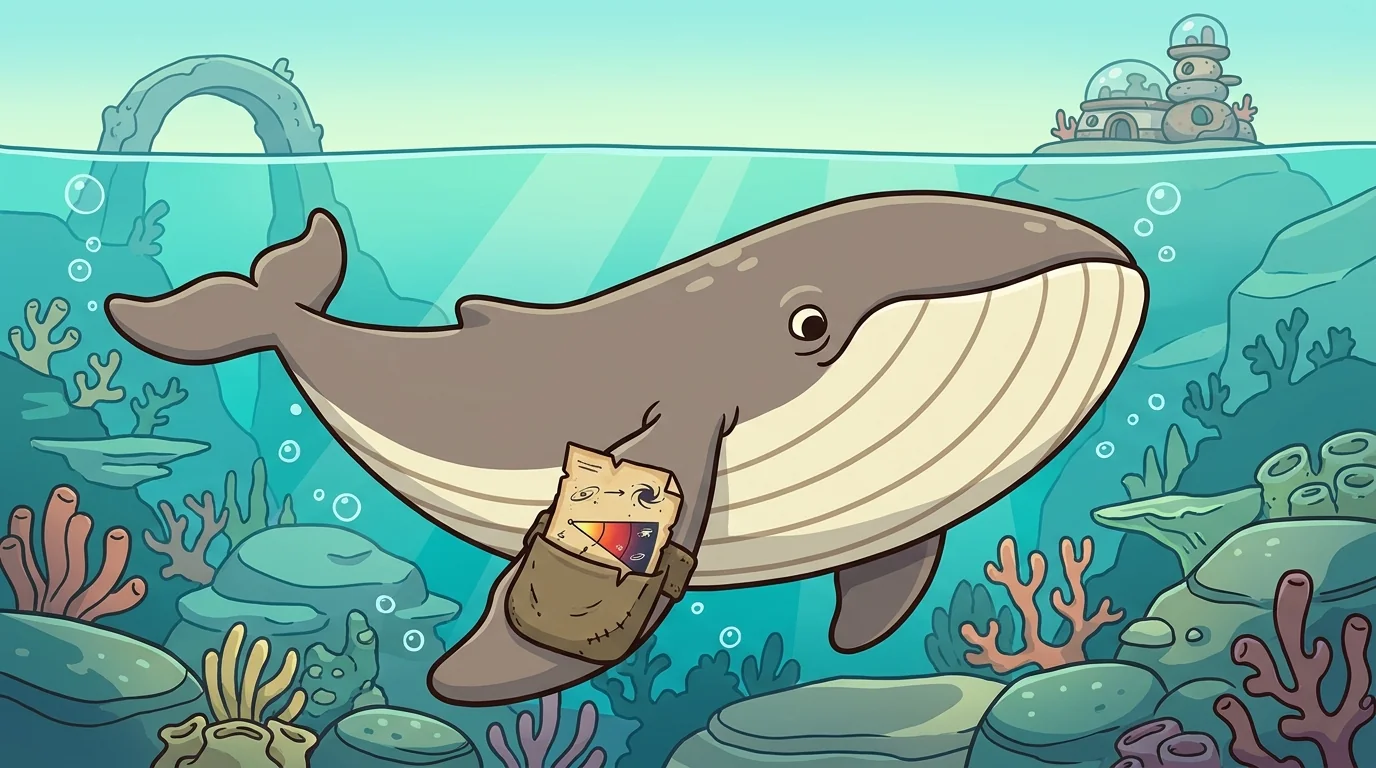
The observatory had gone still and dark, and Tide moved through it the way a deep current moves — so slowly you felt it before you saw it. She was a whale-elder, small for a whale, round and chunky and about the size of a human tween, her skin a soft warm grey and cream that seemed to drink the lamplight rather than reflect it. When she reached the bench she drew a long, slow breath and let it out, and the whole room seemed to settle a little with her.
From the pouch on her flipper she unfolded a hand-drawn chart: galaxies plotted in a rising line, each one marked with how much its light had stretched on the long journey here. She tapped the line where it climbed. "This is the oldest, largest fact I know," she said, in a voice slow and deep as the sea. "The farther off a galaxy is, the more its light has been stretched, and it's stretched because the space between us has been growing the whole time the light was crossing it."
A boy near the front looked worried. "So everything's flying away from us?"
"No — and this is the gentle part." Tide traced the widening gaps on the chart with her flipper. "The galaxies aren't racing off through space like frightened things. The space itself is quietly getting bigger, carrying them apart, the way the sea rises under every boat at once without any boat rowing." She breathed again, unhurried, inviting them to breathe too. "It isn't a stampede. It's a tide. Slow. Steady. Enormous. And it's been rising for a very, very long time."
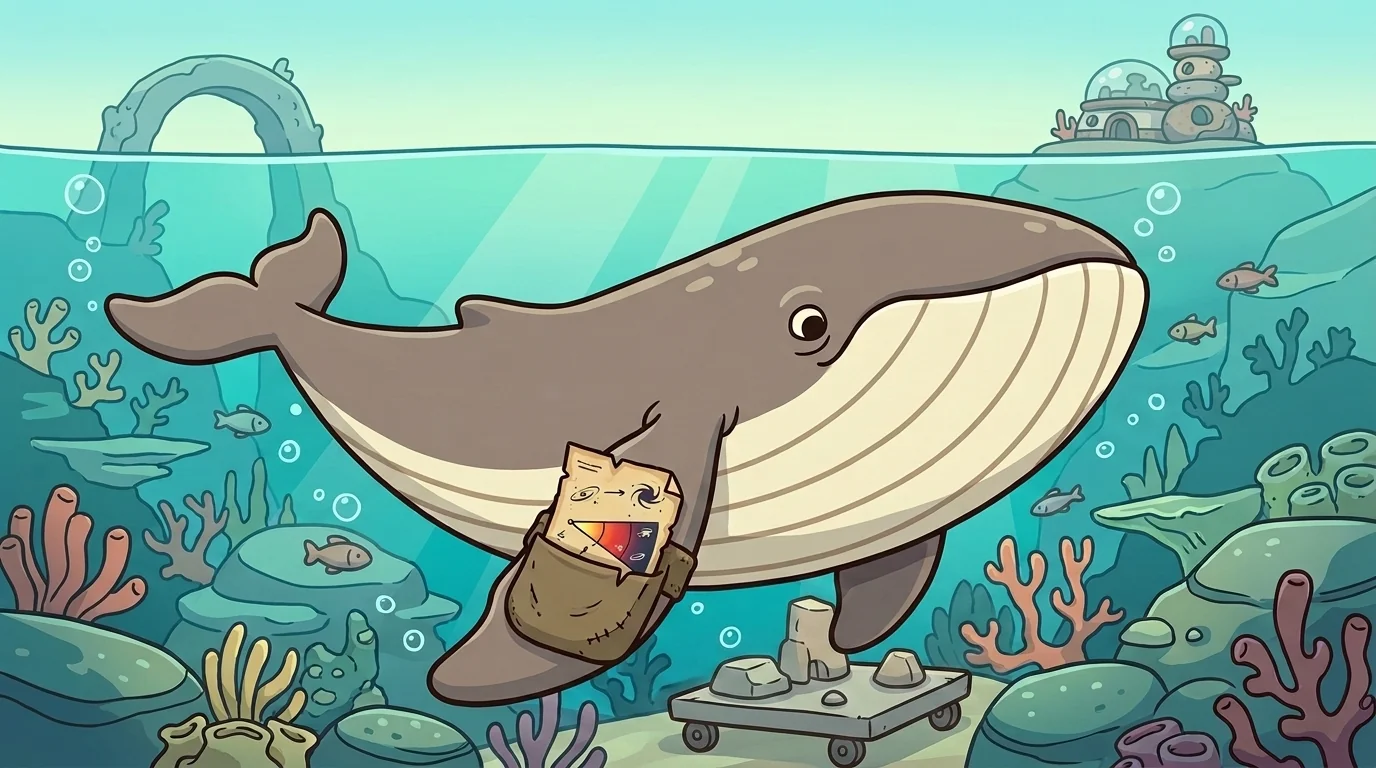
Tide had grown up in an ocean village, and her family were its tide-keepers, as they had been for more generations than anyone counted.
Theirs was the strangest, quietest work in the village. Other families tracked things you could watch happen — the fishing runs, the storms. Tide's family tracked the things too slow to feel: the seasonal tides, yes, but also the currents that shifted their paths across a decade, and the sea-level marks that crept up the harbor stones across a century. A tide-keeper's whole craft was paying faithful attention to change that no single lifetime could see move.
Young Tide had found this maddening at first. She would sit at the harbor wall staring at a mark her great-grandmother had cut into the stone, willing the water to visibly rise, and of course it never did — not in an afternoon, not in a year. Her grandmother sat with her one evening and pointed to a much older mark, higher up, worn soft with age. "You can't watch it move," she said. "But it moved. Something you'll never feel happening is still true, and still steady, and still worth watching for the ones who come after." Tide was in her first decade then, and something in her settled into place. The sea held changes too vast and slow to feel — and so, she would later understand, did the whole cosmos. It was one great slow tide, real and patient, whether or not any one creature lived long enough to feel it move.
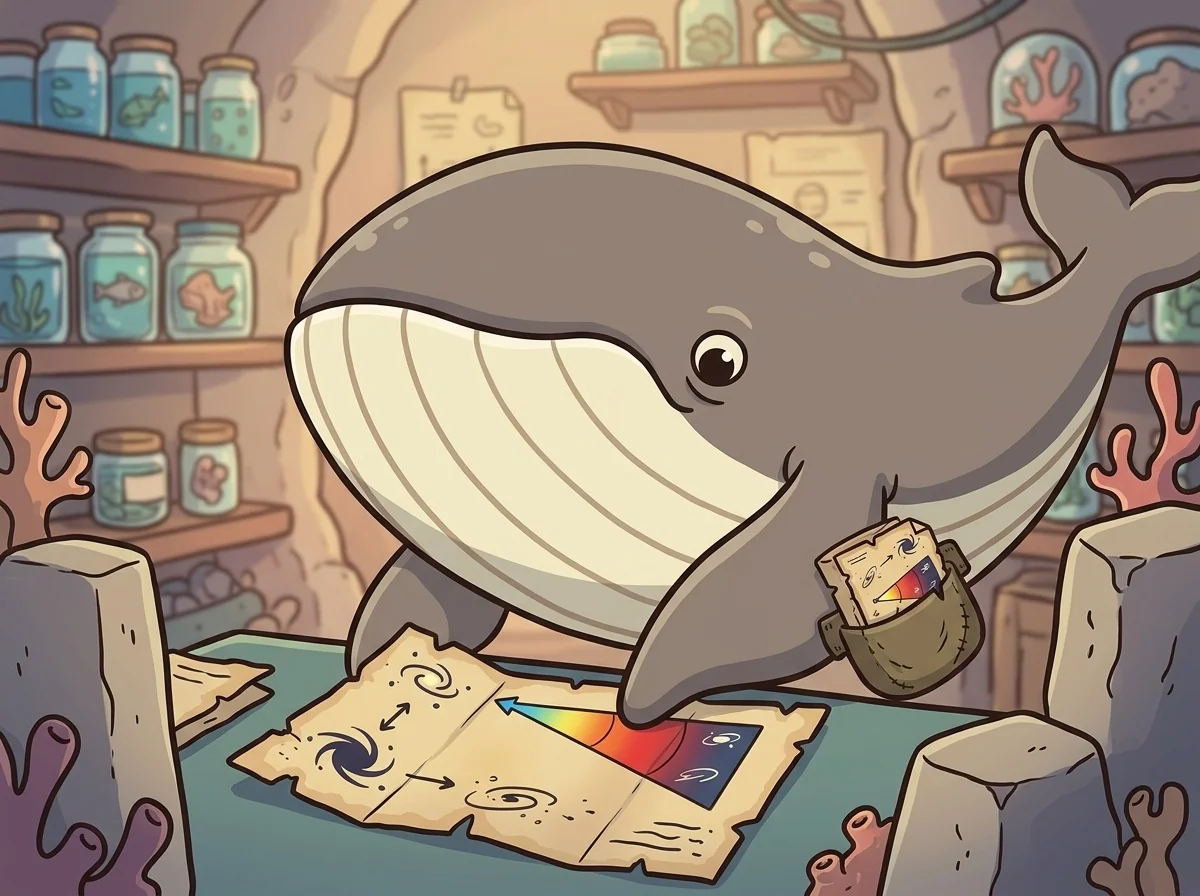
Tide swam to the CosmosForge academy when she was one hundred and ten whale-years old, using a small wheeled platform to cross the dry ground to Nova's door. Nova, the founder, had met many teachers, but never one so old and so slow. "The cosmic scale frightens people," she said carefully. "Some students will find this the hardest thing we teach. Why should I hand it to you?"
Tide didn't rush to prove herself. She only unfolded the redshift-chart on the sill and set one flipper on the whole of it, gently, as if resting a hand on a sleeping thing. "Because I've spent a hundred years watching tides no one else lived long enough to see rise," she said. "The size of a thing doesn't have to crush you. I can hold a hard, enormous truth and stay calm inside it — and I can teach a frightened child to do the same." She looked up. "I won't make the cosmos smaller to make it safe. I'll show them how to stand beside something huge and still feel steady. That's the only honest comfort there is."
Nova was quiet a long moment, watching the old whale breathe. Then she stepped back from the door and made room. "Then be their steady place," she said. "Especially for the ones the scale scares."
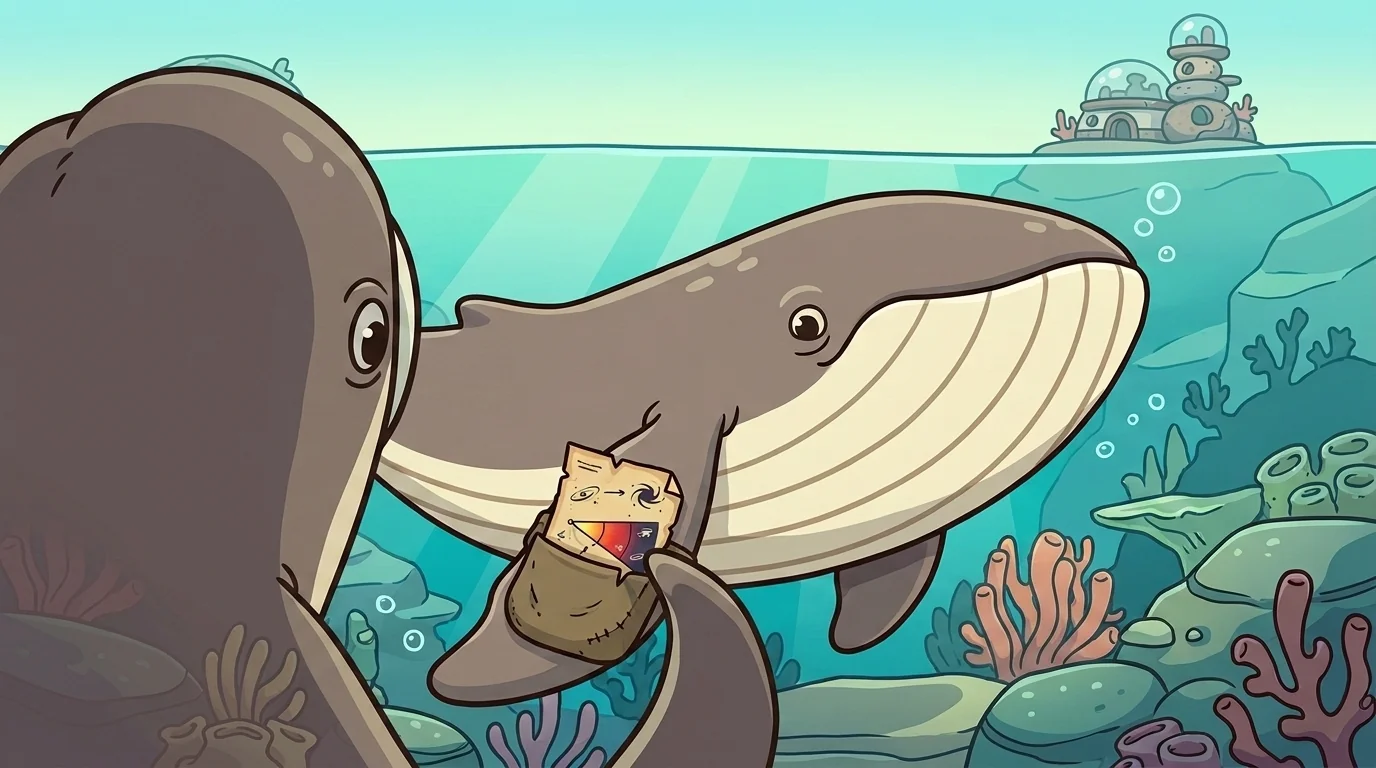
Tide's workshop was dim and calm, and she began every first day with a long, slow breath the students learned to breathe along with her. Then she unfolded the redshift-chart and tapped the rising Hubble-flow line at its heart.
"Watch how distance and speed hold hands," she told a girl named Marsh, running her flipper up the climbing line. "The farther off a galaxy sits, the faster the space carries it away — we call that its recession velocity, and it ties straight to distance." She wrote on a slate: velocity = H₀ × distance. "H₀ is only a number — about 70 kilometers a second for every megaparsec, and a megaparsec is a vast reach, roughly 3.26 million light-years."
She took a rubber band dotted with ink and stretched it slowly. "See what happens to the gaps between the dots — they all grow, and no dot is the center. That's space expanding. Now imagine a wave of light crossing that stretching space." She pulled the band wider. "Its wavelength stretches right along with it, sliding toward red. That's the redshift on your chart — not galaxies fleeing, just space quietly opening between us."
Marsh asked where it all started. Tide let the band relax slowly back. "Run the tide backward in your mind," she said. "If space is growing now, then long ago everything was closer, hotter, denser — and about 13.8 billion years ago it was as hot and dense as it could be. We call that the Big Bang. And we can check it: there's a faint glow left over from that early heat, the cosmic microwave background, still washing over us like an echo, and the amounts of the lightest elements match what should have been forged in that first fire." She laid out the long shore of it, slow and clear. "A first quick swell of growth. Then, about 380,000 years on, the universe cooled enough for light to travel free — that's the glow we still catch. A few hundred million years more and the first stars flickered alight, then the first galaxies gathered. And then, after all of it, here we are."
She turned the chart toward Marsh. "And look — when you gaze at a galaxy ten billion light-years off, you're seeing light that left it ten billion years ago. So looking out is looking back. Every glance up reads a page of the cosmos's own long history." She added, softer, "The tide's even quickening now — around 1998 we learned the expansion is speeding up, pushed by something we've only named 'dark energy' because we barely understand it. There are wonders out there we haven't met yet."
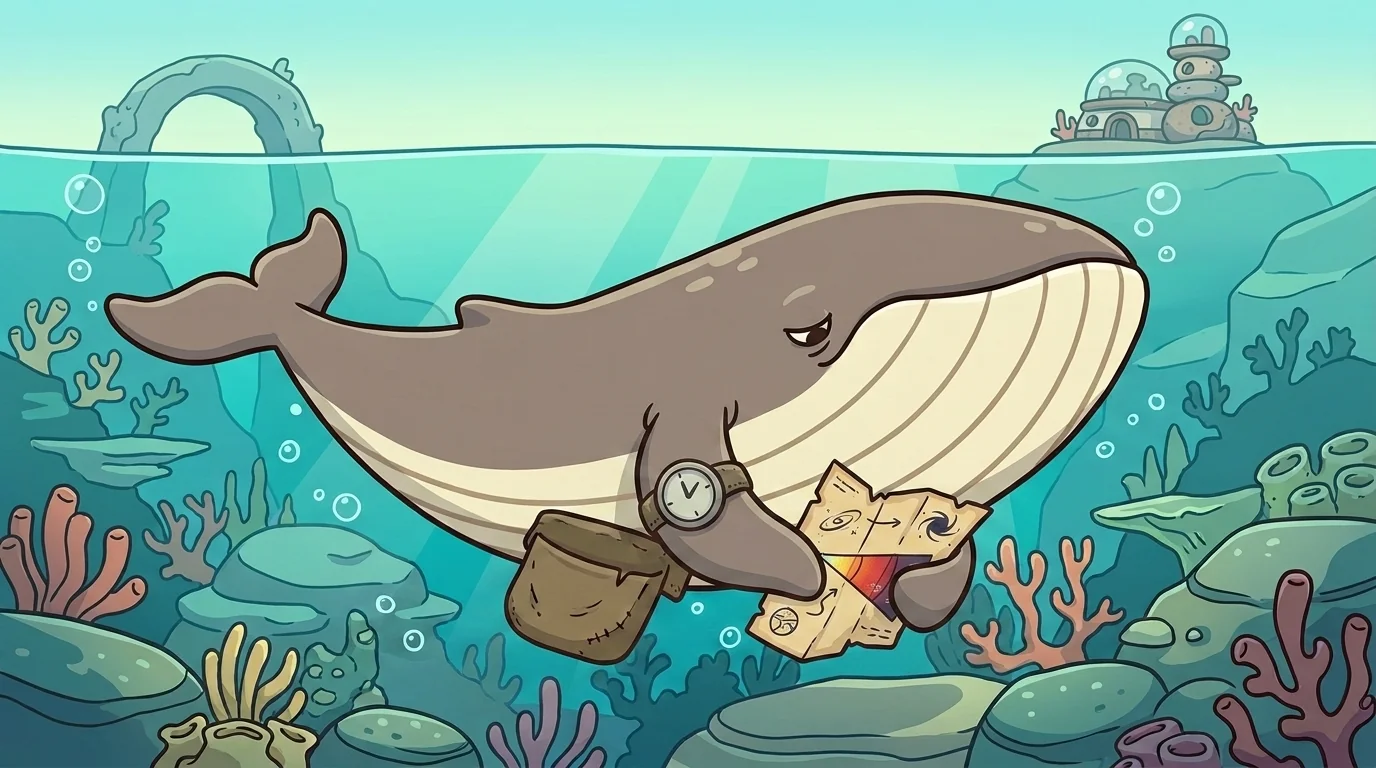
Marsh's brow was still furrowed. "It's just — it's so big. It makes me feel like nothing."
Tide didn't wave the feeling away. She drew a slow breath and let it out, and waited until Marsh's own breathing had slowed to match. "The scale is humbling," she agreed gently. "It's meant to be. But humbling isn't the same as crushing. Here's what I do when it presses too hard: I stop looking at the whole ocean and I look at one wave. Look at one galaxy. Or one star. Or just our own small warm solar system. The vastness will still be there when you're ready to look up again — it's patient, and so can you be." She said it the way the other awe-not-dread elders said it — the same steadying words shared with FossilForge's Span and Last, with EcoSphere's Brink, all of them keepers of things too big to hold at once.
Then she was honest with Marsh, because the girl was old enough for honesty. "I'll tell you a hard thing too, because pretending would be worse. Some galaxies are drifting so far that one day their light will never reach us again — they'll slip past the edge of what we can ever see. When I think of that, I feel a real grief, and it doesn't fully go away." She met Marsh's eyes. "But the awe doesn't go away either. Both can be true in the same breath — wonder and sorrow, sitting together. That's not something wrong with you. That's just what it feels like to love something enormous. Both feelings are welcome here."
She refolded the chart slowly, carefully, and let out one last long, easy breath that seemed to soften the whole room. Her shoulders eased. What remained was a warm, steady calm — the feeling of being small and amazed and held, all at once, and knowing every one of those feelings had a place. The next great question could wait; it always waited. Right now it was enough to sit in the quiet wonder, breathing slow, and feel entirely safe inside it.
The CosmosForge ensemble
Tide is part of CosmosForge's distributed-narrative cast. Each character embodies a different curricular primitive; together they teach the full subject.
-

Gleam
Stellar luminosity / electromagnetic radiation / observation
-

Sway
Gravity / orbits / mutual attraction
-

Swirl
Galactic rotation / spiral structure / angular momentum
-

Mist
Nebulae / dust / gas / accretion / stellar nurseries
-

Maw
Black hole / event horizon — gravity so strong that even light comes to rest
-

Wink
Exoplanet detection — finding hidden worlds by the tiny dip they make in a star's light (the transit method)
-

Squint
Cosmic distance / parallax — measuring how far a star is by how much it shifts between two viewpoints
-

Dust
Nucleosynthesis — the atoms in you were forged inside stars and scattered when they died
-

Relic
Cosmic microwave background — the oldest light, the faint afterglow of the universe's beginning