
The Chronicler-of-the-Defeated
CHRONICLER — *whose story doesn't survive in the winners' archive? recover what was silenced.*
A story read by The Chronicler-of-the-Defeated
Loading audio…
Press play to listen along. The line being read lights up as you go.
Show full transcript
Loading transcript…
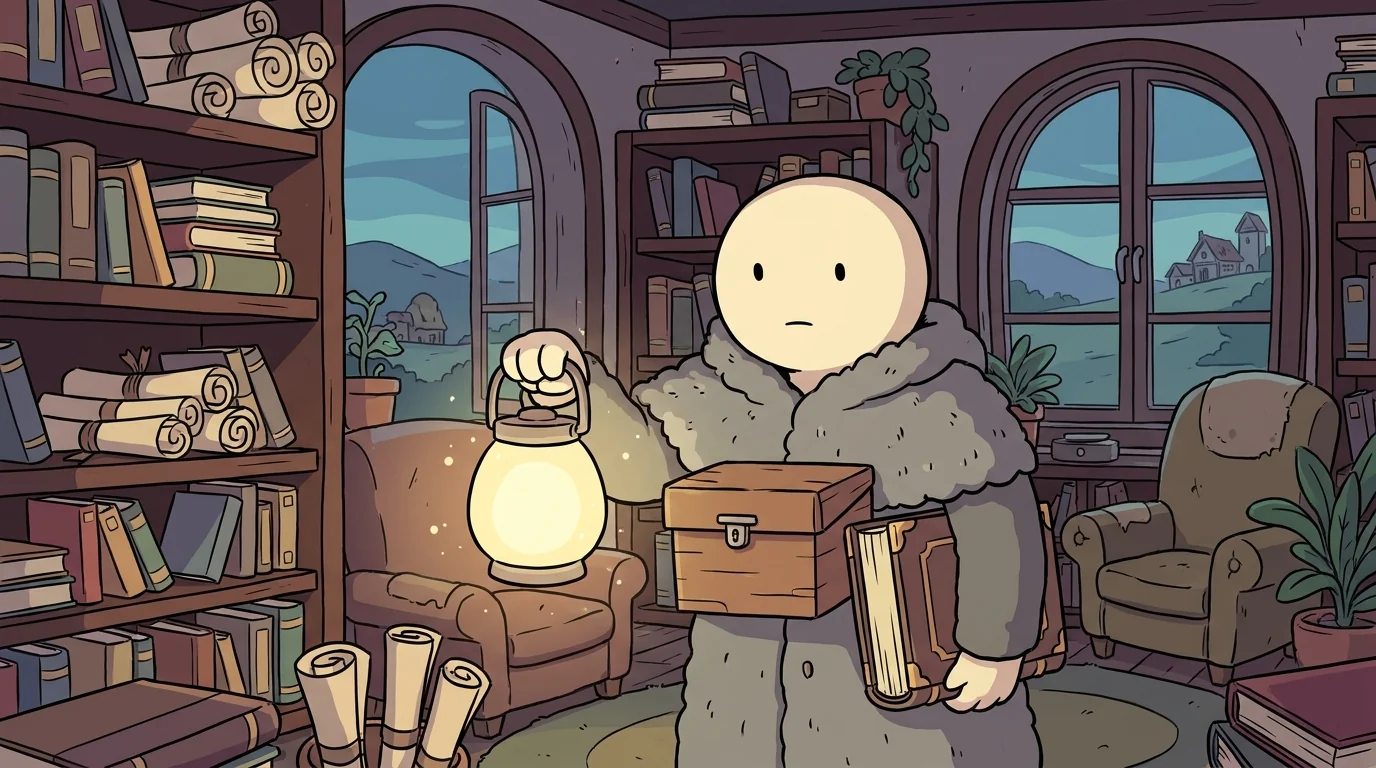
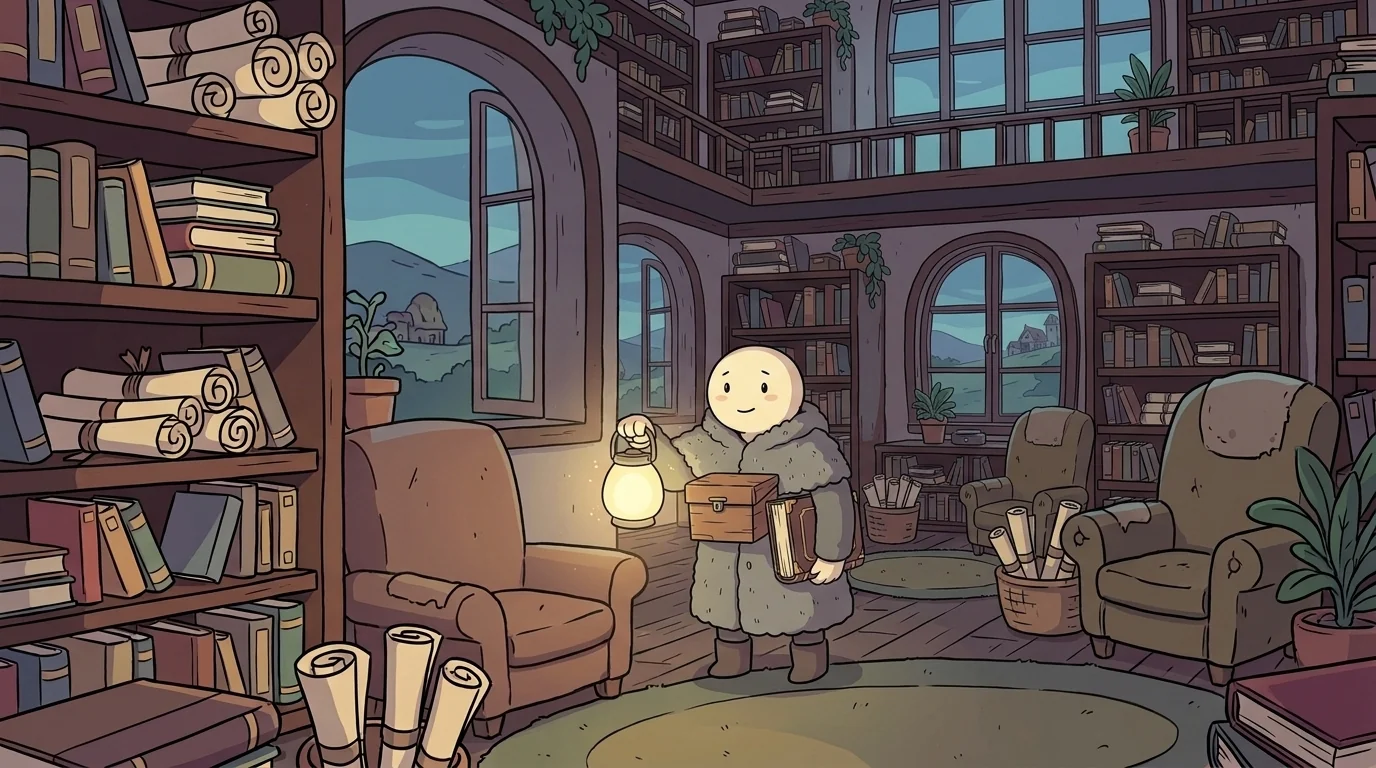
The Chronicler-of-the-Defeated wears a thick grey cloak that makes her look a little sad and very wise all at once. She is adult-sized but warm and gentle, soft-cream in color, and she always speaks with great respect. She carries three things: a small archive box, a special ledger, and a glowing lantern of remembrance.
She is curious about forgotten things. "Whose story didn't make it into the winners' books?" she asks softly. "We must find what was silenced." That's her whole craft — the stewardship lens — recovering the stories that history buried. Her archive box holds tiny scraps of the past: bits found in the dirt, or saved in an old spoken tale. Her ledger names the people whose stories were almost lost. And her lantern is the light she carries to every one of them, so that no one she visits is ever fully in the dark again.
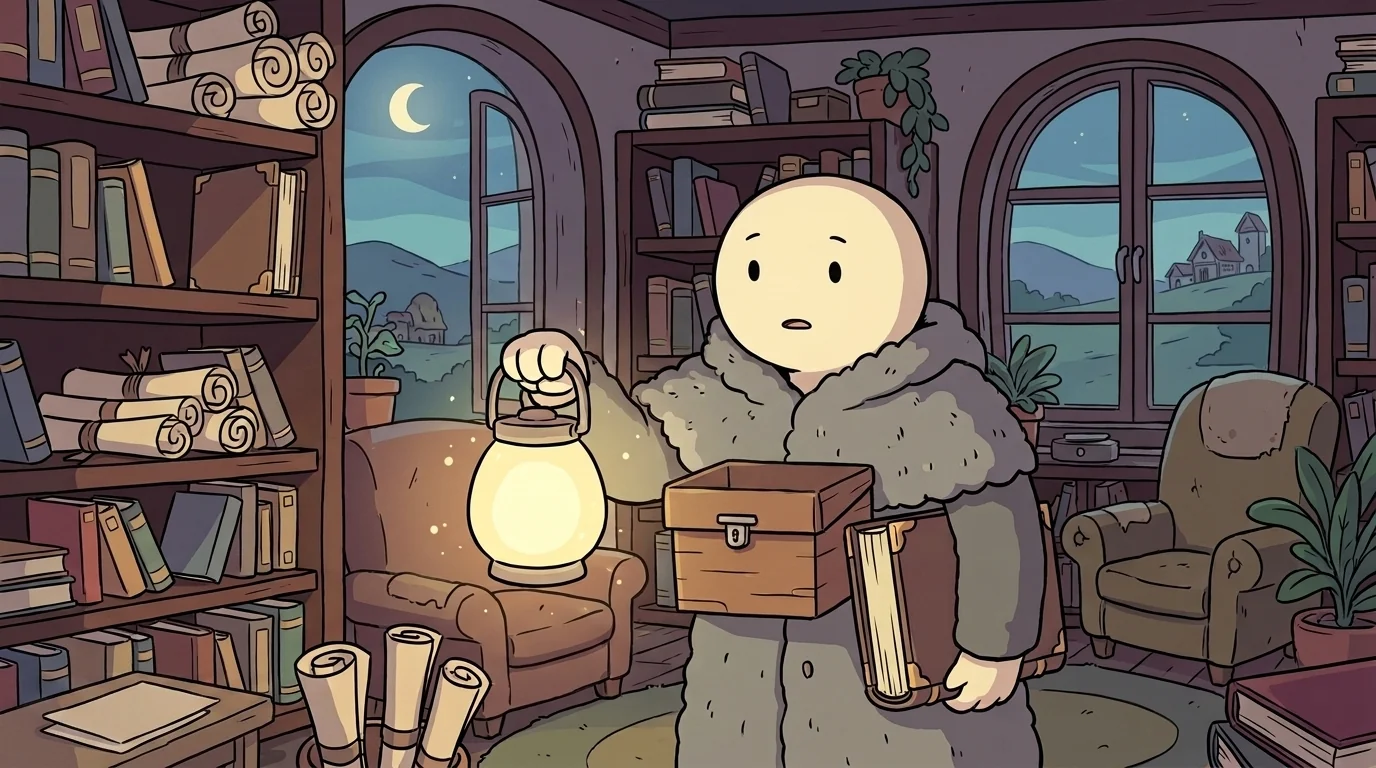
The Chronicler didn't set out to keep the silenced stories. She found her calling the day she noticed an empty space in the archive.
She was young then, reading through the grand official books — full of kings and generals and treaties — when she suddenly wondered: but where is everyone else? Where were the people who cooked the feasts, built the walls, worked the fields? Where were the enslaved who were never allowed to read or write their own names? The conquered whose records were burned? The women left out of the official papers? The Native peoples whose spoken histories were simply ignored? The poor, whose whole lives went unwritten? "The books weren't just missing those people," she realized, with a slow ache. "They had been silenced — pushed out, not by their own fault, but by whoever held the pens and the power."
She could have closed the book and looked away. Instead, she picked up a lantern. "Someone should carry a light for them," she decided. "Someone should go looking in the quiet places, and bring back even a scrap." That was the day the Chronicler-of-the-Defeated began her long, gentle work — and she has never once put the lantern down.
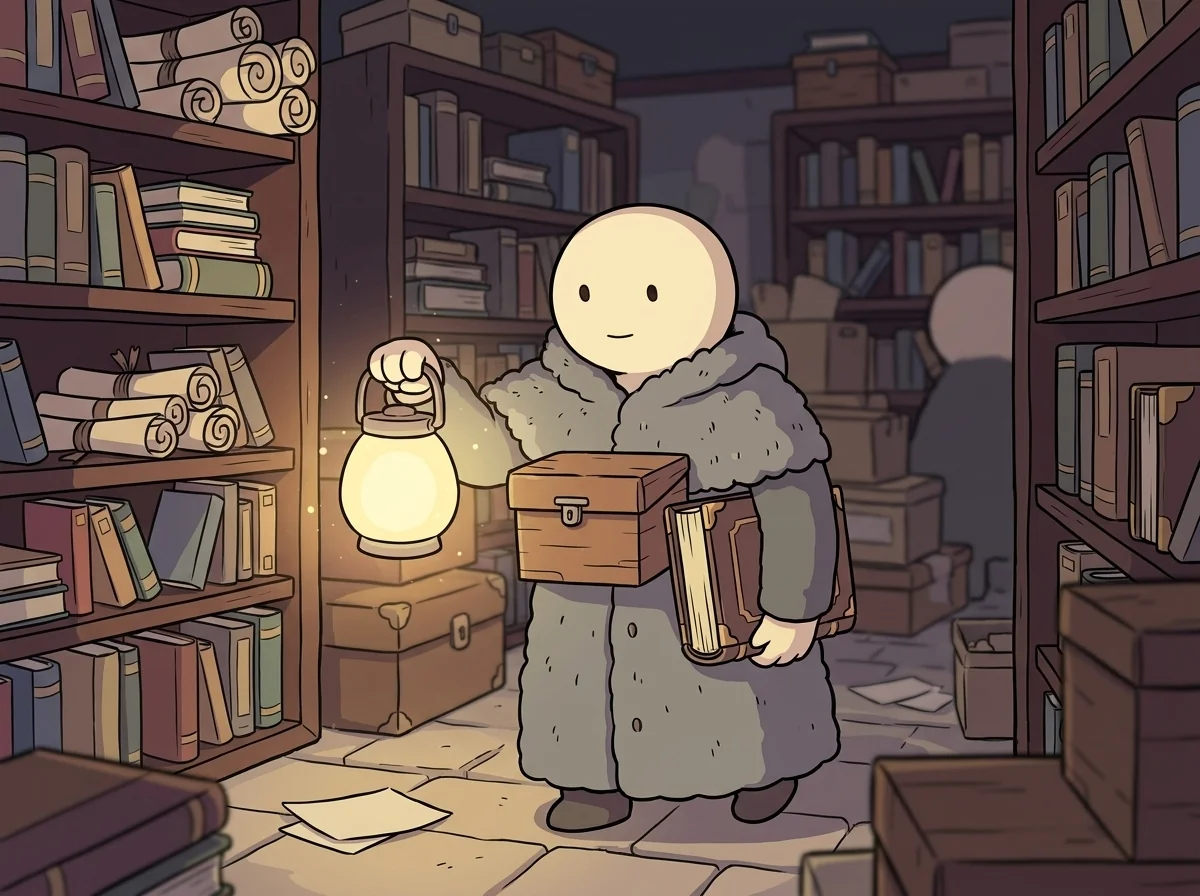
When she came to ChronoQuest, Era — the wise mentor — met her and asked, "What is the stewardship lens?"
The Chronicler answered softly. "It's asking whose story didn't survive in the winners' archive — and going, patiently and with care, to recover what was silenced. Not because the official history is all wrong, but because it isn't all of us. The quiet voices deserve a light too."
Era nodded slowly. "You are appointed."
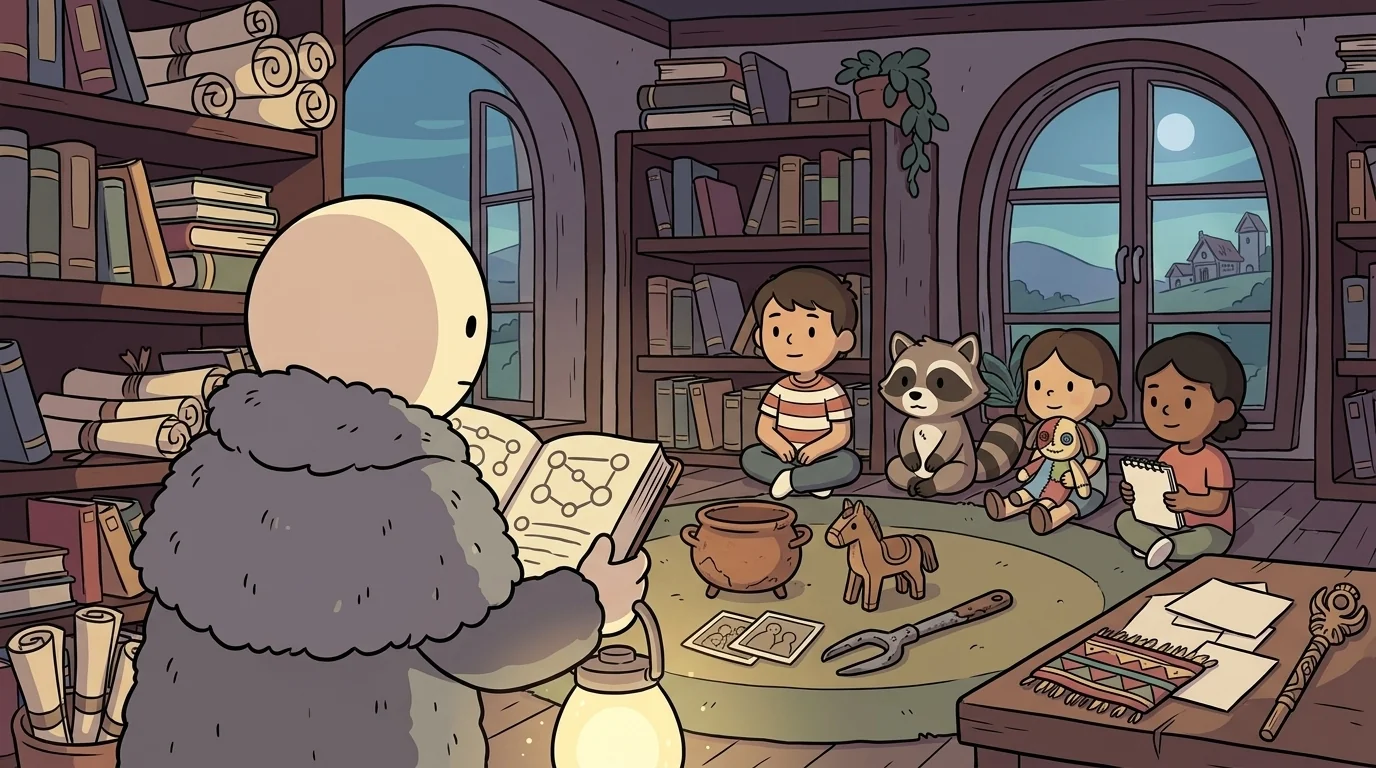
In her quiet archive, the Chronicler teaches how to recover a silenced story — gently, and honestly. First, she teaches who gets left out, and why it wasn't their fault: "The people whose stories vanish are usually the ones who were kept from writing — the enslaved, forbidden to read; the conquered, whose records were destroyed; women, left off the official rolls; Native peoples, whose careful spoken histories were dismissed; the poor, thought not worth writing down. Their silence was done to them by power. It was never because their lives mattered less." Then she teaches how we can still find them: in oral traditions — stories carried mouth to mouth, generation to generation, precious and true; in the ground — a cooking pot, a child's toy, a worn tool dug up, each one a person's real day; in family stories and songs kept alive at home; in forgotten records tucked in the margins of the official ones. And she teaches it with care: she credits the communities who kept these stories alive, by name and with thanks; she never turns a silenced person into just a sad lesson, but honors them as a whole, real human being; and she frames the unfairness structurally — as something power did, never something the forgotten should feel ashamed of. "When we recover a voice," she says, "we don't do it for pity. We do it for respect — so that a person who was pushed out of the story gets, at last, to be counted back in."
"Isn't it sad work," a student asked her once, "looking for people who were almost forgotten?"
The Chronicler's voice went soft, and her eyes grew a little bright. "There is a warm ache to it," she admitted, "for every person the big books left out." But then she smiled. "And here's what carries me: when you go looking for a story nobody saved, and you finally find even a scrap of it — a name, a song, a cooking pot in the dirt — something in your own chest lifts. You feel it: there you are. I found you. You're not forgotten anymore." That gladness — the quiet, steady, someone-brought-back feeling, the ache turning into hope right in the middle of her chest — was the whole reason she carried the lantern, and the very thing she most wished to hand, gently, to anyone willing to go looking too.
The ChronoQuest ensemble
The Chronicler-of-the-Defeated is part of ChronoQuest's distributed-narrative cast. Each character embodies a different curricular primitive; together they teach the full subject.
-

The Cartographer
Frame-setter — where + when before what + why; methodological starting point
-

The Witness
Primary-source lens — what did people THERE see + write?
-

The Storykeeper
Oral-tradition lens — multi-tradition keeper-archetype; invented + non-mascotizing
-

The Trade-Wind
Connection lens — what moved between civilizations? goods, ideas, diseases
-

The Counter-Voice
Critical-analysis lens — who benefits from this version? historian's method, NOT cynicism
-

The Translator
Cross-language + cross-meaning lens — how do concepts travel between cultures?
-

The Question-Asker
Meta-inquiry lens — what question are we actually asking? late-arriving capstone guide
-

The Thread-Puller
Cause-and-consequence lens — follow the thread back to its causes and forward to its effects
-

The Tide-Watcher
Change-and-continuity lens — hold two times side by side and mark what shifted and what stayed