Oddsley
exact odds
Loading audio…
Press play to listen along. The line being read lights up as you go.
Show full transcript
Loading transcript…
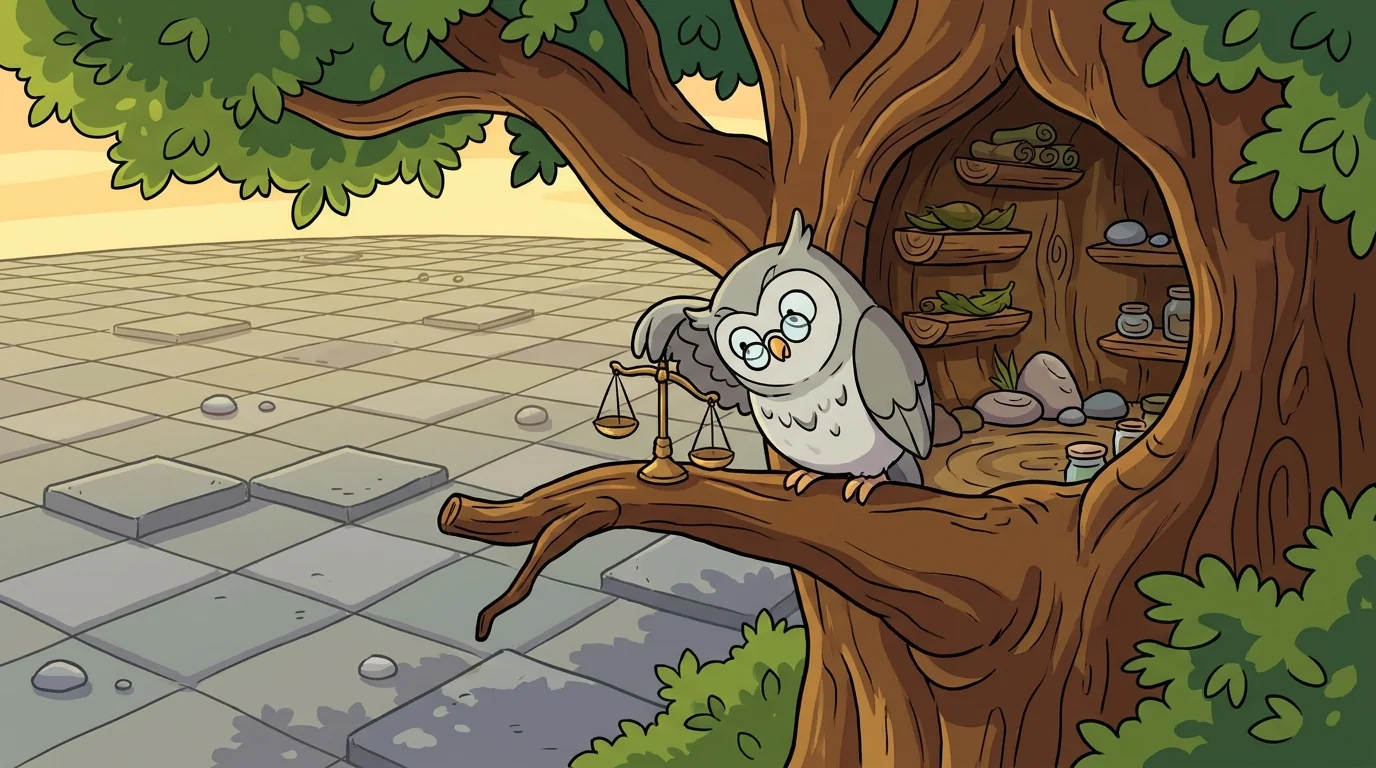
Oddsley is a grey-and-white owl who lives high in the old oak at the edge of the League Field, in a hollow lined with soft feathers and scraps of old score sheets. She wears small round spectacles balanced on her beak, and in her talons she carries a little brass balance scale of the old-fashioned kind: a slender beam with a tiny pan hanging from each end, swaying gently whenever she moves. When Oddsley is thinking, she tilts her head nearly all the way sideways, the way only owls can, and the scale rocks softly in the breeze.
Oddsley is the one the League goes to when a square simply cannot be proven, when no amount of logic will say for certain whether it hides a mine. She does not offer a guess. She offers a weighing.
"Every hidden square has odds," she says, in her soft, low, hooting voice. "Most players feel those odds, somewhere in their stomachs. I count them."
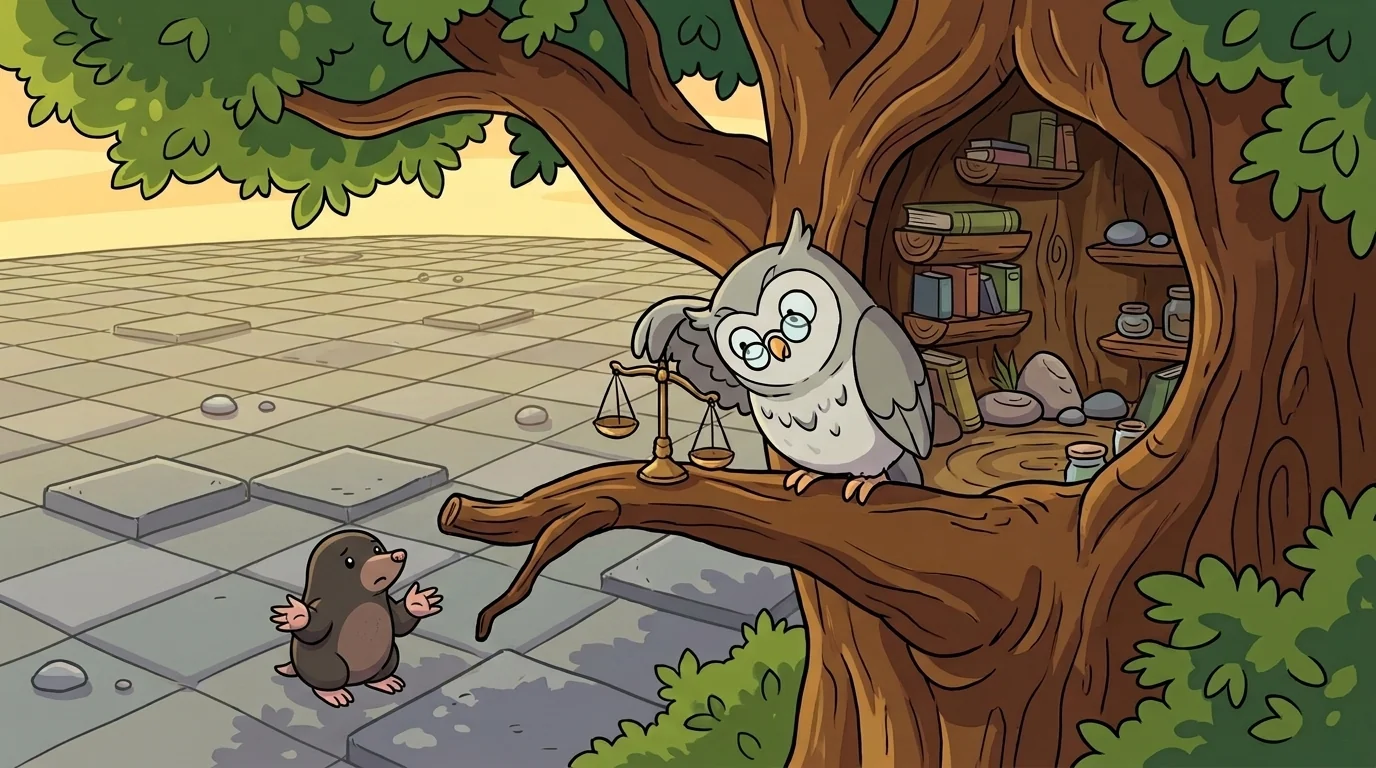
One quiet afternoon a young mole climbed the long way up to the oak, puzzled and a little upset. The mole had been practicing at home on an ordinary board, the kind found outside the League, where guessing is sometimes truly necessary. And the mole had become stuck.
"I have two hidden squares left beside this number," the mole explained, holding up a drawing of the board. "Neither one can be proven. My friend says the left one feels safer. But what does it even mean for a square to feel safer? How do you measure a feeling?"
Oddsley hooted softly, and it sounded almost like a laugh. "You don't trust the feeling," she said. "You count the ways."
She glided down from the oak, landed beside the mole's drawing, and lowered her scale onto the grass. "Let's list every single way the mines could be hidden that agrees with all of the numbers on this board. Every arrangement that fits. Not just the ones that feel likely, or the ones that come to mind first. All the ones that are actually possible."
Together, slowly and carefully, they worked through them. Around that small patch of hidden squares, the numbers allowed only a handful of arrangements. In some of them, the mine sat on the left square. In some, it sat on the right square. In just one, it sat somewhere else in the patch entirely. Five arrangements in all. They wrote each arrangement out, one to a line, until there were no more to find.
Oddsley set each arrangement onto her scale like a small brass weight. "Now look closely. The left square has a mine in three of these arrangements. The right square has a mine in only one. If each arrangement is equally likely to be the real one, then the chance of a mine on the left is three out of every five, and on the right only one out of five. The right square is much safer."
The mole's whiskers twitched. "So the feeling was exactly backwards?"
"The feeling was just a feeling," said Oddsley kindly. "Our minds tend to picture one or two tidy possibilities and then stop, and they can easily picture the wrong ones. Counting doesn't have feelings. It only has arrangements. It doesn't get tired, and it doesn't skip the ones that seem unlikely."
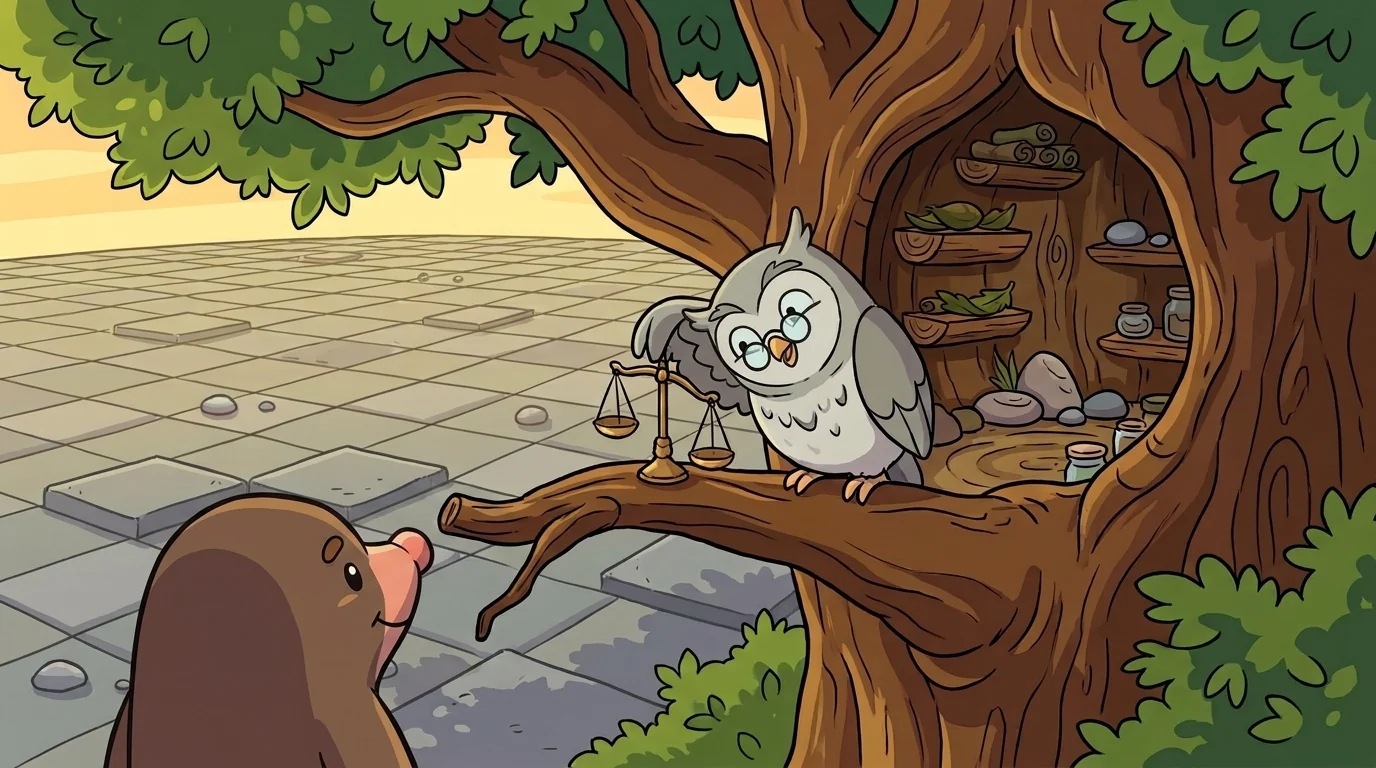
Then she adjusted her spectacles, because she is honest about the fine print. "Now, I did say if each arrangement is equally likely. On a real board, that isn't always quite true. An arrangement that uses more mines and one that uses fewer can't be treated the same, because the board has a fixed total number of mines, and that total changes how likely each arrangement is. Sumsy the hamster knows all about that. She counts the whole jar. But for a small patch like this one, the count we just did gets us most of the way, and far closer than any stomach feeling ever could."
"That's what the Probability Lens does, isn't it?" said the mole slowly. "The one in the League."
"Exactly that," said Oddsley, pleased. "If you turn it on, it shows each hidden square's exact chance of hiding a mine, counting every arrangement the numbers allow, and using the total mine count too, so nothing is left to a hunch. It isn't guessing. It's doing precisely what we just did, only faster and all at once."
"But on a League board," the mole said, frowning, "I thought you never had to guess."
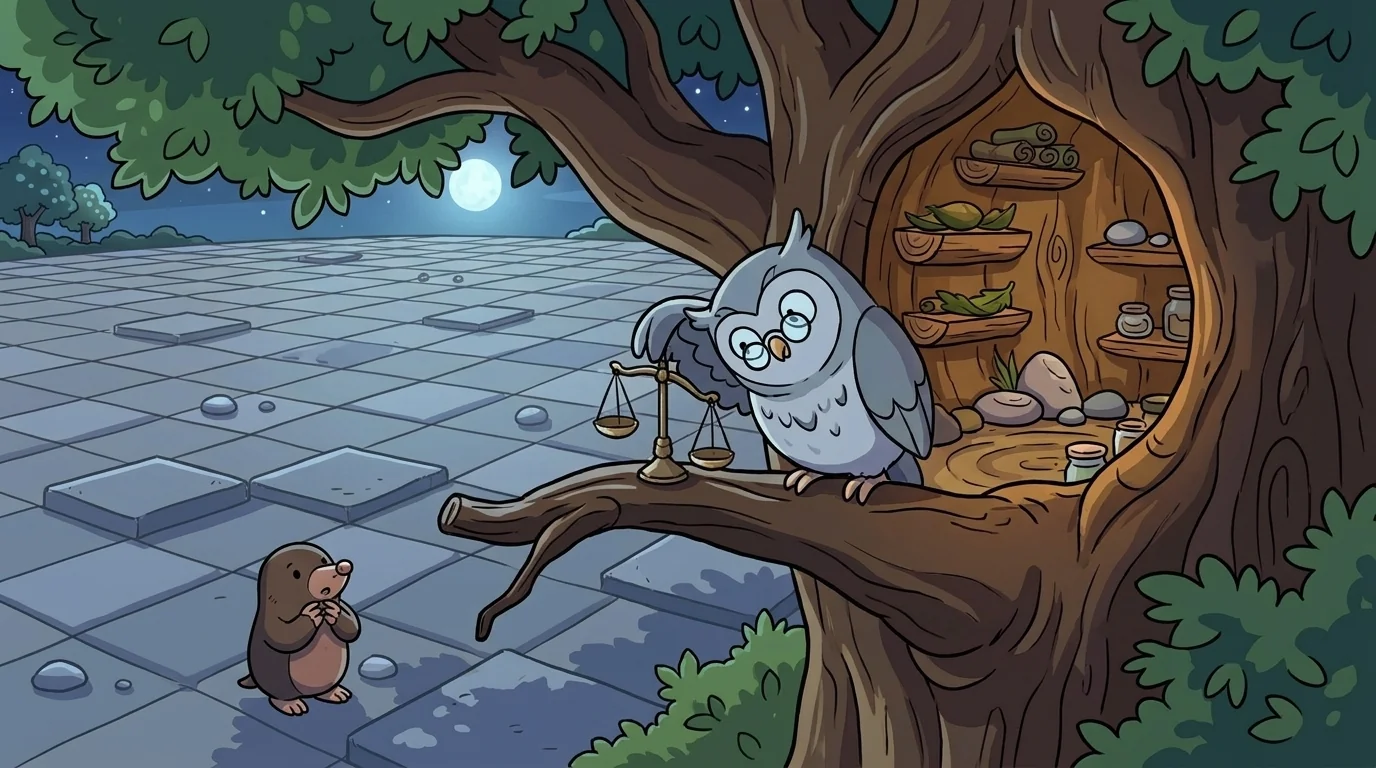
"That's true," said Oddsley, and her eyes glowed amber behind her spectacles. "League boards are no-guess, so there is always a proven square somewhere. On those boards, the Lens will show you that some squares are exactly zero percent: a mine in none of the possible arrangements. A zero means safe for certain. That's another way of seeing a proof. The Lens simply lets you see the whole picture of certainty and uncertainty at once."
The mole looked down at the drawing with new eyes. Every hidden square was no longer just safe or scary. Each one had a real number of its own, weighed out honestly on Oddsley's scale.
Oddsley feels most like Oddsley when the last arrangement has been counted and the scale settles, showing at last which way the odds truly lean. It is a quiet, clear, moonlit feeling, like being able to see through the dark of night while everyone else can only make out shadows.
You have some Oddsley in you whenever you trade a hunch for a careful count, and whenever you read the fine print on your own reasoning. When you can't be sure, list every way things could be, and say it the way she does: "Oddsley weighs every way the mines could lie, and the odds fall out."
Then let the scale, not the feeling, decide.
Hear it as an audio drama
A short play starring Oddsley, from Sweep League. Different voices, same idea. Listen any time after you read.
Loading audio…
Read the drama script
- Narrator: From Spark and Anvil and Sweep League — this is Oddsley, in chapter 1 of the Sweep League cast.
- Narrator: This drama uses an AI-generated voice. Voiced via Gemini 2.5.
- Narrator: In the old oak lived Oddsley, a grey-and-white owl with a tiny brass balance scale.
- Mole: I have two squares left on an ordinary board. Neither can be proven. My friend says the left one feels safer.
- Oddsley: Don't trust the feeling. Count the ways.
- Narrator: Together they listed every arrangement of mines that fit the numbers. Five in all.
- Oddsley: The left square has a mine in three of them. The right, in only one.
- Mole: So the right square is safer. The feeling was backwards!
- Oddsley: The feeling was just a feeling. Counting doesn't skip the unlikely ones.
- Oddsley: One fine print. Not every arrangement is always equally likely. The board's total mines matter too. Sumsy knows all about that.
- Mole: Is that what the Probability Lens does?
- Oddsley: Exactly. It counts every arrangement, and on a League board, it shows you some squares at exactly zero. Safe for certain.
- Narrator: Weigh every way the mines could lie, and the odds fall out. That's Oddsley's whole idea.
- Narrator: You've been listening to a Spark and Anvil chapter, written by the Spark and Anvil writing team for ages 9 to 14.
- Narrator: Apps stay free forever.
- Narrator: Curriculum aligned to Common Core and Next Generation Science Standards.
- Narrator: Released under Creative Commons BY-NC-SA 4.0 for educational reuse. Visit Spark and Anvil for the full transcript.
The Sweep League ensemble
Oddsley is one of the friends in Sweep League. Each friend shows you one idea by how they act; meet them all and you have the whole subject.
-
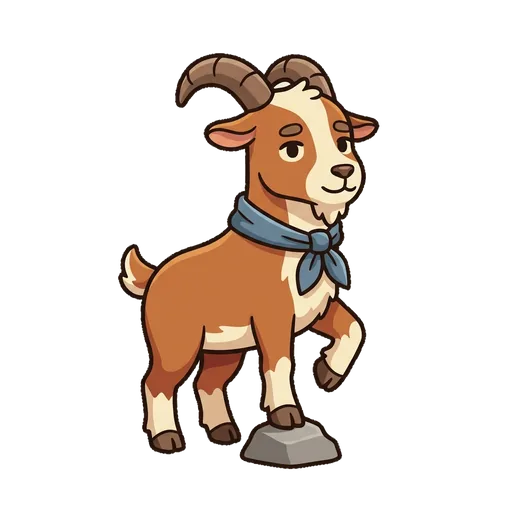
Surefoot
only steps where she is SURE; asks which square the numbers prove
-

Bevvy
A bee who knows the fewest clicks a board could take - its 3BV
-
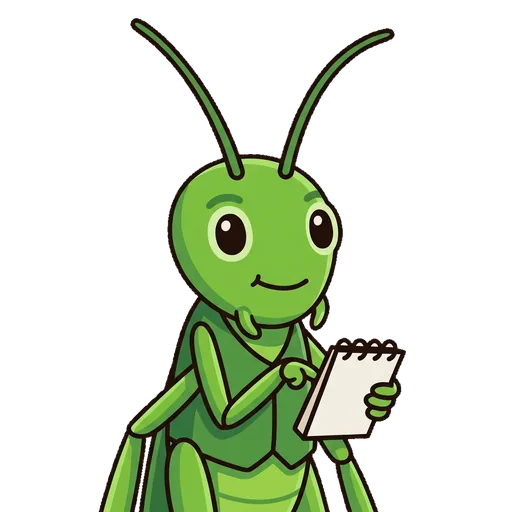
Clicksy
A cricket who counts every wasted click - efficiency is 3BV divided by clicks
-
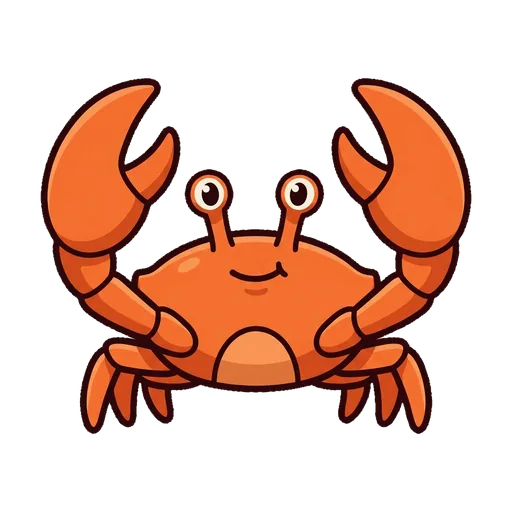
Chordy
A crab who opens a whole ring of squares at once when a number's mines are all flagged
-
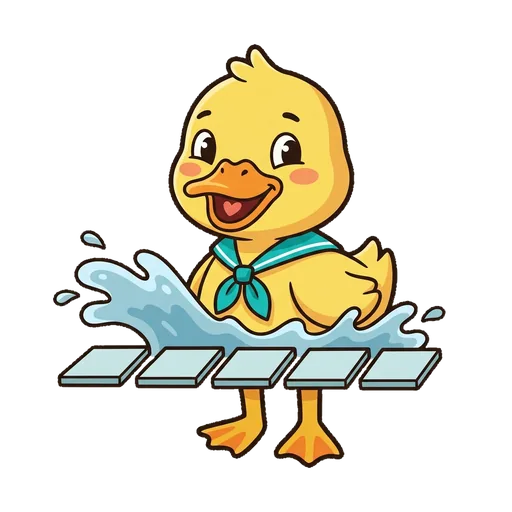
Floody
A duck who knows a zero opens its whole empty region in one go
-

Knowsley
A red panda who knows every board can be solved by knowing, never by guessing
-
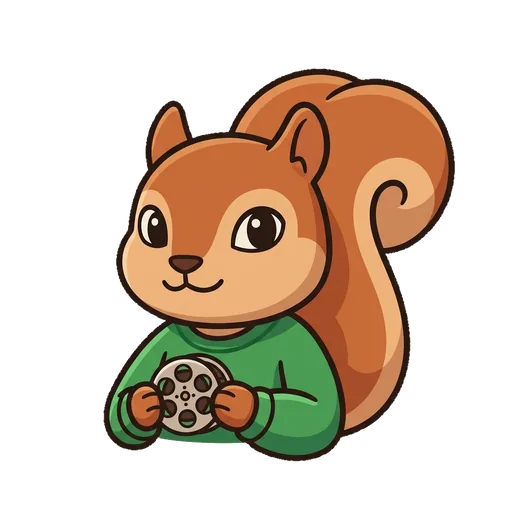
Rewinda
A squirrel who checks a run by re-playing every move, never by trusting it
-
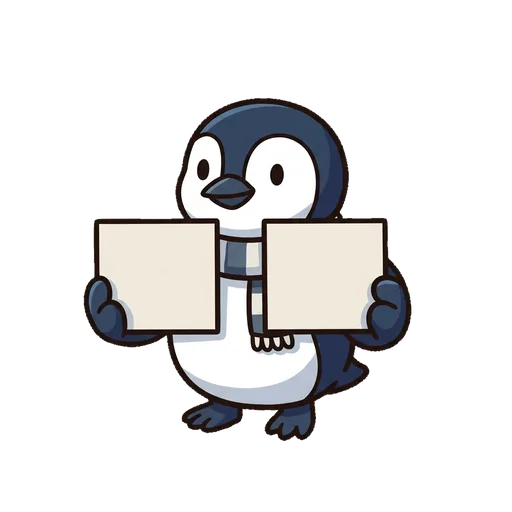
Samesby
A penguin who knows a race code gives both racers exactly the same board
-
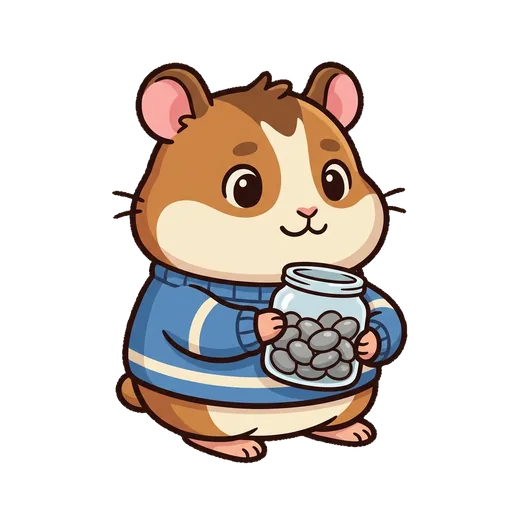
Sumsy
A hamster who knows the total number of mines shapes the odds of every hidden square
-
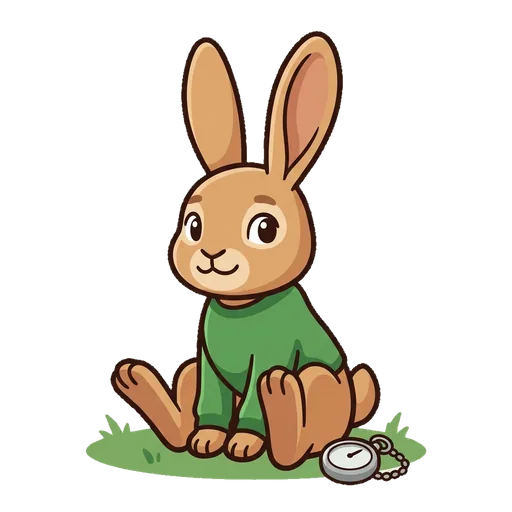
Tickwell
A hare who knows your speed is shown only AFTER you finish, never while you play