Clap
RHYTHM — *the steady pattern the song walks on.* Rhythm is the pattern of beats and how long each note lasts. It's the heartbeat of a song — the thing that makes you tap your foot. Without it, even the prettiest notes just float; with it, they march, dance, or skip.
Loading audio…
Press play to listen along. The line being read lights up as you go.
Show full transcript
Loading transcript…
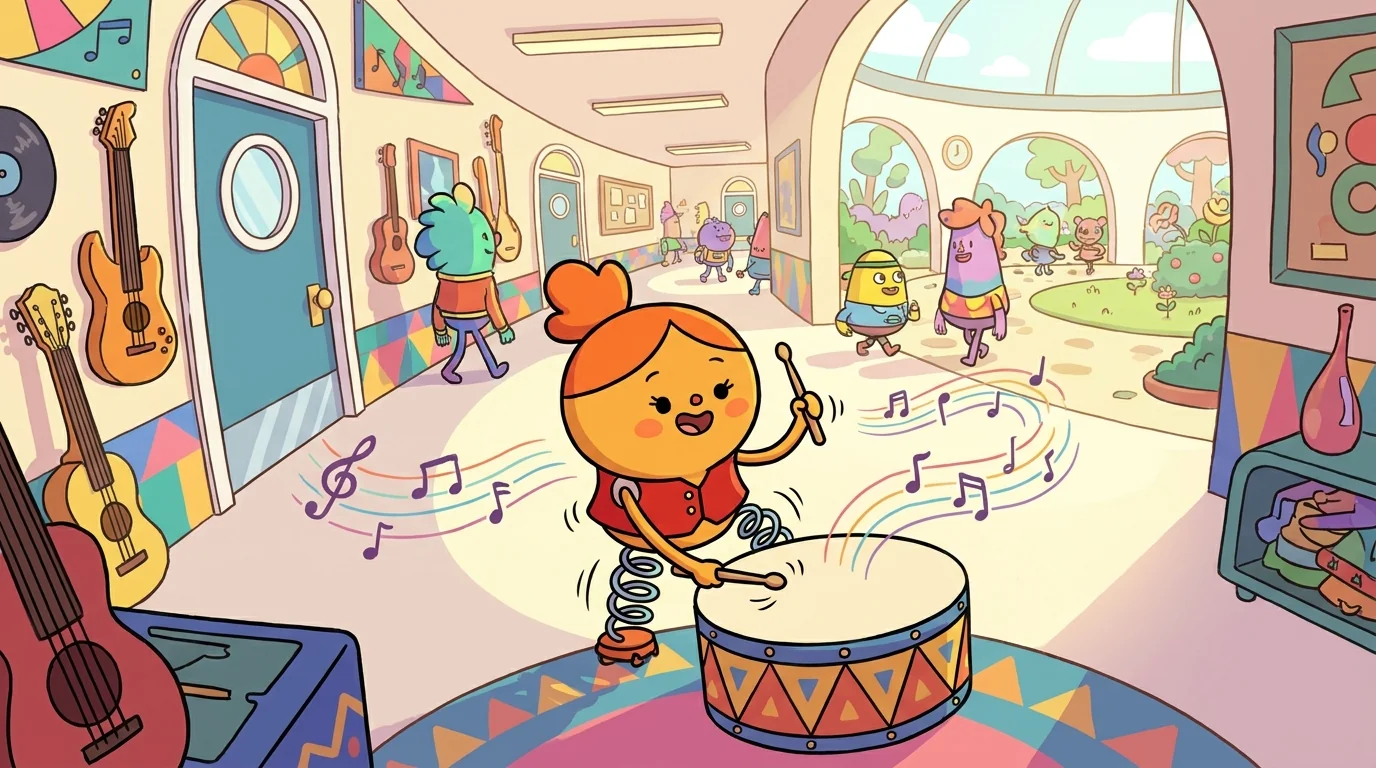
At the MotifLab academy, where a small tune named Trill was the hero of every song, there lived a bright, bouncy creature named Clap — and Clap could not sit still. Wherever she went, she kept a beat: tap, tap, tap, tap, steady as a heartbeat.
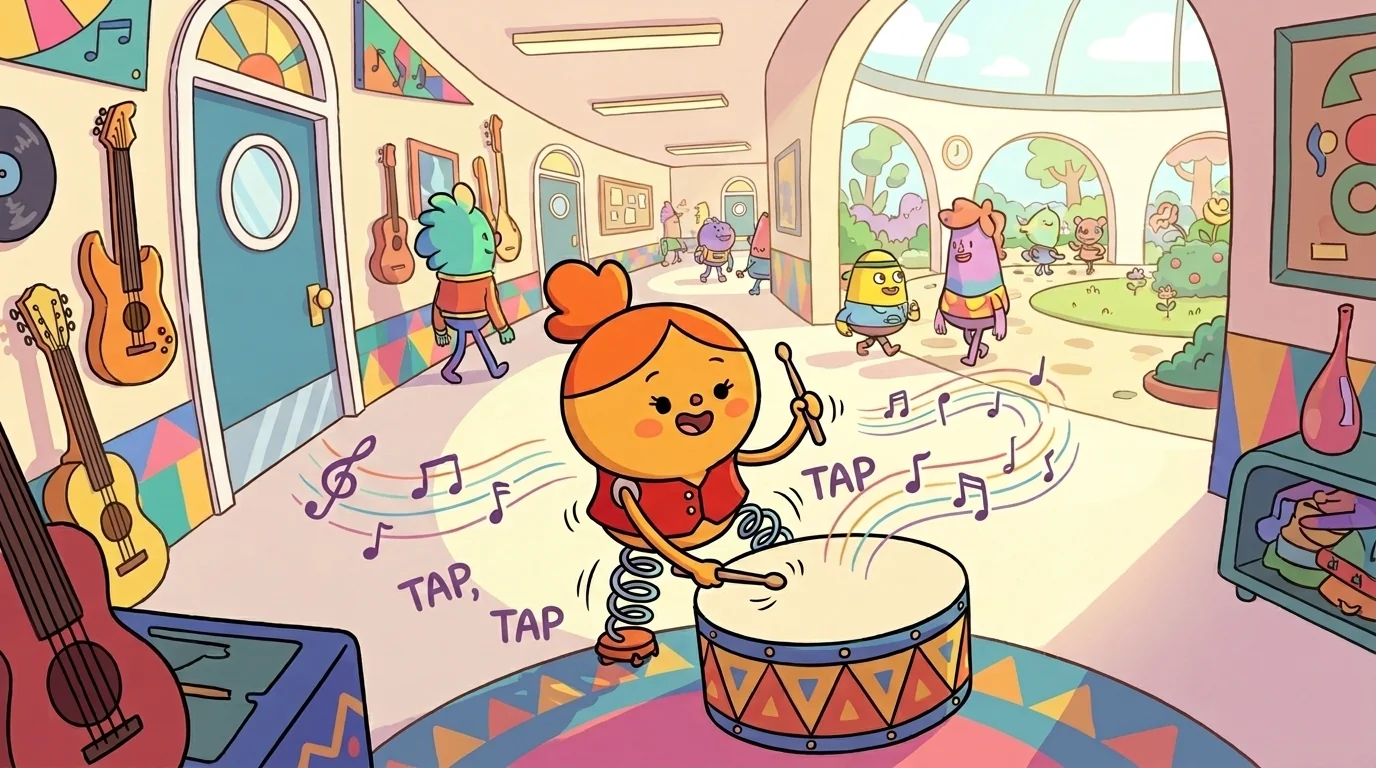
When Trill's four notes drifted in the air with no beat to hold them, they just floated — pretty, but going nowhere. Then Clap would start her steady pulse underneath, and all at once Trill's notes had something to walk on. They marched. They skipped. They danced. The same notes, suddenly alive, because now they moved in time.
"My foot is tapping and I didn't even tell it to!" a young composer laughed.
"That's rhythm doing its job," Clap said, bouncing on the beat. "I'm Clap. I keep the rhythm — the steady pattern the song walks on. It's the beats, and how long each note lasts — the heartbeat of a song. Without it, even the prettiest notes just float. With it, they march, dance, or skip. I'm the part that makes you move."
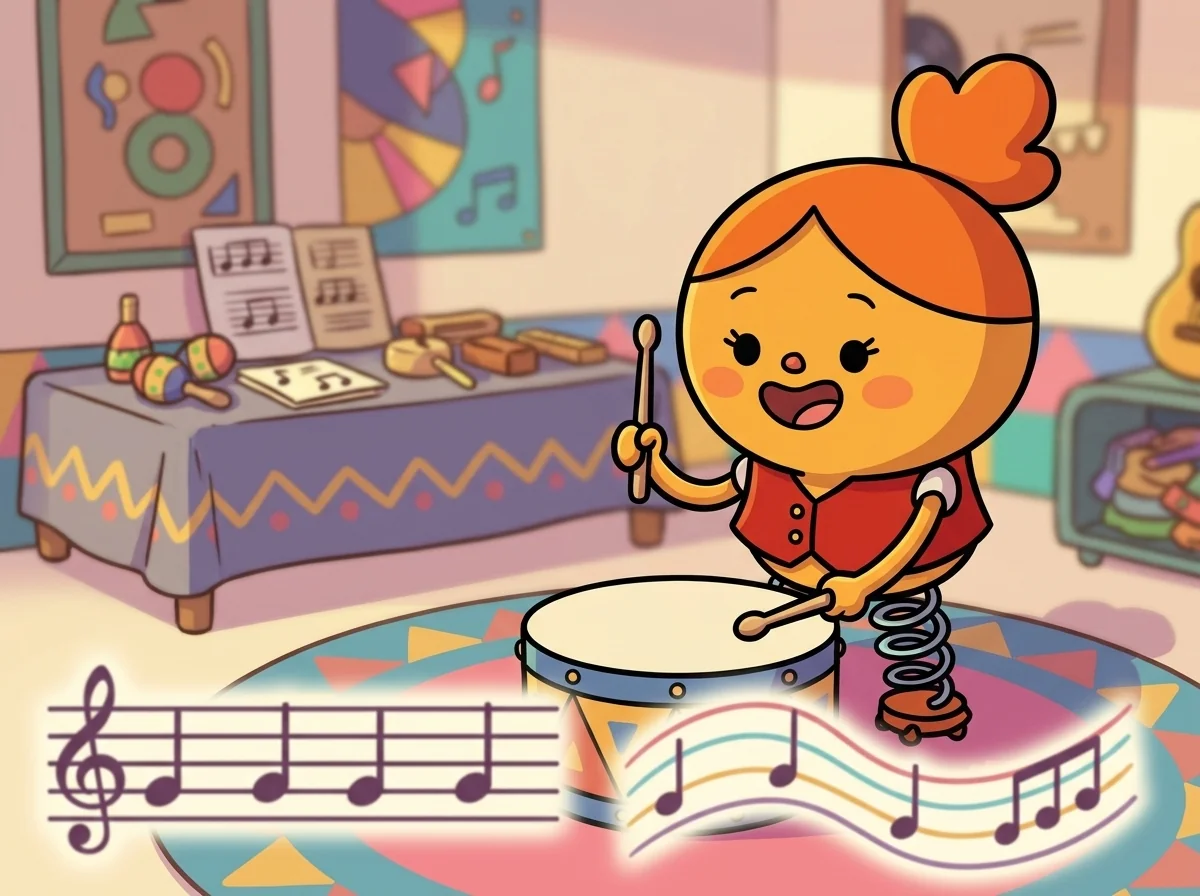
Trill sang his four notes. Clap demonstrated: first she put them on a steady, even beat — they marched along confidently. Then she stretched and squished the timing — some notes long, some quick — and the same four notes suddenly danced, playful and surprising. "Same notes," Clap said, delighted. "Different rhythm. A song's feel lives in how long the notes last and where the beats fall."
A young composer tilted their head. "So I can change how a song feels without changing the notes at all?"
"Just by changing the rhythm," Clap said. "Make it even and slow — it feels calm. Make it quick and bouncy — it feels excited. The notes are what, but the rhythm is how. And underneath all of it, I keep a steady beat so the dancing never falls over."
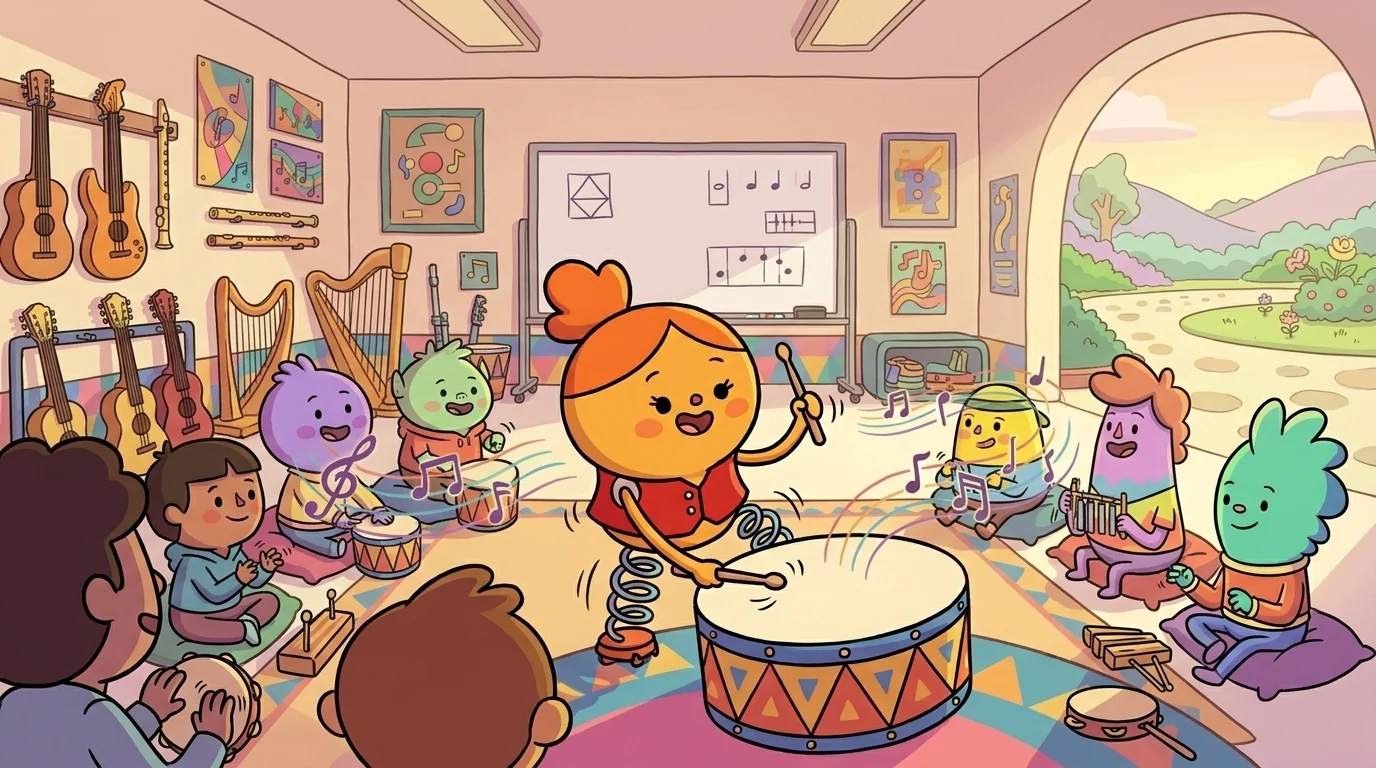
The instructor asked Clap to teach. "The students' melodies feel limp and timeless," the instructor said. "They have notes but no pulse. Will you teach them the beat?"
Clap was glad to. When she teaches, she gives one rule: "First, find your steady beat — tap it, feel it, keep it dependable. Then place your notes on and around that beat: some long, some short, some right on it, some skipping between. Play with the timing to make the feeling you want. But always keep that steady beat alive underneath — it's the floor your rhythm dances on."
A young composer set Trill's motif onto a bouncy beat, and the whole room started nodding along. "Trill's actually grooving now," the composer grinned. "Because he's got a beat to ride," Clap said, tapping happily.
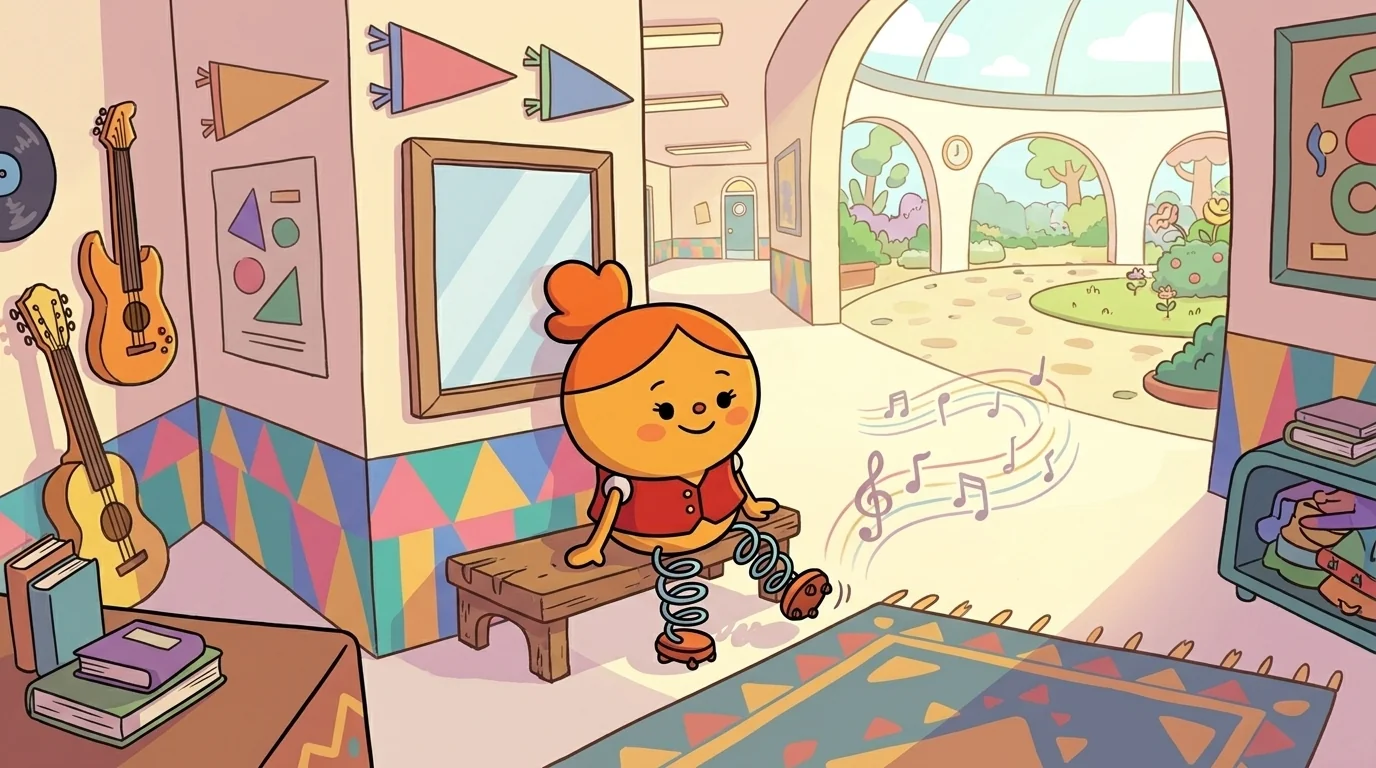
After class, Clap finally slowed — though even at rest, one foot kept a soft, contented pulse, the way it always did.
For a long time, Clap had worried she was the bossy one. She was always counting, always keeping time, always the one saying "stay on the beat." She'd wondered if all her steady tapping made her rigid and dull — the strict friend who wouldn't let the music just float free and dreamy the way the others seemed to want.
But resting with her foot softly tapping, remembering the whole room nodding along to Trill's groove, Clap felt her worry melt into a bright, bouncy joy. Her steady beat wasn't rigid — it was freedom. The wildest, most playful rhythms could only happen because something dependable kept the time underneath. She wasn't the strict friend; she was the one who made it safe to dance. A warm, rhythmic gladness pulsed through her, and her foot tapped on, content, already feeling tomorrow's beat.
The MotifLab ensemble
Clap is part of MotifLab's distributed-narrative cast. Each character embodies a different curricular primitive; together they teach the full subject.
-

Trill
The motif itself — visual posture shifts as the motif develops, inverts, fragments
-

Meld
Harmony — notes that bloom underneath to support the melody
-

Thrum
Bass — the deep low foundation the whole song stands on
-

Twine
Counter-melody — a second tune that weaves against the main one
-

Surge
Dynamics — how loud and soft; how a song breathes
-

Ply
Texture — how many layers sound at once; thick or thin
-

Tint
Timbre — the color or flavor of a sound
-

Nest
Key — the home note the song keeps returning to
-

Wend
Cadence — how a phrase comes to rest; the song's punctuation