Crown
TROPHIC PYRAMID — *top vs. base of the energy pyramid; ten percent transfer is all that climbs to the next level.* The ecology primitive of *the pyramid has its shape because of the loss.*
Loading audio…
Press play to listen along. The line being read lights up as you go.
Show full transcript
Loading transcript…
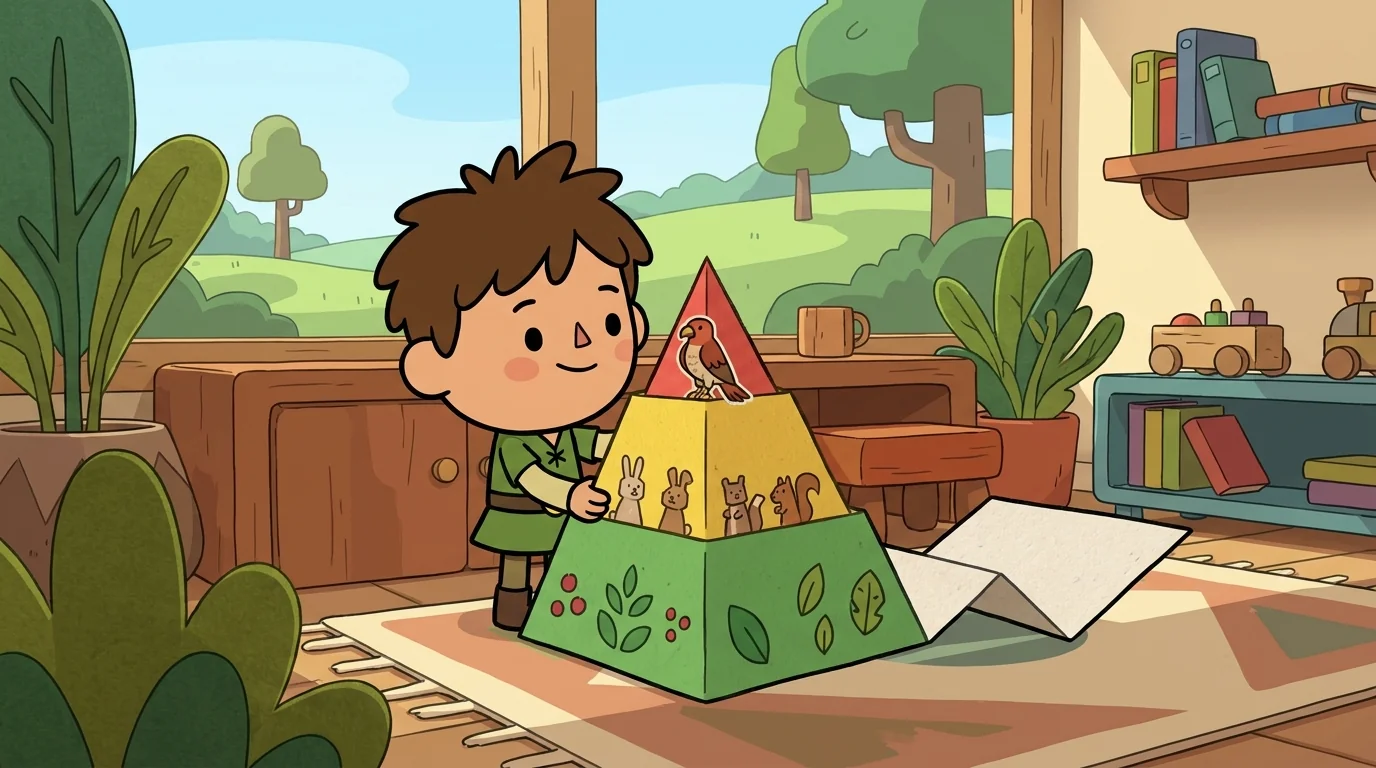
Crown crouched over the meadow with her long striped tail curled around her, counting. Ten thousand blades of grass, more or less — she stopped counting and just gestured at the green sweep of it. Then the grasshoppers: fewer, a scatter of them ticking through the stems. Then a single sparrow, hunting the grasshoppers. Then, wheeling far overhead, one hawk. She pulled the folded pyramid-card from her tail-pouch, smoothed it flat until it stood up in three dimensions, and pointed her lemur-finger from the wide green base to the single speck at the tip. "One hawk," she murmured to herself, delighted, "resting on all of that." The wideness at the bottom was the whole reason the point at the top could exist at all, and seeing it never stopped feeling like a small marvel.
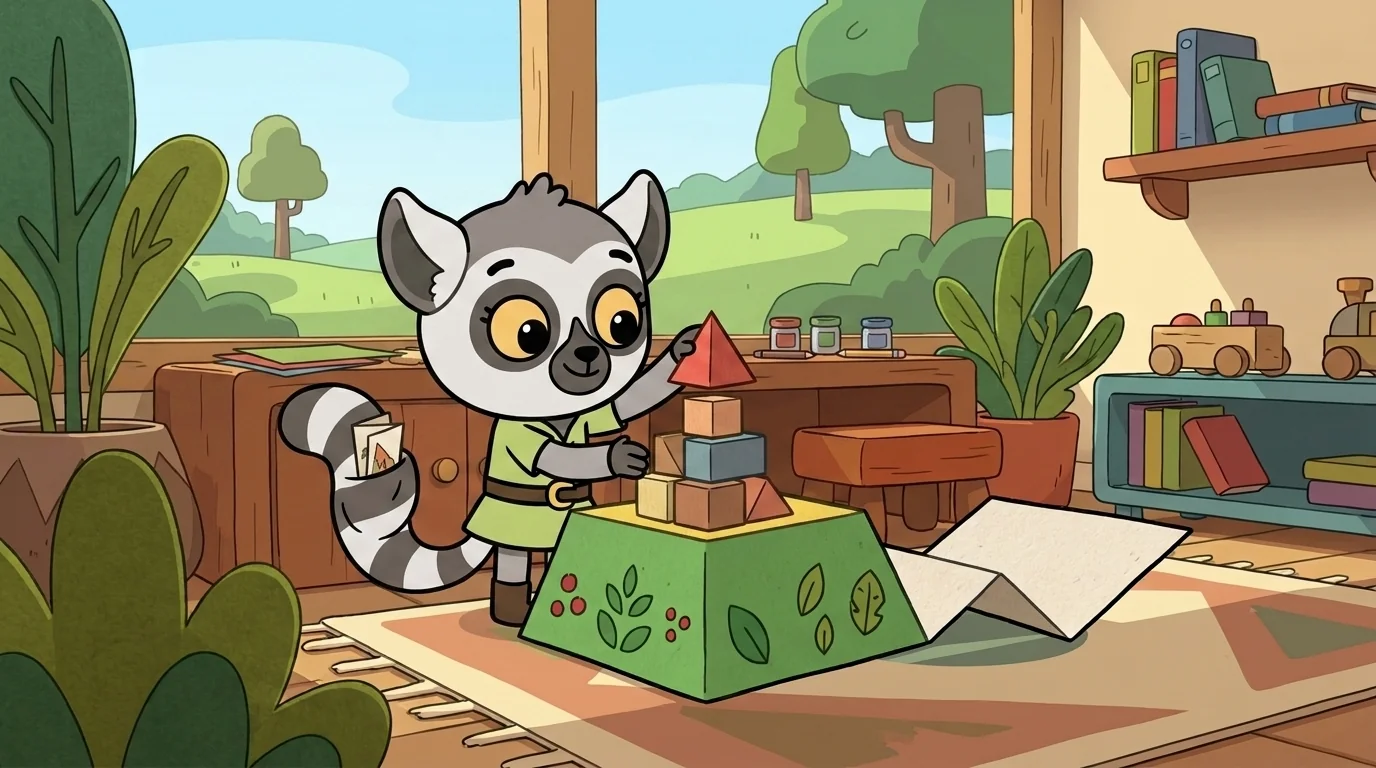
She had felt that marvel first as a child, at the harvest festival. Her family were the village pyramid-stackers, and every autumn they built a great pyramid of pumpkins and gourds in the square. The year Crown was six, they let her set the crowning squash on top.
She scrambled up proud, holding the little gourd like a prize, and set it at the peak. "I'm at the top!" she called down.
Her father laughed, not unkindly, and put one broad palm flat against the wide bottom row. "You're only up there," he said, "because all of this is holding you." He rocked the base, just slightly. The whole pyramid shuddered, and Crown grabbed the peak to steady herself, suddenly small. "Pull one pumpkin from the bottom," he said, "and your throne comes down with everything else." That afternoon she climbed back down and spent an hour just looking at the base — the fat unglamorous squashes doing the real work — and something rearranged itself in her. The top wasn't the winner. The top was the smallest thing, held up by everyone beneath.
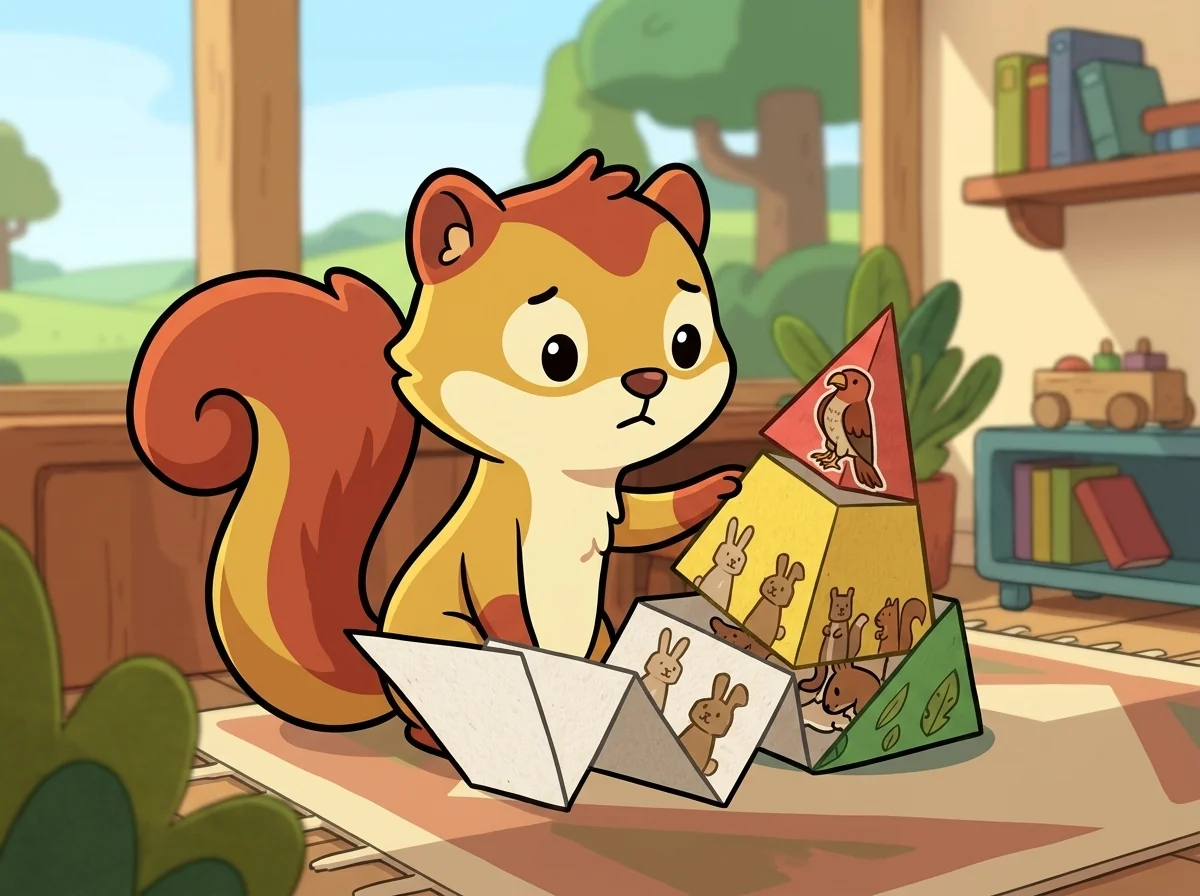
She was twenty-two when she walked to the EcoSphere academy, pyramid-card in her pouch. Terra asked her nothing about definitions. He simply pointed at a hawk circling the academy fields and asked, "How many?"
Crown unfolded her card on the low garden wall and answered by building it in front of him. She swept her arm across the grass — the wide base. She marked the grasshoppers, fewer. The sparrows, fewer still. And at the top, the one hawk. "It cannot be two," she said, "unless the meadow doubles. Every step up spills nine parts out of ten — into moving, into warmth, into what never gets eaten. The point is narrow because the climb is costly." Terra watched her hand travel from the broad bottom to the lonely tip, and knew she saw the shape the way it truly was — proportion, not rank. That was enough.
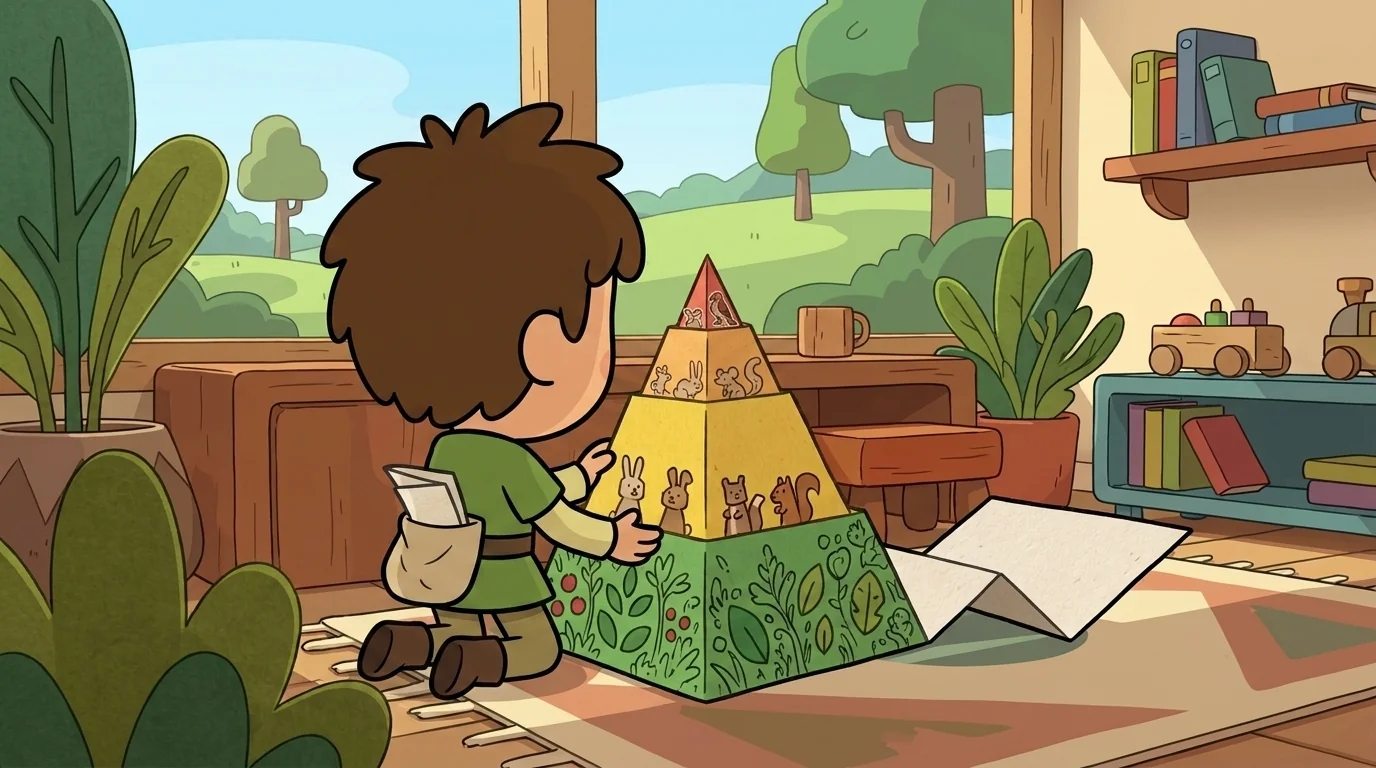
Her first workshop began with the blocks. She stacked ten wooden blocks at the base, one on top of those, and balanced a chip no bigger than a fingernail above that. Then she nudged the room to look.
"Count with me," she said. "How many levels?" A student counted the tiers — four, five. "Good. Rarely more than that. The energy runs out before you can stack a sixth." She lifted the single top block and held it up. "This is the hawk, the shark, the great cat. Every child in here wants to be this block." A few laughed. "But watch." She set it back and slid one block out of the bottom ten. The whole stack leaned, wobbled, and she caught it just in time. "Pull the grass, and the hawk falls. The base is the source. Take the base, take everything."
A girl frowned. "But the hawk's still the strongest. It's still on top."
Crown tilted her head, warm. "It's on top the way the little chip is on top — because it's what fits up there, once the cost of the climb is paid. Not a king. A survivor of the spill." She showed them the strange ocean case too, where tiny plankton weigh less than the fish that eat them, yet feed them all by breeding fast — proof that the shape can trick you, and that counting carefully beats guessing. "Sometimes the weight-picture and the energy-picture disagree," she said. "That's when you slow down and count, not rank." She reminded them that her friend Chain traced the same energy as a sequence, arrow to arrow, while she showed it as a stack — one flow, seen two ways.
"You can still love the hawk," she added, gently. "Love it as a marvelous, constrained thing, balanced on a mountain of quiet lives. That's better than loving a king."
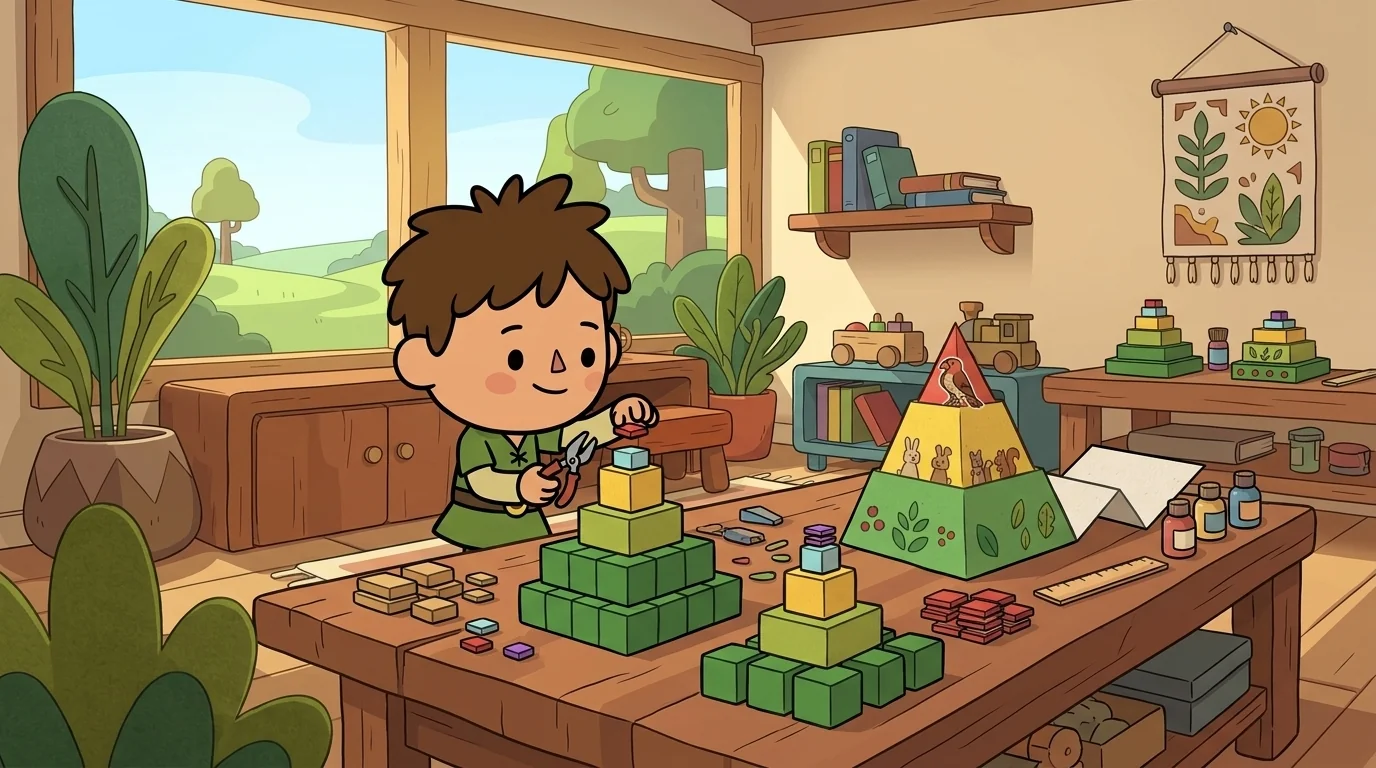
After the others left, a small student stayed behind, staring at the lonely top block. "I always wanted to be that one," he admitted.
Crown rested her fingers on the wide warm bottom row and felt how steady it was. "For a long time so did I," she said. "Then I saw who was holding it up." She watched his eyes travel down the stack, from the tip to the broad base, and saw the exact moment it landed — the moment he stopped staring up and started to feel the weight of everyone below. A quiet gladness settled in her chest, the same one she'd felt at six with her palm on the pumpkins. That soft, steadying feeling, she thought, watching him understand, was worth more than any apex.
The EcoSphere ensemble
Crown is part of EcoSphere's distributed-narrative cast. Each character embodies a different curricular primitive; together they teach the full subject.
-
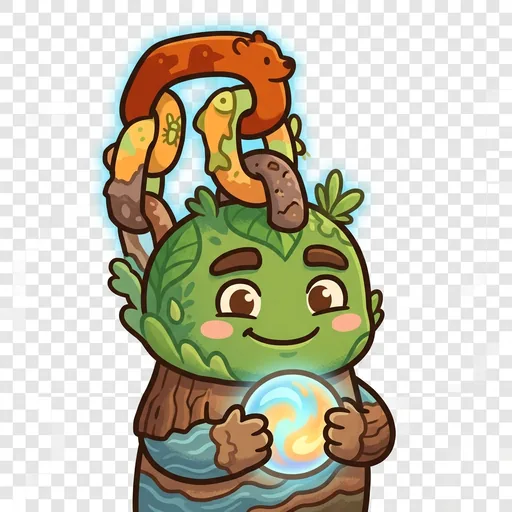
Chain
Food chain / trophic flow (energy moving up levels)
-
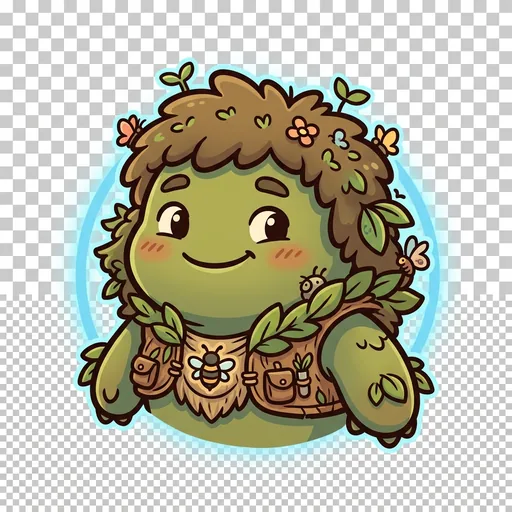
Niche
Ecological role / job-in-the-ecosystem
-
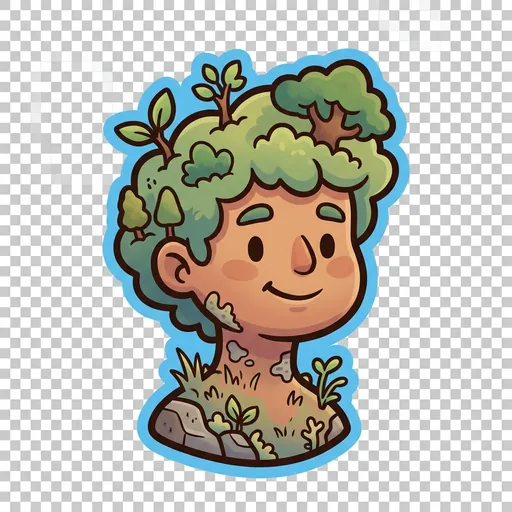
Phase
Succession / ecosystem change over time (primary, secondary, climax)
-
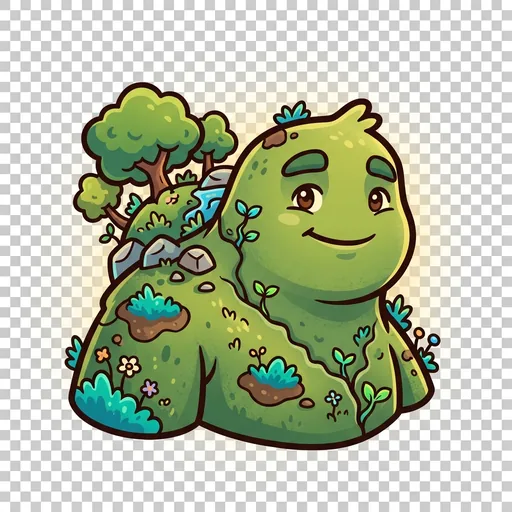
Brink
Tipping points / ecosystem thresholds / resilience-or-collapse
-
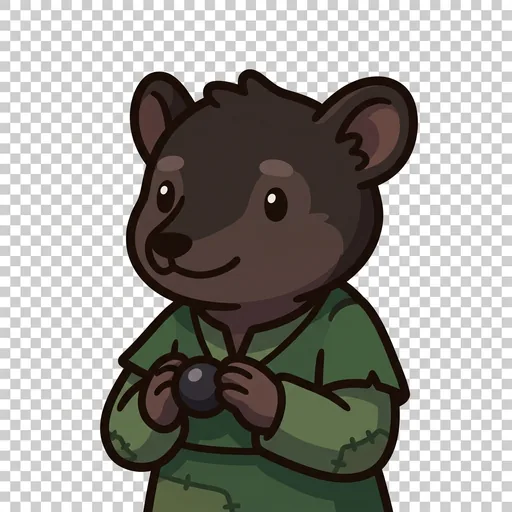
Cinder
Carbon cycle — the same carbon moves round and round: air to plant to animal to air
-
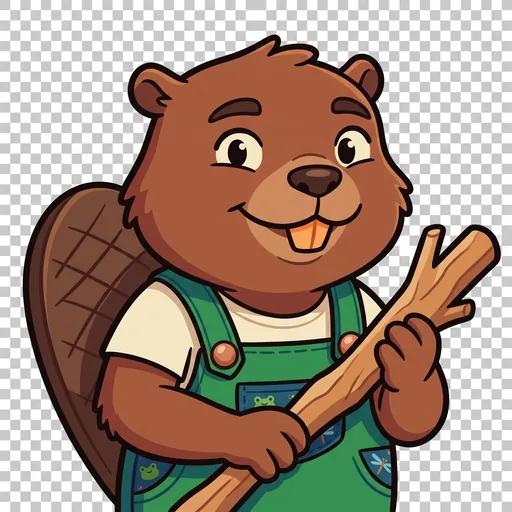
Lodge
Keystone species — one species that holds a whole ecosystem together; remove it and the web unravels
-
Mulch
Decomposition — what dies doesn't leave; it is broken down and handed back to the living
-

Rill
Water cycle — the same water goes round forever: sea to sky to rain to stream to sea
-
Sprawl
Invasive species — a species carried somewhere new, where nothing holds it back