Aim
LINE PURPOSE — every line of dialogue should be trying to DO something: to ask, to dodge, to persuade, to wound, to comfort, to hide. A line that only passes along information is dead weight. Real talk is people using words to get what they want.
Loading audio…
Press play to listen along. The line being read lights up as you go.
Show full transcript
Loading transcript…
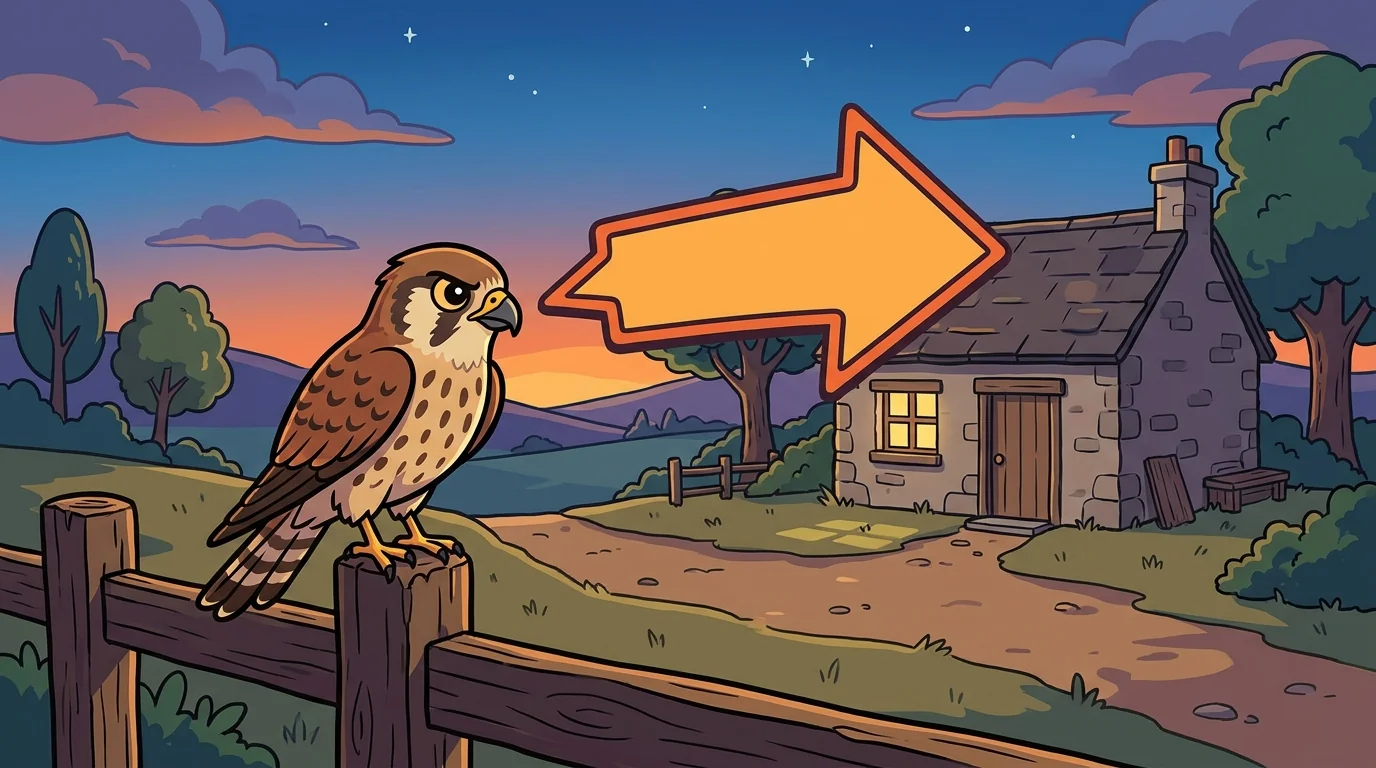
The wind off the ridge tasted of damp pine and early frost as Patter climbed the gravel path. His boots crunched against the loose stones, the sound sharp in the quiet evening. Up ahead, perched on a silvered cedar fence post, sat Aim, a small kestrel with feathers the color of slate. Her dark eyes were perfectly still, tracking the movement of a dry leaf as it scraped across the cold dirt.
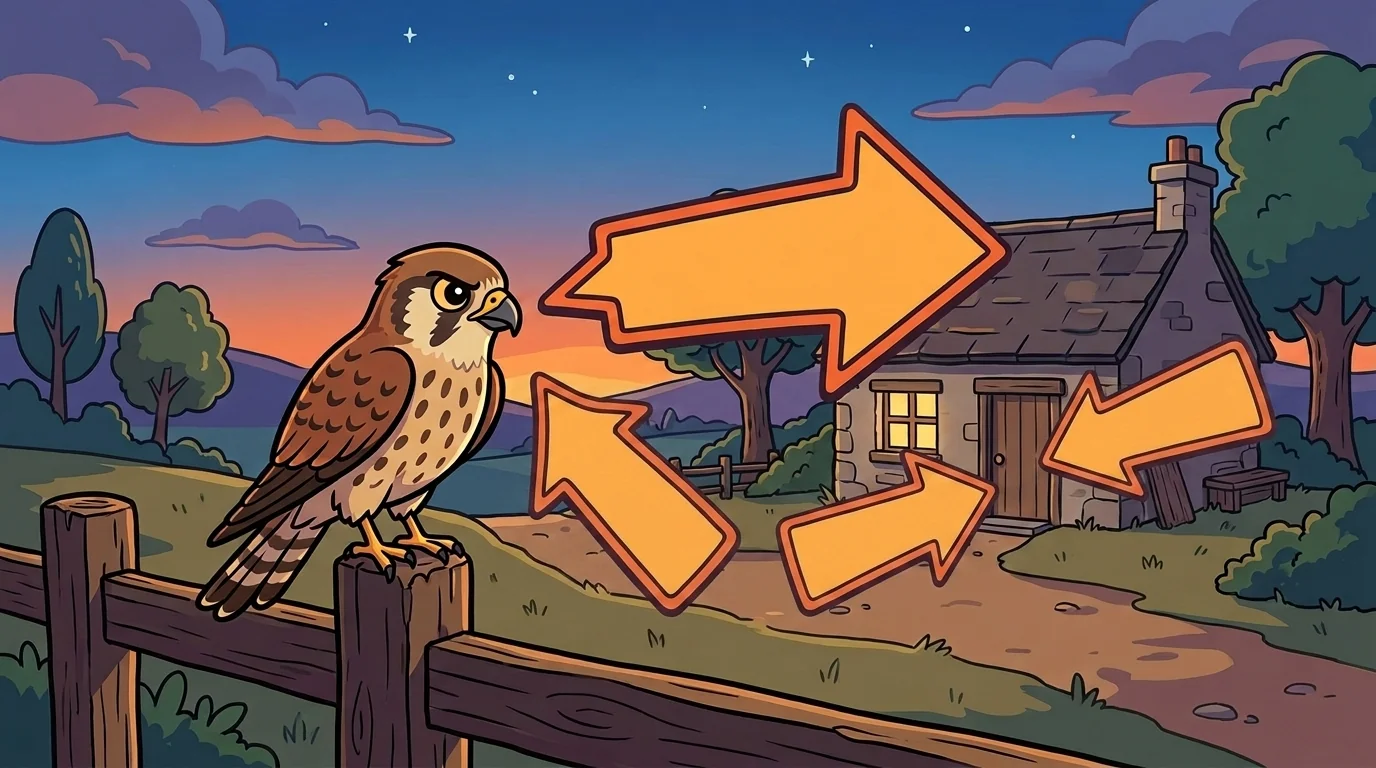
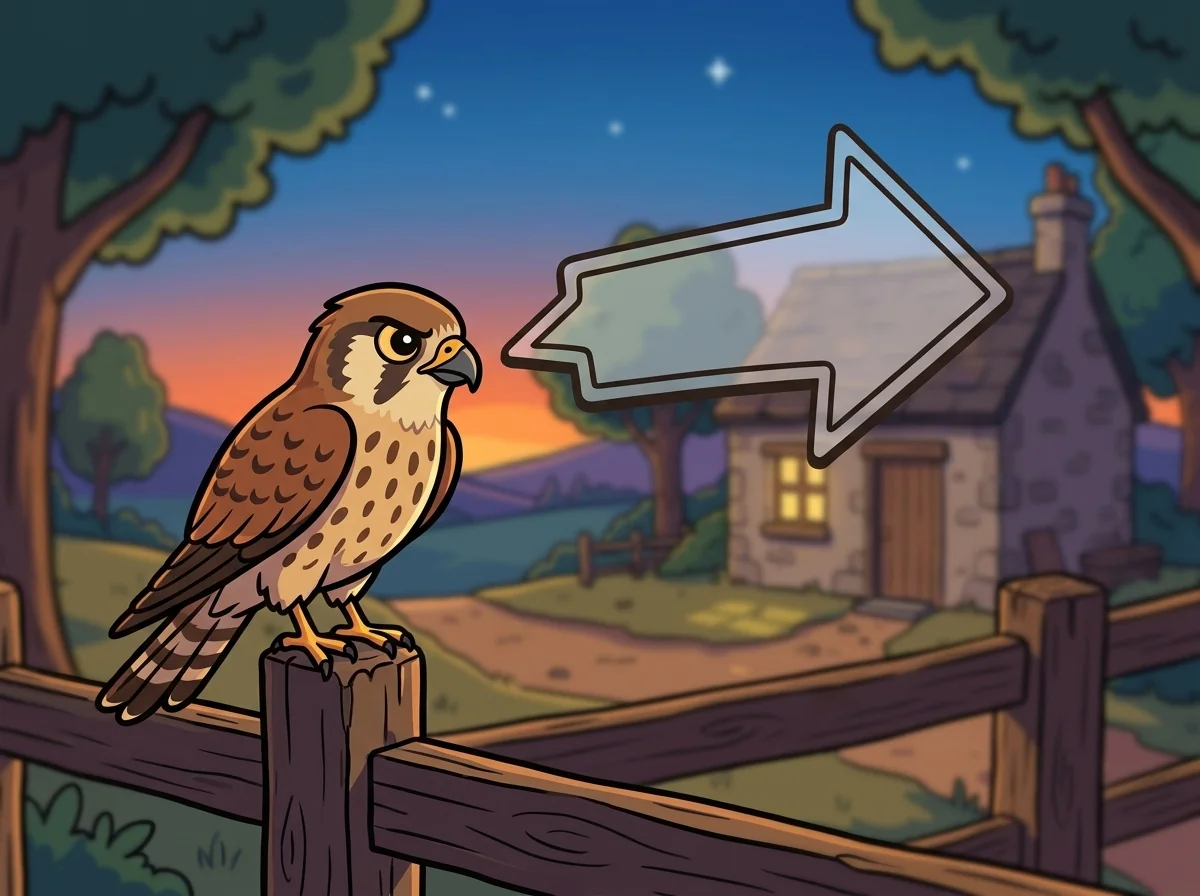
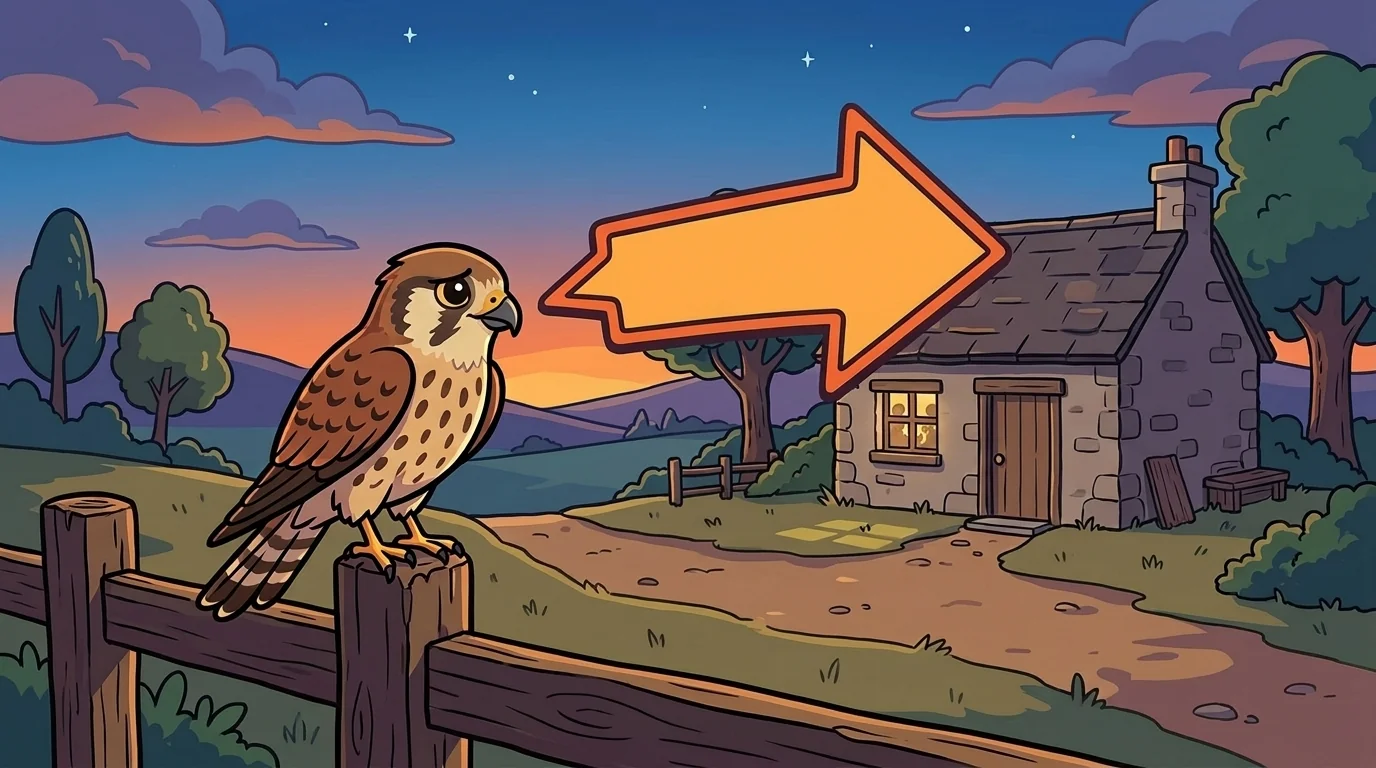
When Patter approached, she did not turn her head, but her speech bubble appeared in the sharp air. It was not the soft, rounded cloud Patter was used to seeing from other birds. This bubble was hard-edged and triangular, tapering to a needle-sharp point like a flint arrowhead.
"It's getting cold out here," Aim said.
It bypassed Patter entirely and pointed directly at the heavy oak door of the nearby cottage. Inside the house, a fire glowed orange behind the glass pane, throwing warm light onto the grass. The words themselves were merely about the temperature, but the arrow was aimed at a warm hearth.
Patter stopped, his hands shoved deep into his coat pockets as he studied the strange shape. "Your words say one thing," Patter said slowly, "but the arrow points somewhere else."
Aim turned her head then, her gaze sharp enough to pin a beetle to a leaf. "Every line is aimed at something," she said, her voice quiet but clear. "My name is Aim, and I keep the purpose—what a line is trying to do." She nodded toward the cottage door, where the orange light still spilled onto the dark lawn. "I didn't really want to discuss the weather, because I wanted to go inside. So that's where my words were aimed."
They watched the lane below as the twilight deepened to a bruised purple against the hills. Two figures walked slowly along the hedge, their voices drifting up the slope in the quiet air.
"Watch them," Aim whispered, her wings twitching once as she leaned forward on her perch.
A boy in a bright yellow jacket was walking slightly ahead of a girl on the gravel. He kicked a loose pebble into the ditch, his shoulders hunched against the rising wind.
"Nice jacket," the girl said, her voice small and tentative in the open space.
From her mouth, a sharp little arrow-bubble zipped through the air like a tiny dart. It did not point at the yellow fabric, hovering instead right in front of the boy's face.
"She doesn't care about the coat at all," Patter murmured, watching the glowing shape tremble.
"Not in the least," Aim agreed, her eyes tracking the light. "The arrow is aimed at I want you to like me, which is a bid for attention."
The boy did not look back, keeping his hands in his pockets as he shrugged. "I'm not hungry," he muttered, his voice flat and dismissive.
His arrow-bubble was jagged, pointing straight down the road toward his own house, away from her.
"He wants to be left alone," Patter said, recognizing the sharp, defensive angle of the point.
"Exactly," Aim said, her yellow talons tightening on the weathered wood of the post. "People rarely talk just to share facts, because they almost always talk to get something." She tilted her head. "They want to be reassured, to dodge a question, to win, or to be loved. Sometimes they just want to push someone away before they get hurt. When you know what a line is aiming at, you know what the character really wants. The words are just the bow, and the want is the arrow."
To show him the alternative, Aim puffed out her chest feathers and mimicked a flat voice.
"The capital of the country is the biggest city, and it has a river," she droned.
A speech bubble drifted from her beak, but it had no point at all. It was perfectly round, grey, and saggy, like a wet paper bag filled with heavy sand. The bubble floated for a second, then dropped into the weeds with a soft, pathetic thud.
"That line isn't aimed at anything," Aim said, looking down at the deflated shape. "It's just facts, and nobody talks like that in real life. A line with no aim is a line with no life."
The realization hit Patter like a sudden splash of cold creek water on his face. He thought of the notebooks piled high on his desk back at the schoolhouse. He remembered the endless pages of dialogue his students wrote every single Tuesday afternoon. They write lines that just deliver information, explaining things at each other like encyclopedia entries. But nobody is trying to get anything from anyone else, Patter muttered to himself.
He looked back at Aim, whose sharp eyes seemed to read his thoughts completely.
"Aim," Patter said, leaning against the fence as the first stars began to show. "I run a workshop where the kids' characters use dialogue to dump facts. They write things like, 'As you know, we are cousins, and our father is the king.' Nobody is ever trying to do anything to anyone else in their stories. Would you join us and teach them how to aim every single line?"
Aim looked down at her talons, then back at the warm light of the cottage. Patter watched her next arrow-bubble form, and it pointed directly at his chest.
"I'll come," she said, her arrow carrying the clear weight of wanting to help.
The workshop room smelled of cedar shavings, damp wool, and the sweet scent of markers. Ten kids sat around a long oak table, their notebooks open and their pencils poised. When Patter introduced Aim, she flew straight to the top of the blackboard with a flutter. Her sharp talons scraped lightly against the wooden frame as she looked down at them.
"We are here to talk about line purpose," Patter announced, writing the words in chalk.
Aim took over immediately, focusing on a young writer named Toby, who was chewing an eraser.
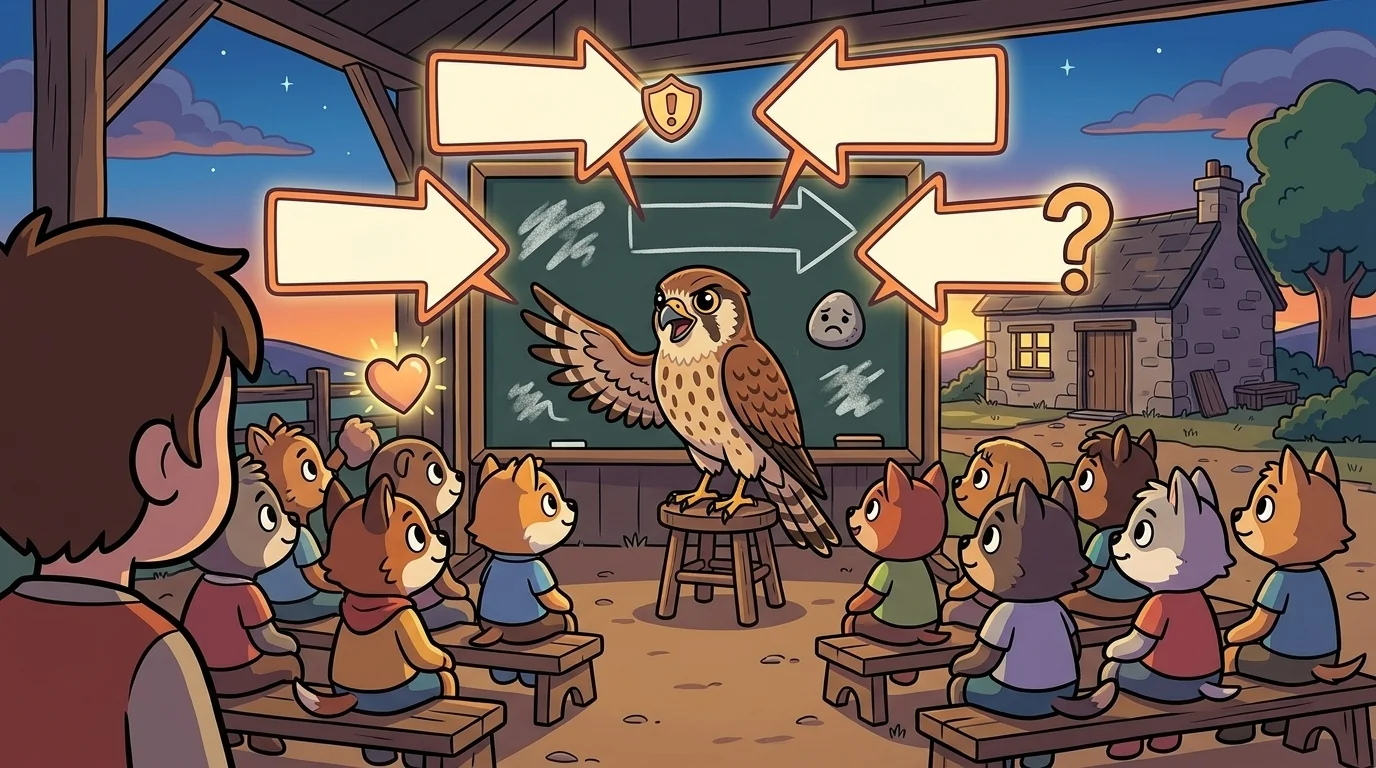
"Before you write a line," Aim said, "ask: what is this character trying to do?" She paused. "Not just say," she added, her voice cutting through the rustle of paper, "but do."
She hopped down to the table, her sharp gaze sweeping over their messy drafts. "Are they asking, dodging, bragging, or apologizing without actually saying the words?" she asked. "Are they trying to make someone love them, or trying to push them away? Once you know the goal, you aim the line directly at that target."
She picked up a piece of white chalk and wrote a sentence on the board. The chalk squeaked loudly as she wrote the three words: You're home late.
"What could this line be aiming at?" she asked, looking around the quiet room.
A girl in the back named Maya raised her hand and spoke up hesitantly. "Maybe they were worried about the person?" she suggested, looking at the board.
"Yes," Aim said, her arrow-bubble pointing at Maya. "An arrow aimed at love."
"Or maybe they are in trouble," Toby suggested, sitting up a little straighter now.
"An arrow aimed at a warning," Aim agreed, nodding her small, feathered head.
"What if they just want the other person to feel guilty?" another student asked.
"An arrow aimed at a little wound," Aim said, her dark eyes gleaming with interest. "Same three words, but we have four different arrows," she told the class. "The aim is what makes the line actually mean something to the reader."
She flew back to the top of the board, watching them like a sentinel. "Look at any line you have written and ask: what is this character trying to get? If you cannot answer that, then either give the line an aim, or cut it."
Toby frowned, tapping his pencil against his chin as he looked at his paper. "What if my character just needs to explain how the magic compass works?" he asked.
"Then find what they want from explaining it," Aim said, tilting her head. "Do they want to sound smart, or are they trying to stall for time? Are they warning their friend, or trying to impress someone they care about? Nobody explains things for no reason, so you must find the reason behind the words. That reason is your arrow," she concluded, folding her wings against her sides.
After the workshop, Aim settled back on the weathered fence post beside Patter in the yard. Her sharp eyes looked softer now in the deep blue of the evening dusk.
"You see every single arrow and every hidden aim," Patter murmured, watching the distant hills. "Doesn't it ever feel like too much, seeing the want behind every single word?"
Aim was quiet for a long time, watching the last orange light fade away.
"I used to think it was a lonely way to listen to the world," she admitted softly. "I was always seeing past the words to the deep wanting underneath them all. It felt like I could never just take a simple sentence at face value."
She tilted her head, her feathers catching the faint silver of the rising moon. "But it turned out to be the opposite of lonely," she said gently. "When I see what someone is really aiming at, I understand them so much better. I notice that 'it's cold' really means please sit a little closer to me. Or 'I'm fine' really means please stay here with me because I am lonely. Truly, I understand them far better than their words alone could ever say."
A warm, clear tenderness filled her keen eyes as she looked at her friend. "Seeing the arrow is the closest kind of listening there is," she said. "It is hearing not just what someone says, but what their heart reaches for."
She folded her wings, content to be a creature who could see the want. It was a quiet gift, allowing her to love people all the more for it.
The DialogueQuest ensemble
Aim is part of DialogueQuest's distributed-narrative cast. Each character embodies a different curricular primitive; together they teach the full subject.
-
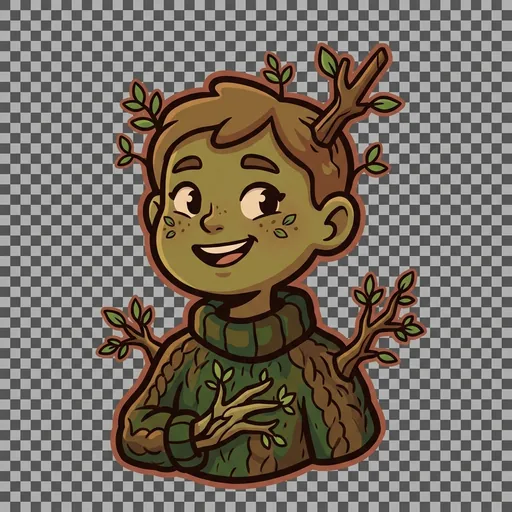
Sprig
Branch meaningfulness — sapling-tween whose visible branching skeleton shifts physically when she picks between dialogue options (the choice re-routes her body)
-

Glance
Subtext — arctic-fox-tween in a thick scarf; speech-bubble visibly half-empty with dotted-line ghost-text floating beside it
-
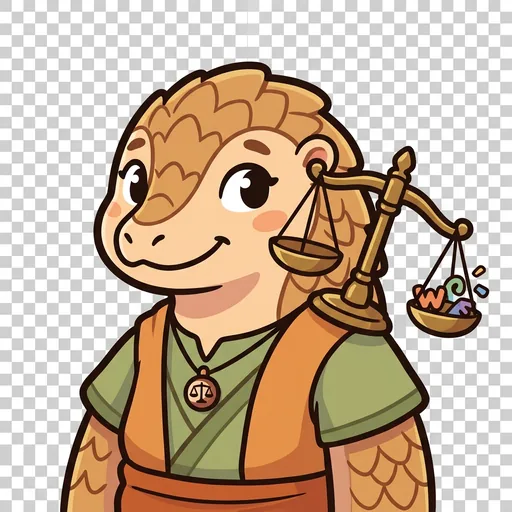
Weigh
Tag balance — pangolin-tween with a brass balance-scale on her shoulder; scales tilt visibly as dialogue happens around her
-

Brogue
Voice consistency — border-collie-elder in a worn flat-cap who uses exactly 4-5 signature words across every appearance (deliberately non-specific old-country accent)
-
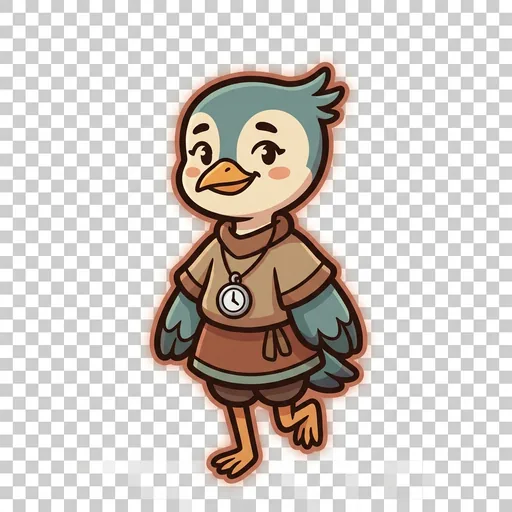
Rest
Rhythm + silence — heron-tween with a small silver pocket-watch around her neck; one foot perpetually raised mid-step; treats the pause as a line of dialogue itself
-
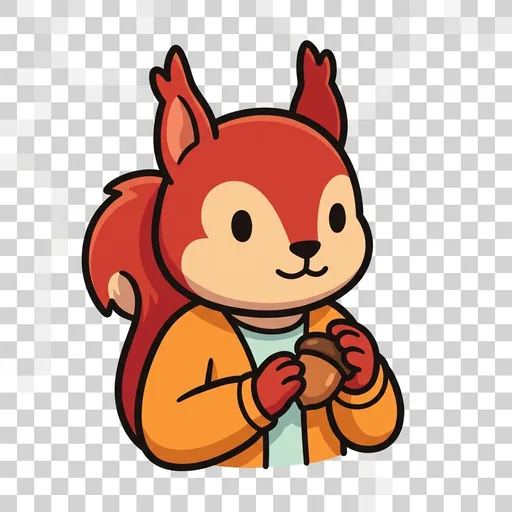
Prop
Action beats — red-squirrel-tween whose paws are always busy with a small acorn; the little actions between lines show feeling and set the rhythm of a talk
-
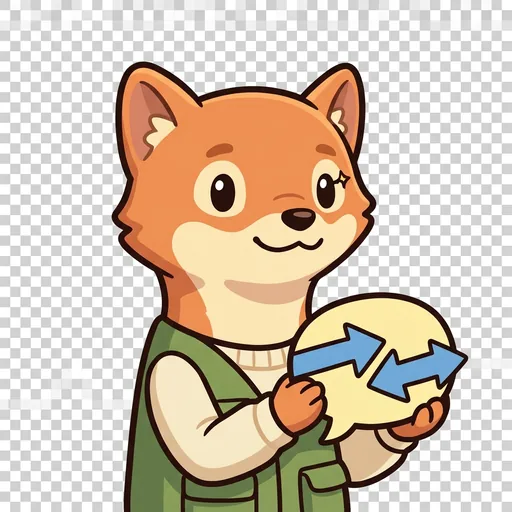
Spar
Conflict / friction — pine-marten-tween whose speech bubbles push against the other speaker's; two characters wanting different things is the engine (the push stays kind)
-
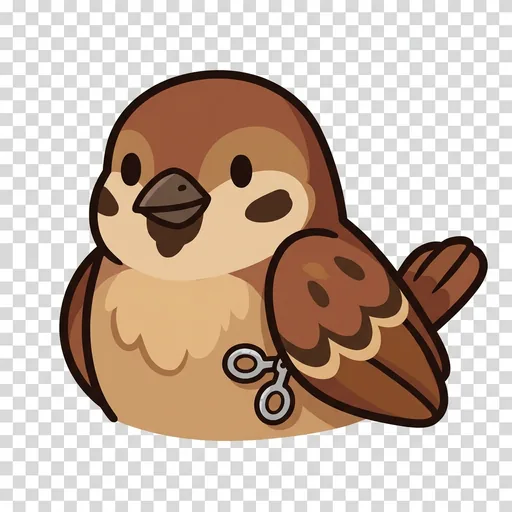
Clip
Economy — sparrow-tween with tiny silver scissors who trims the filler ('hello, how are you, fine') and starts scenes late, right where they get interesting
-

Dash
Interruption / overlap — chipmunk-tween who crashes into the ends of others' lines with a dash when feeling runs too high to wait (used on purpose, sparingly)