Prod and Nub
DECIDING A HARD ARGUMENT — two moves settle a stubborn clash: Prod asks the questions that show which points really stand up, and Nub weighs the surviving true points to find the one that decides. Test first, then weigh — a question sorts the real from the flimsy, and weighing sorts the important from the merely true.
Loading audio…
Press play to listen along. The line being read lights up as you go.
Show full transcript
Loading transcript…
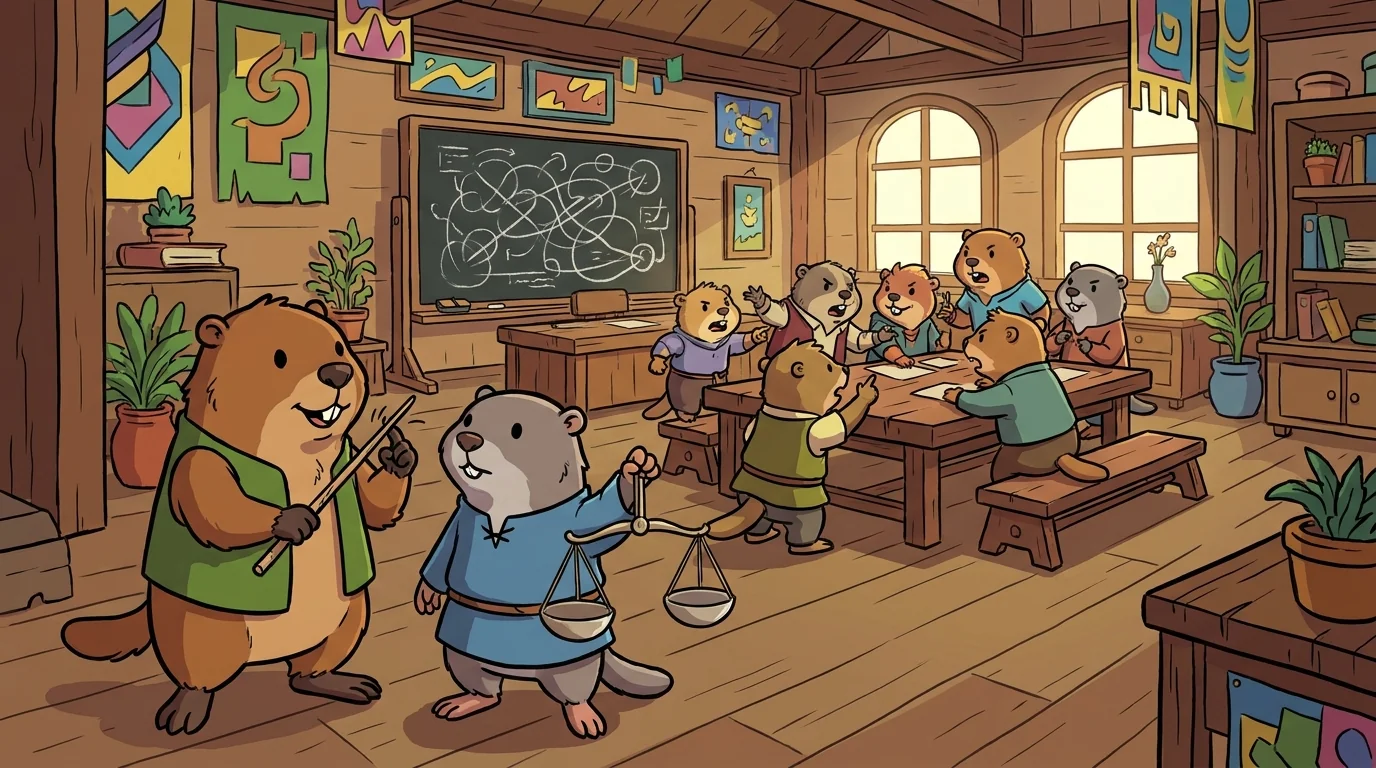
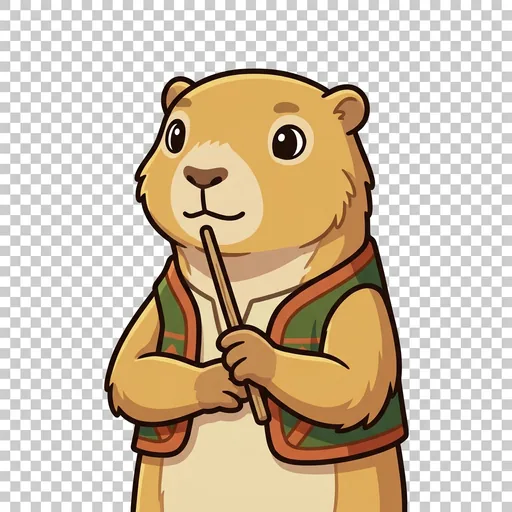
A knot of young marmots was arguing in the meeting-hall about whether their club should hold a big fundraising fair — and it had been going for an hour, everyone right, no one winning — when Prod slipped in with his reed pointer and Nub arrived with her scales and bowl.
On the board someone had chalked a heap of reasons: A fair would raise lots of money. A fair is a huge amount of work. Everyone loves fairs. It might rain. We could buy new equipment. Some kids can't come on weekends. True things, all tangled together, going nowhere.
"Half those points haven't been tested," said Prod, tapping his reed. "Some might be hollow."
"And the ones that hold still need weighing," said Nub, lifting her scales. "Which one decides?"
They looked at each other and understood at once: his questions came first, then her scale.
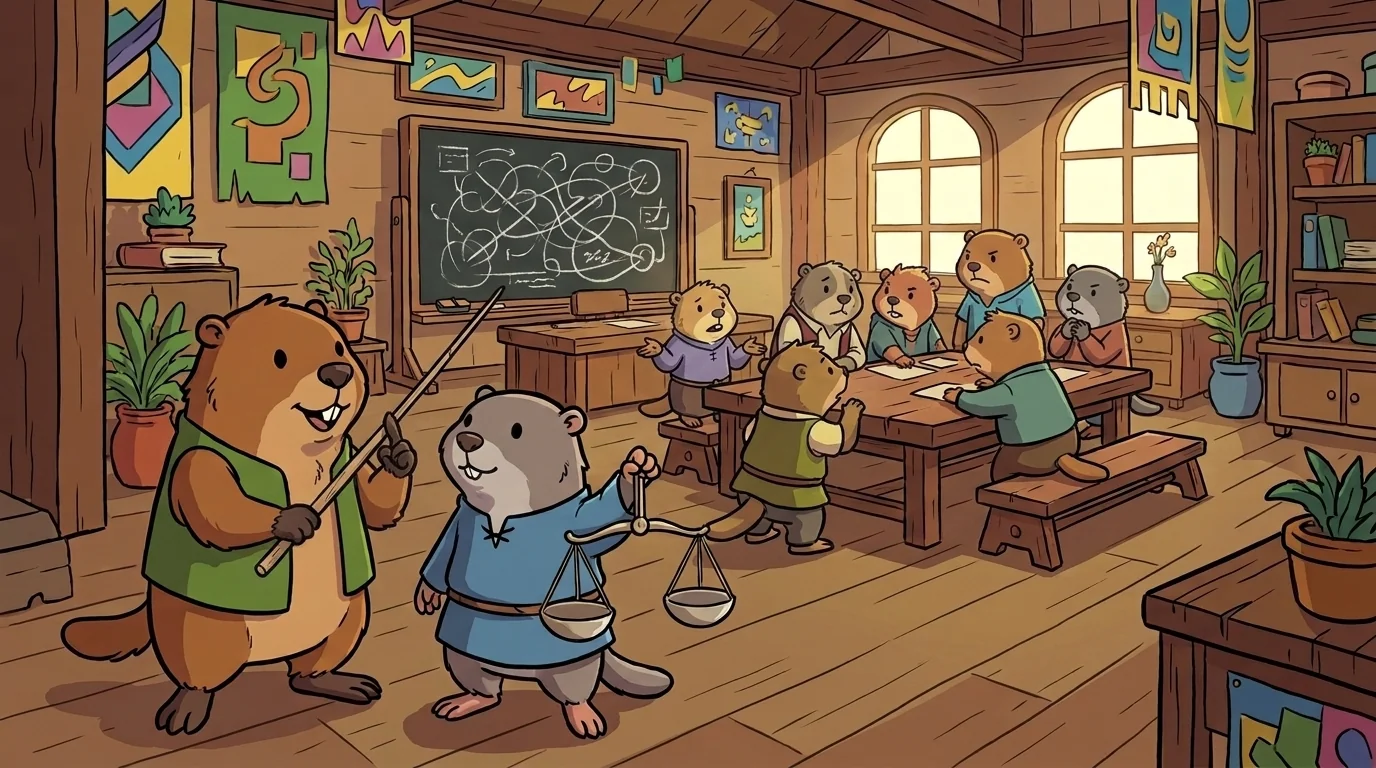
Prod stepped to the board. "Before we weigh anything," he said, "let's tap each reason and hear which ring true." He pointed his reed at the first. "'A fair would raise lots of money.' How much? Compared to what?" A marmot named Tibb admitted, "I... don't actually know. I just assumed lots." Prod tapped the next. "'Everyone loves fairs.' Everyone? Or just the ones who said so in this room?" Another pause; another honest shrug. Then he tapped "a fair is a huge amount of work" — and this one rang solid: three marmots quickly listed the booths, the setup, the cleanup, the weeks of planning. Real, and specific.
"See what the questions did," Prod said gently. "Two of those 'reasons' went hollow the moment we asked how do you know? — they were guesses in confident voices. But the work one rang — it's got specifics under it. We've cleared away the flimsy. Now only the true points are left on the board." He set down his reed. "That's my whole job. Not to knock anything down — just to ask each point to prove it's real, so we're weighing gold and not fog."
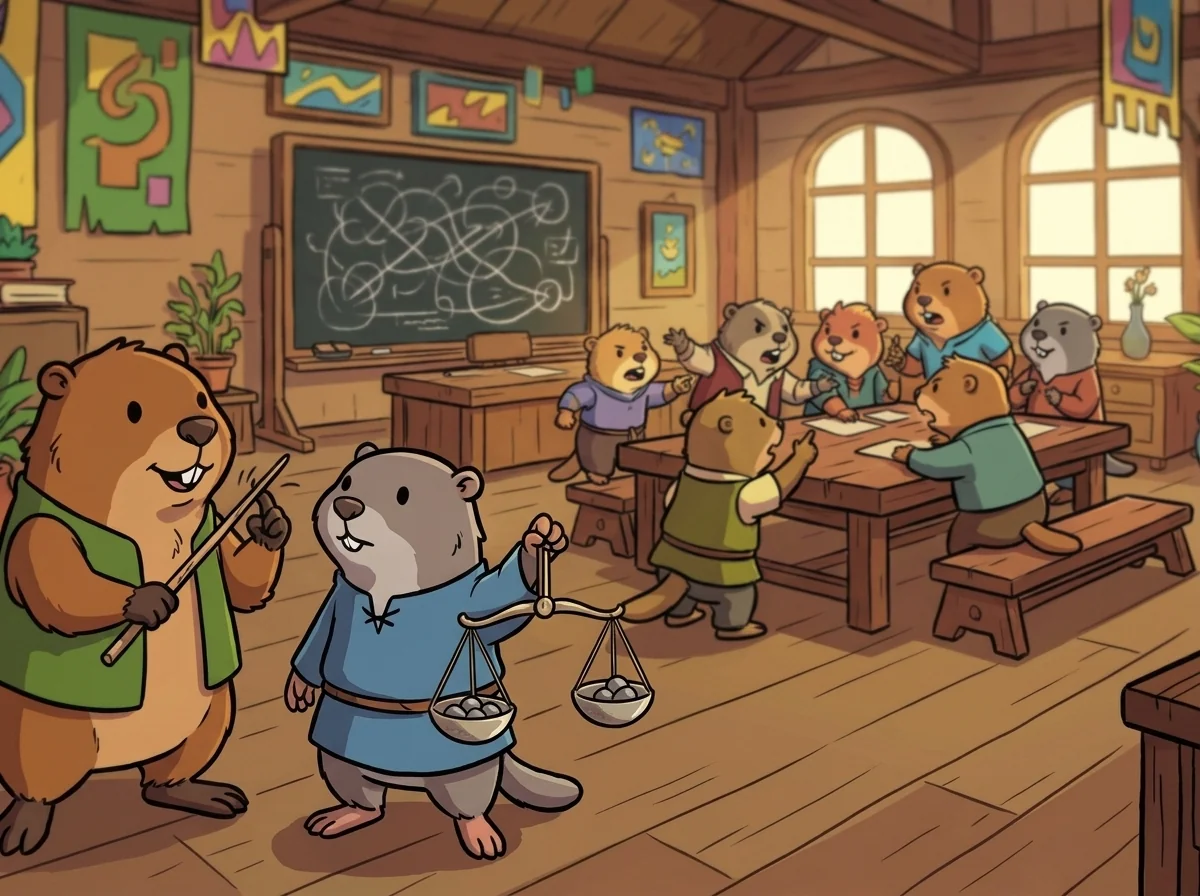
Then Nub stepped up with her bowl. "Good — now we've got the points that actually hold," she said, dropping pebbles in one by one: raises some real money. lots of real work. some kids can't come weekends. could buy needed equipment. "All true, now that Prod's tested them. So the question isn't which is false — none are. It's which one matters most for us." She weighed them, paw to paw. "Here's the nub: the equipment we'd buy — is that something the club truly needs, or just wants? And 'some kids can't come weekends' — how many, and could we hold it after school instead?"
The room worked it through. The equipment, it turned out, was genuinely needed — the old gear was breaking. And the weekend problem had a fix: hold the fair on a Friday afternoon. "So," said Nub, tipping her scale, "the work is real and heavy — but the need is real and heavier, and the one true objection has a solution. Weighed out, the need tips it." She looked up. "Not because anyone was wrong. Because, of the true things, the need for equipment carries the most weight."
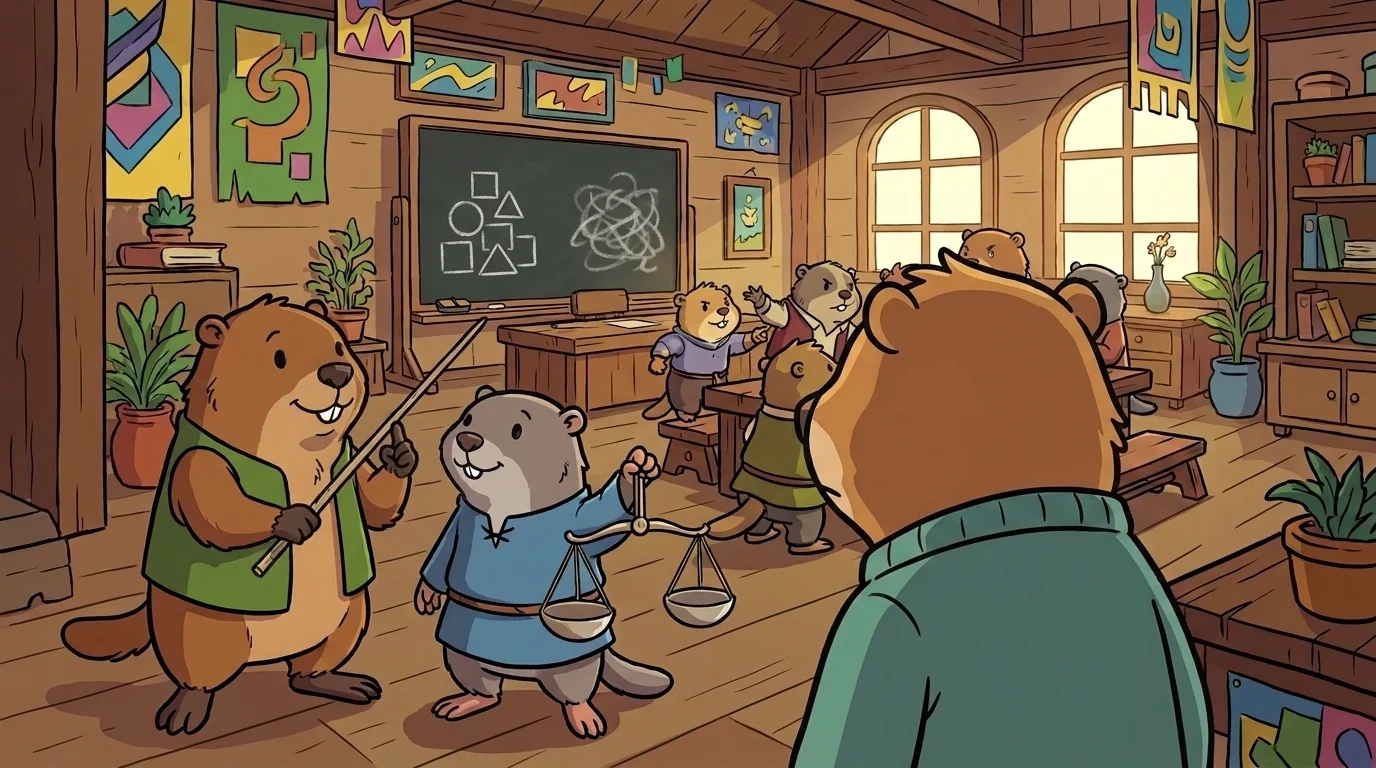
Tibb, who'd been arguing for an hour, stared at the sorted board. "So first you two threw out the fake reasons—"
"Tested them," Prod corrected mildly. "They tested false. There's a difference — I didn't decide they were fake; the question did."
"—and then you weighed the real ones and found the heaviest," Tibb finished. "And that's... the answer?"
"That's the answer," said Nub. "But watch — it took both moves. If we'd only weighed, we'd have wasted time weighing hollow guesses against real points, like putting fog on a scale. And if we'd only questioned, we'd have a tidy pile of true reasons and still no idea which one decides." She and Prod glanced at each other. "His question sorts the real from the flimsy. My scale sorts the important from the merely true."
"Test first," said Prod.
"Then weigh," said Nub.
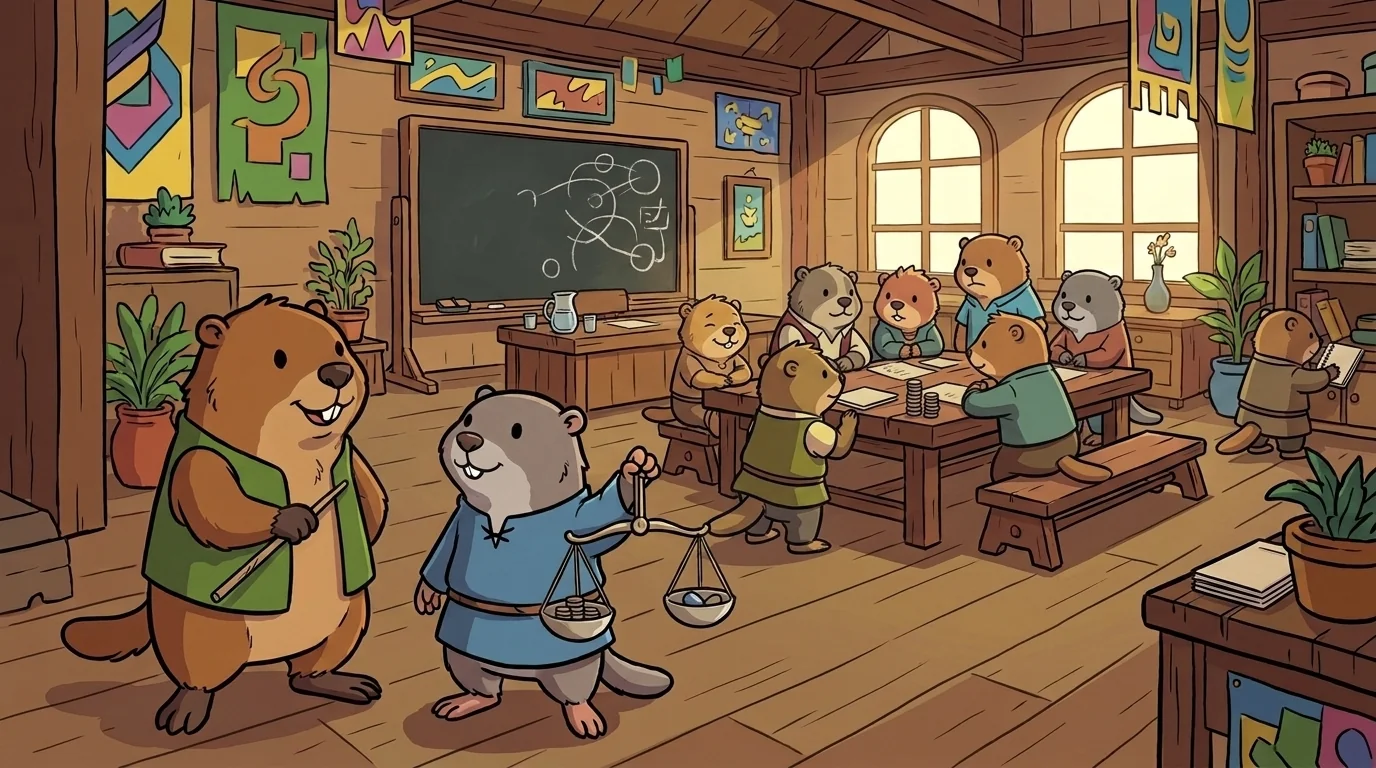
Tibb sat down, the hour-long argument suddenly, quietly over. "It felt like it could go forever," he said. "Everyone had a point."
"Everyone did," said Prod. "That's exactly why questioning came first — half the points only sounded like points until someone asked. And then—"
"—the true ones still had to be weighed," said Nub, "or you'd argue true-thing-against-true-thing until the sun went down." She folded her scales. "A hard argument isn't won by the loudest true reason. It's decided by testing which reasons are real, then weighing which real one counts."
And Tibb felt the long, tangled, everyone's-right tightness in his chest finally come loose — replaced by the clean, settled calm of an argument that had actually been decided, fairly, with no one made a fool. It felt good, that resolution: not a winner and a loser, but a room that had tested its reasons and weighed them true. Prod and Nub gathered their reed and their scales and walked out together, the tester and the weigher, each knowing the argument would still be running if the other hadn't come.
The DebateForge ensemble
Prod and Nub is part of DebateForge's distributed-narrative cast. Each character embodies a different curricular primitive; together they teach the full subject.
-

Build
Case-construction — claim + warrant + evidence as architecture; what does your case REQUIRE to stand?
-

Weigh
Evidence-evaluation — sources have positions, evidence has limits; credibility-as-calibration (shared design language with TruthQuest Weigh — cross-app continuity)
-
Steel
Steelmanning the opposing view — strongest version of what they would say IF you let them; visibly holds up opposing-view-card with two hands
-

Reply
Civil-rebuttal-not-rebuke — 'I disagree because' not 'you're wrong because'; address the ARGUMENT not the PERSON
-

Yield
Changing-your-mind-in-light-of-evidence-as-strength — concession is craft + intellectual courage; visibly carries 'updated' badge (shared design language with TruthQuest Update — cross-app continuity)
-

Crib
Signposting — say the shape of your argument out loud so a listener can follow: first, second, therefore
-
Nail
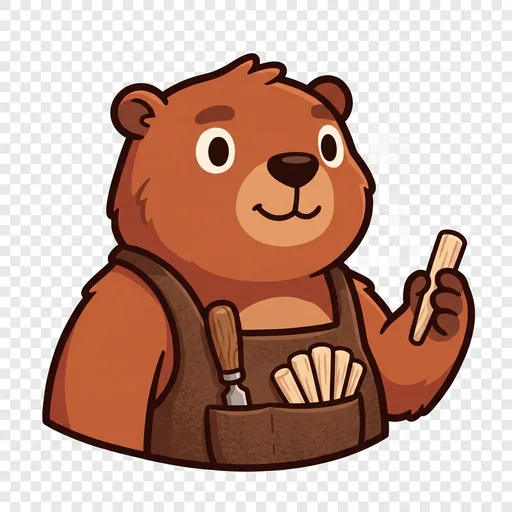
Defining terms — pin down the key word before you argue, or you argue past each other
-

Nub
Impact — when both sides have true points, weigh which one actually decides it
-

Owe
Burden of proof — whoever makes the claim owes the reason; 'prove it isn't' is not an argument
-
Prod
Cross-examination — the one good question that finds the gap in a case