Nail and Owe
SETTING UP A FAIR CLASH — before two sides can argue honestly, two moves must happen together: Nail pins the key word to one meaning, and Owe decides who then carries the proof. You cannot fairly assign the burden until you know what the claim actually means.
Loading audio…
Press play to listen along. The line being read lights up as you go.
Show full transcript
Loading transcript…
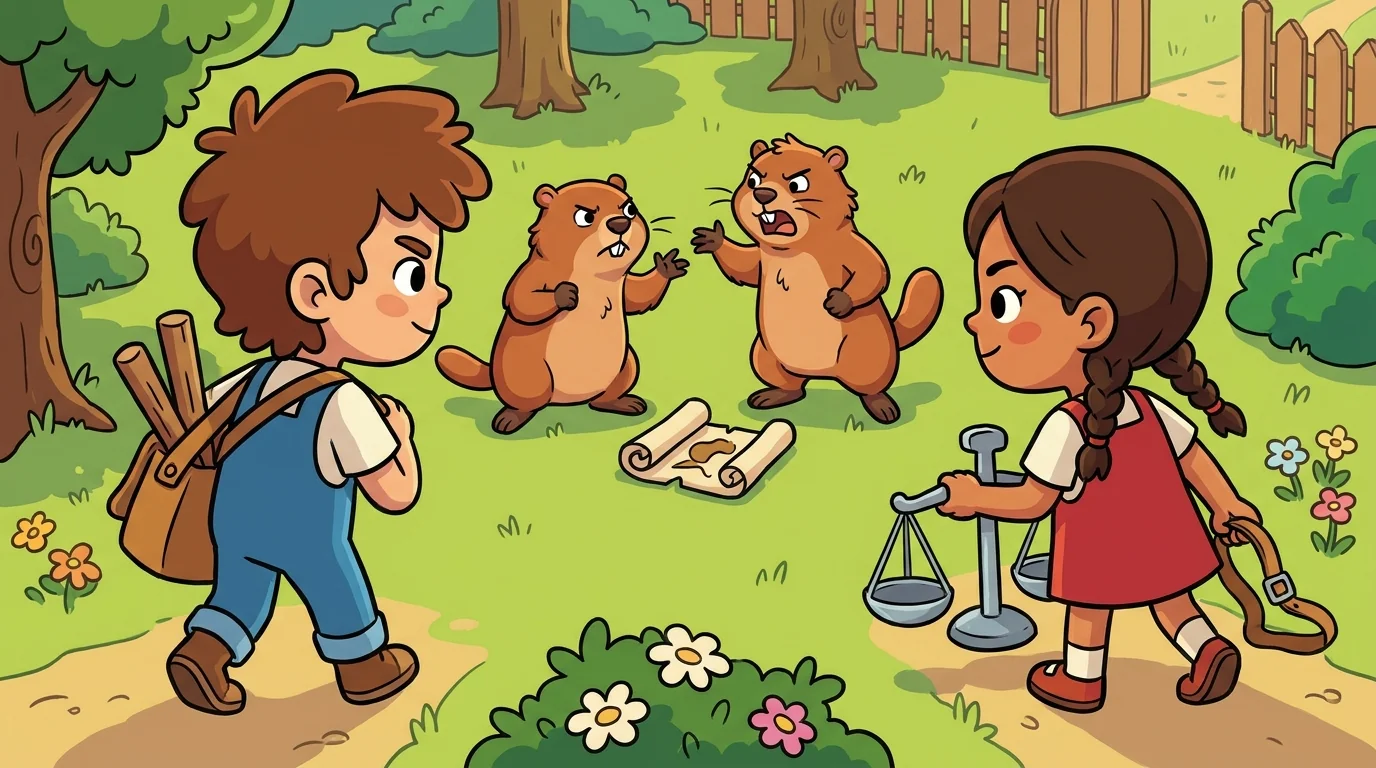
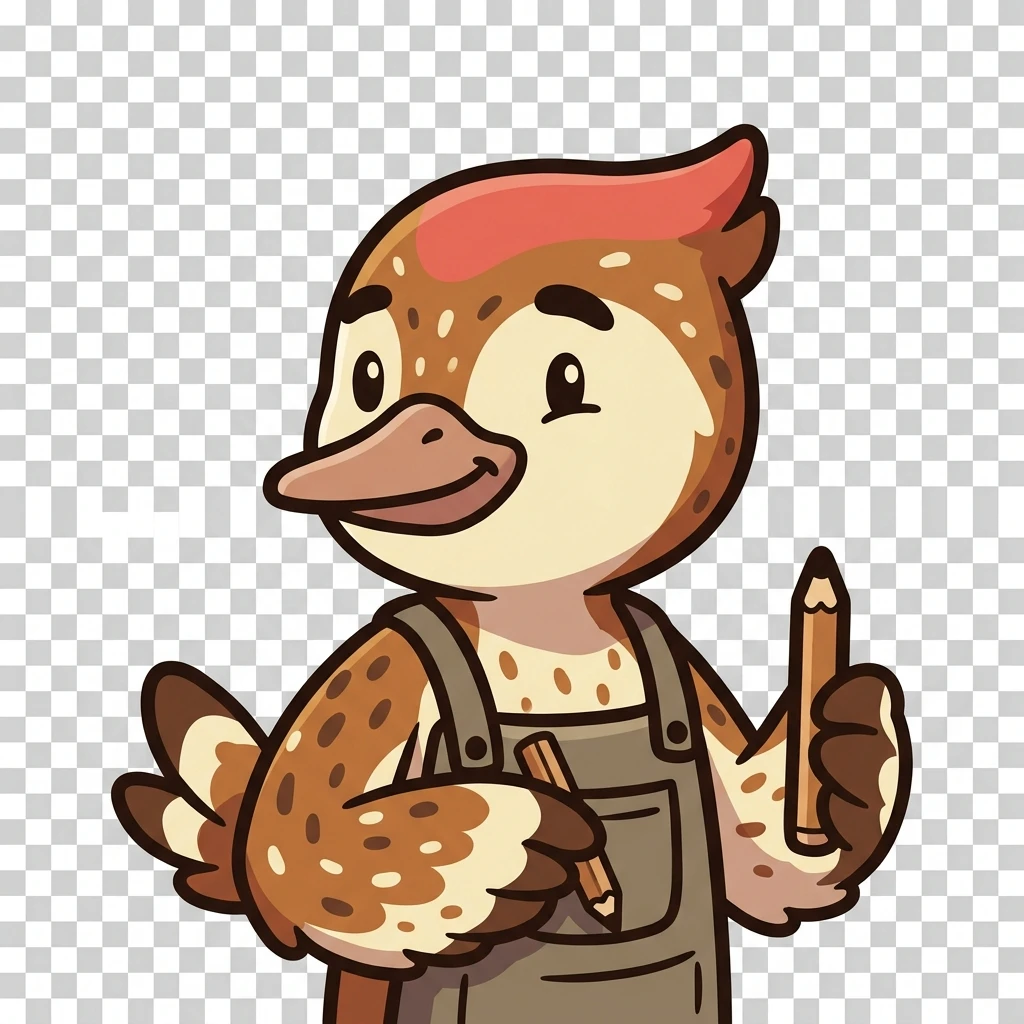
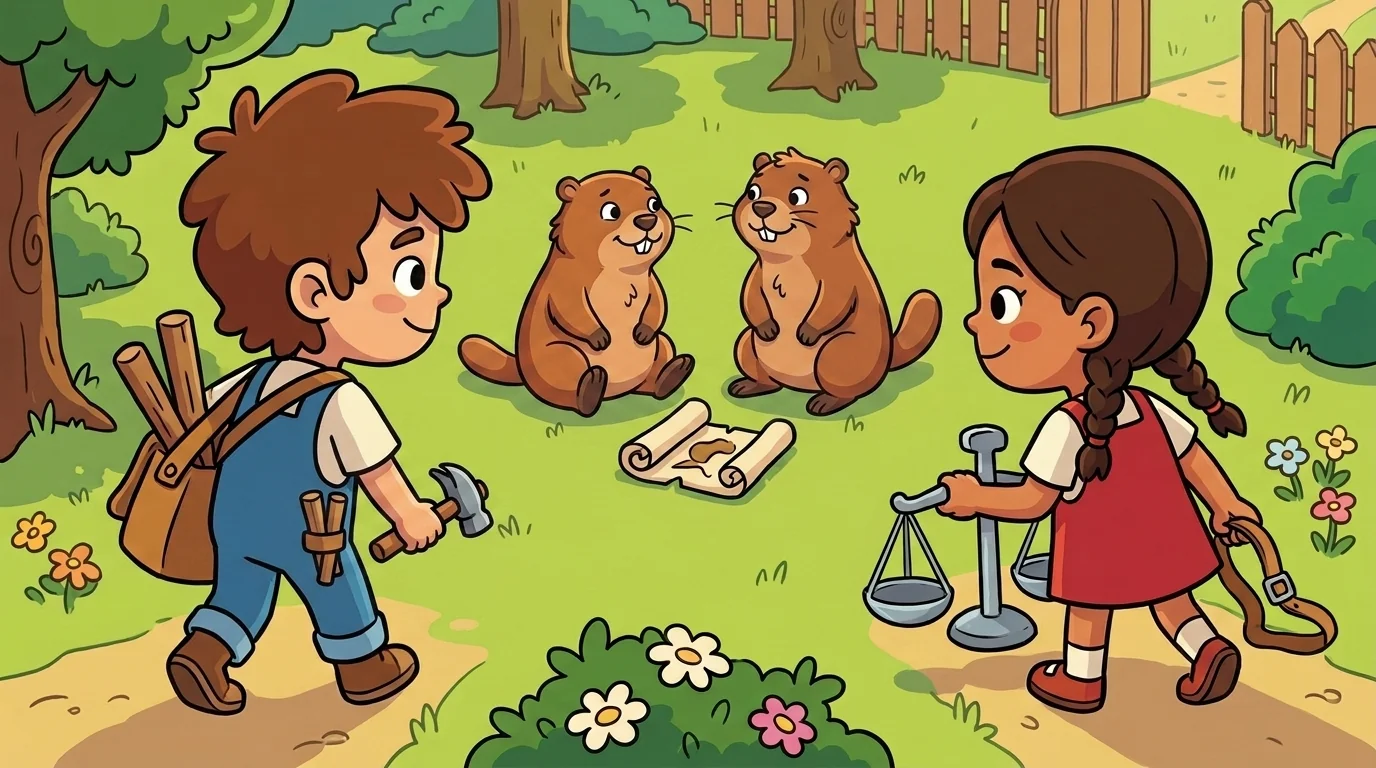
Two young marmots, Rue and Bram, were mid-quarrel in the yard — "It IS!" "It ISN'T!" — when Nail arrived from one path with his pegs and Owe arrived from the other with her scale, each certain the quarrel had gone wrong before it began.
On the ground between the two combatants was the whole trouble: "Our club is being unfair to the new kids," Bram had said, and "Prove it! Prove we're being unfair!" Rue had shot back — and round it went.
"They haven't said what 'unfair' means," said Nail, reaching for a peg.
"They haven't settled who owes the proof," said Owe, unstrapping her scale.
They looked at each other, then at the stuck quarrel, and each saw the other was holding the missing half.
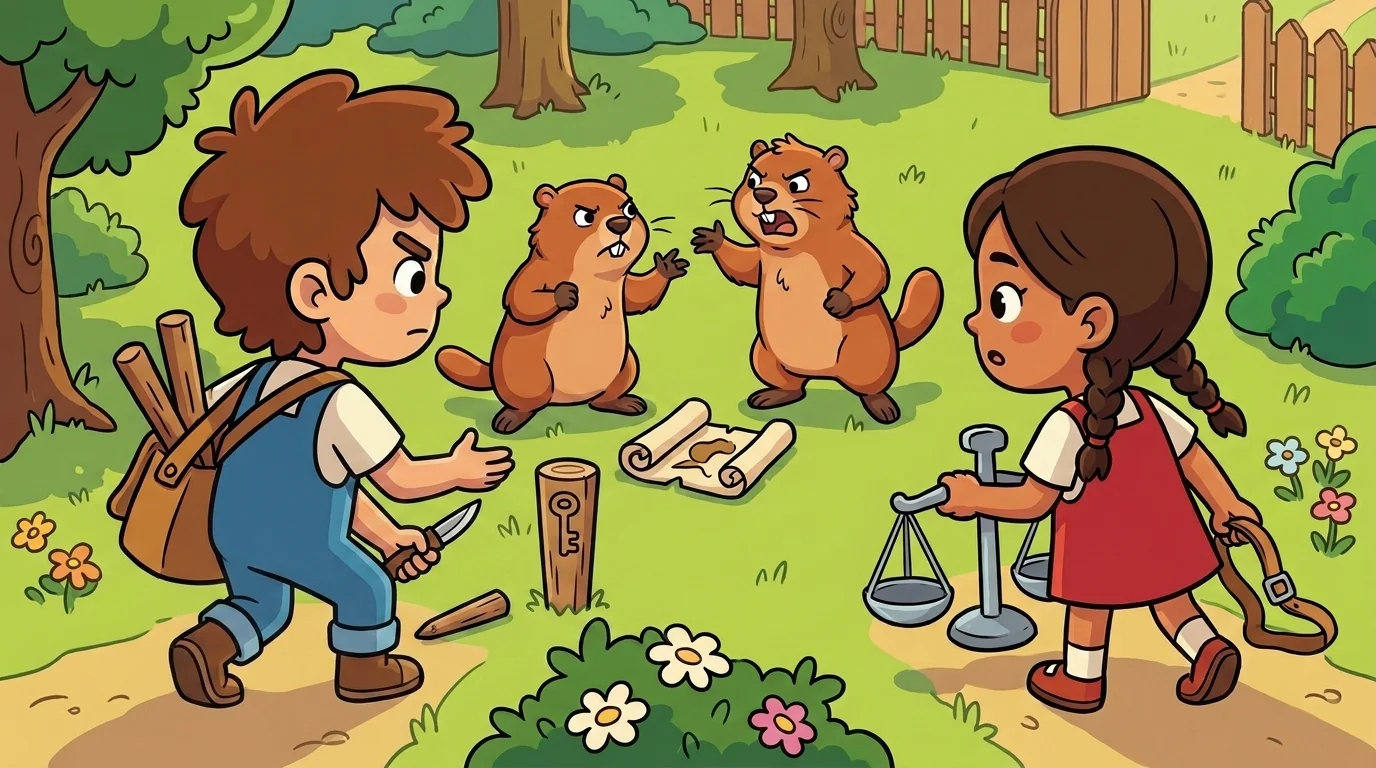
Nail stepped in first. "You're both saying 'unfair,'" he said, "and I'd wager you mean different things." He turned to Bram. "What do you mean — unfair how?"
Bram thought. "The new kids never get to pick the game. It's always the old members."
Nail carved it onto a peg: UNFAIR (Bram): new kids never get to choose. "There," he said. "Now it's not a fog. It's a specific thing: the new kids don't get to pick." He drove the peg into the ground where both could see it. "Half your shouting was just not knowing what the word pointed at. Now it points at one clear thing — and we can actually look at whether it's happening."
Rue blinked at the peg. "Oh. I thought 'unfair' meant we were being mean to them. We're not mean."
"You were arguing two different words," said Nail. "That one's settled now."
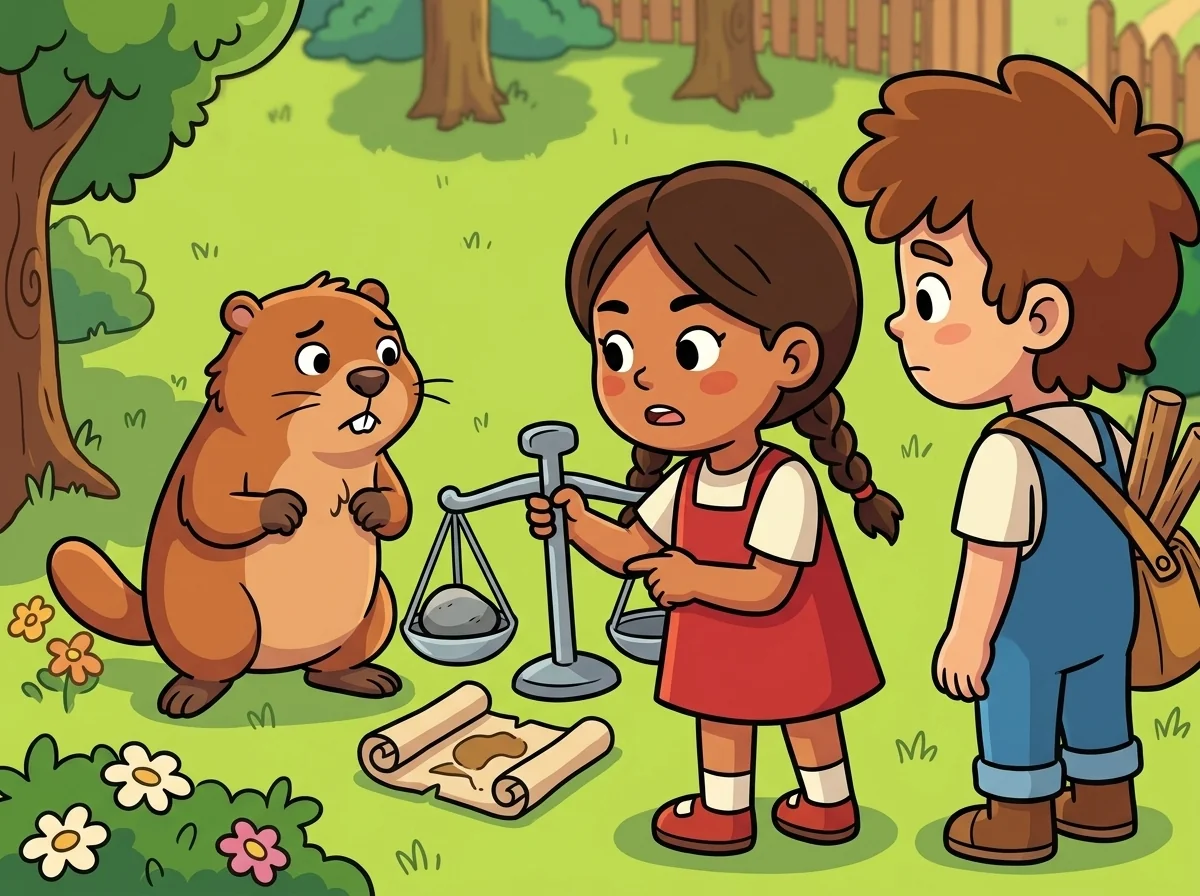
Then Owe stepped up, her scale swinging. "Good — now we know the claim: the new kids never get to pick the game. So the next question," she said, setting a stone on one pan, "is who has to prove that?" She turned to Rue. "Rue, you said 'prove it isn't unfair.' But look — Bram made the claim. Bram says a thing is happening. So the weight sits on Bram's side: he shows it's true. You don't have to prove a 'never' didn't happen — nobody can prove a never." She let the scale tip toward Bram. "It's not that you win by default. It's that the one who claims carries the proof. So, Bram — can you fill the pan? Do the new kids never get to pick?"
Bram opened his mouth to insist — then stopped, honest. "...I think so. But I haven't actually watched every week. Maybe once or twice they did."
"Then that's what you owe," said Owe, not unkindly. "Not a shout — a look. Go count: over the last month, how many times did a new kid pick? Bring that back, and the pan's full or it isn't."
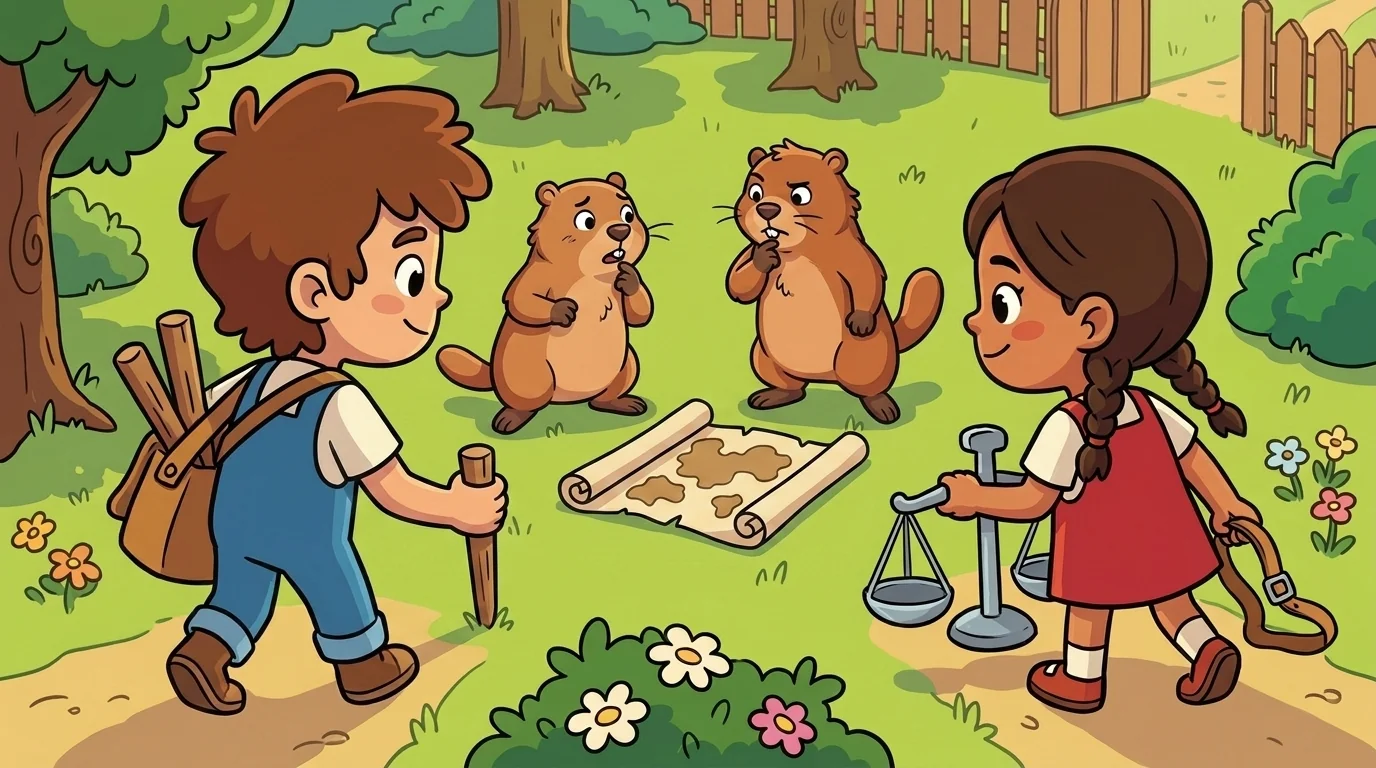
Rue, who had been braced for a fight, looked from the peg to the scale, bewildered. "So... we weren't even arguing yet? All that shouting?"
Nail and Owe glanced at each other and, for the first time, smiled the same smile.
"You were shouting before the argument could start," said Nail. "The word wasn't pinned—"
"—and the burden wasn't placed," said Owe. "Two setup steps. Skip either one and you don't get an argument — you get a tangle that runs forever." She nodded at Nail's peg. "His step has to come with mine. You can't decide who must prove the claim until you know what the claim says. Pin the word first—"
"—then the burden lands on someone real," Nail finished. "Watch what happens now."
And it did happen: Bram went and counted, honestly, and found the new kids had picked twice in four weeks — not "never," but rarely. So the real, fair argument finally began — not "is too / is not," but "twice in a month is too few; how do we make sure new kids get a fairer turn?" — a question both of them actually wanted to solve.
Rue sat down beside Bram, the fight gone out of both of them. "That was days of shouting," she said, "and it turned out we hadn't even started."
"Most shouting hasn't," said Owe gently, folding her scale. "It's two people who never pinned the word or placed the burden, going in circles over a claim that was never made clear enough to test."
"Pin the word," said Nail, driving his peg home one last time, "so everyone means the same thing—"
"—and place the burden," said Owe, "so the right person brings the proof. Then, and only then, you have a fair clash."
Bram let out a long breath, and the hot, cornered feeling that had knotted his chest all week loosened into something calmer and cleaner — the steadiness of an argument that was finally fair, where he knew what he'd claimed and what he owed. It felt better than winning had ever looked. And Nail and Owe walked out of the yard together, the peg and the scale swinging side by side, each glad the other had come down the opposite path with the missing half of the very same beginning.
The DebateForge ensemble
Nail and Owe is part of DebateForge's distributed-narrative cast. Each character embodies a different curricular primitive; together they teach the full subject.
-

Build
Case-construction — claim + warrant + evidence as architecture; what does your case REQUIRE to stand?
-

Weigh
Evidence-evaluation — sources have positions, evidence has limits; credibility-as-calibration (shared design language with TruthQuest Weigh — cross-app continuity)
-
Steel
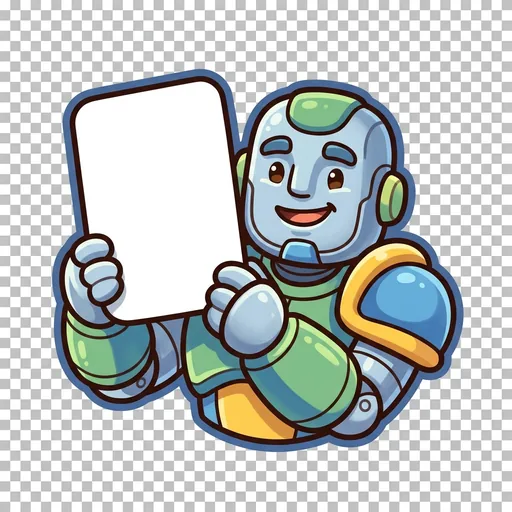
Steelmanning the opposing view — strongest version of what they would say IF you let them; visibly holds up opposing-view-card with two hands
-

Reply
Civil-rebuttal-not-rebuke — 'I disagree because' not 'you're wrong because'; address the ARGUMENT not the PERSON
-
Yield
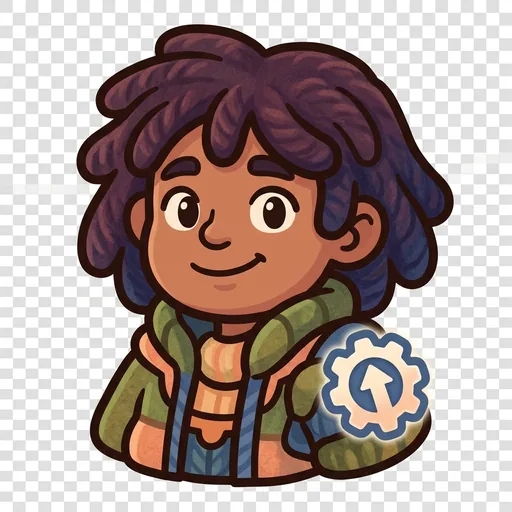
Changing-your-mind-in-light-of-evidence-as-strength — concession is craft + intellectual courage; visibly carries 'updated' badge (shared design language with TruthQuest Update — cross-app continuity)
-

Crib
Signposting — say the shape of your argument out loud so a listener can follow: first, second, therefore
-
Nail
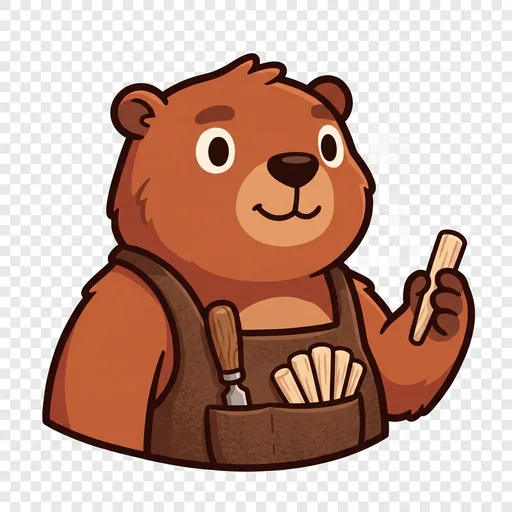
Defining terms — pin down the key word before you argue, or you argue past each other
-

Nub
Impact — when both sides have true points, weigh which one actually decides it
-
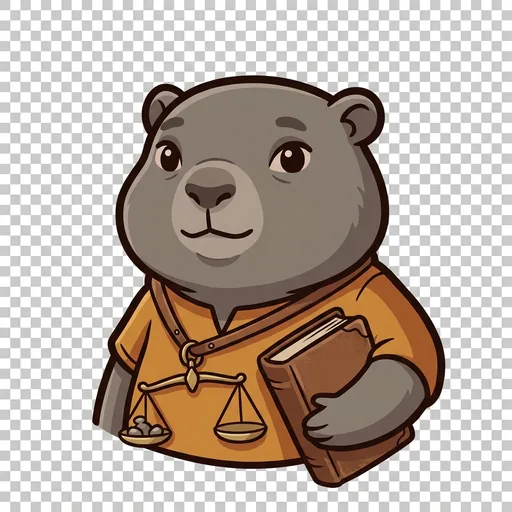
Owe
Burden of proof — whoever makes the claim owes the reason; 'prove it isn't' is not an argument
-
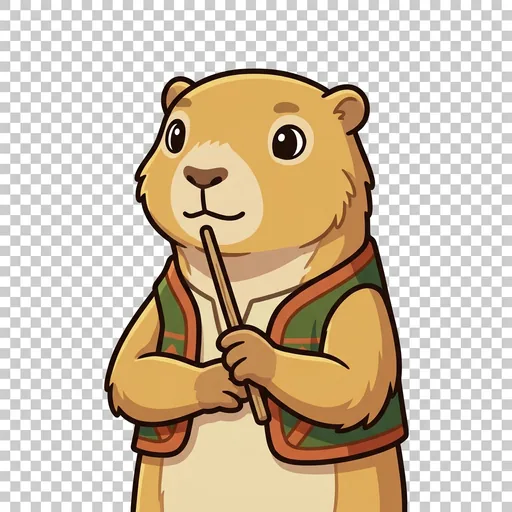
Prod
Cross-examination — the one good question that finds the gap in a case