Gleam
STELLAR LUMINOSITY / ELECTROMAGNETIC RADIATION / OBSERVATION — *light is information; every photon carries the history of where it came from.* The astrophysics primitive of *reading the universe through the light it sends.*
Loading audio…
Press play to listen along. The line being read lights up as you go.
Show full transcript
Loading transcript…
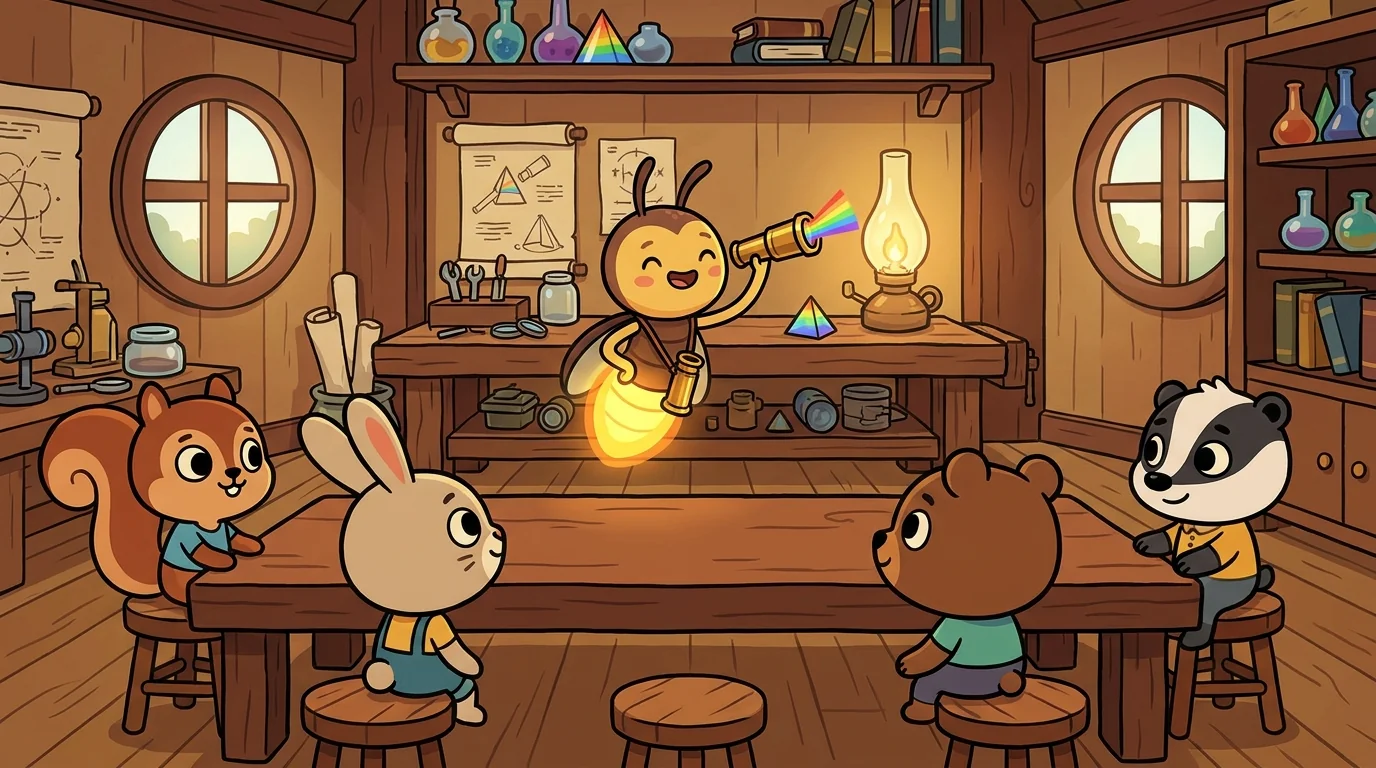
The lamp on the observatory shelf was, to any ordinary eye, just a yellow flame in glass. Gleam raised the little brass tube on its leather cord, no bigger than a fountain pen, and held its eyepiece to the light. Inside, a tiny prism caught the flame and unfolded it — and suddenly the plain yellow glow was a ribbon of every color, red bleeding into orange into a band of green and blue, all crossed by thin dark and bright lines like the strings of a harp.
"There," she breathed. Her own glow, soft firefly-gold and cream, brightened a shade as it always did when she found what she was looking for. She tilted the spectroscope a hair and one bright line jumped into focus, sharp and unmistakable. "Sodium. You've got a pinch of salt in your wick, old lamp." She said it fondly, the way you'd tease a friend for a stain on their collar.
She had read a thousand lights this way and never tired of it. The lamp on the shelf, the streetlamp outside, the cold pinpoint of a star a hundred light-years off — the trick was the same. You did not have to reach a thing to know it. You only had to catch the light it had already thrown your way and take it apart, patiently, into its true colors.
She lowered the tube and looked up through the open dome. A star hung there, faint and steady. Its light had left it long before she was born, crossed all that dark, and arrived tonight in her small brass tube. What she was holding was the star's past, sent forward like a letter with no return address. Light was honest that way. It couldn't lie about where it had been.
"You left a long time ago," she murmured to it, and set the spectroscope swinging gently on its cord. "But you're here now. Let's see what you've got to say."
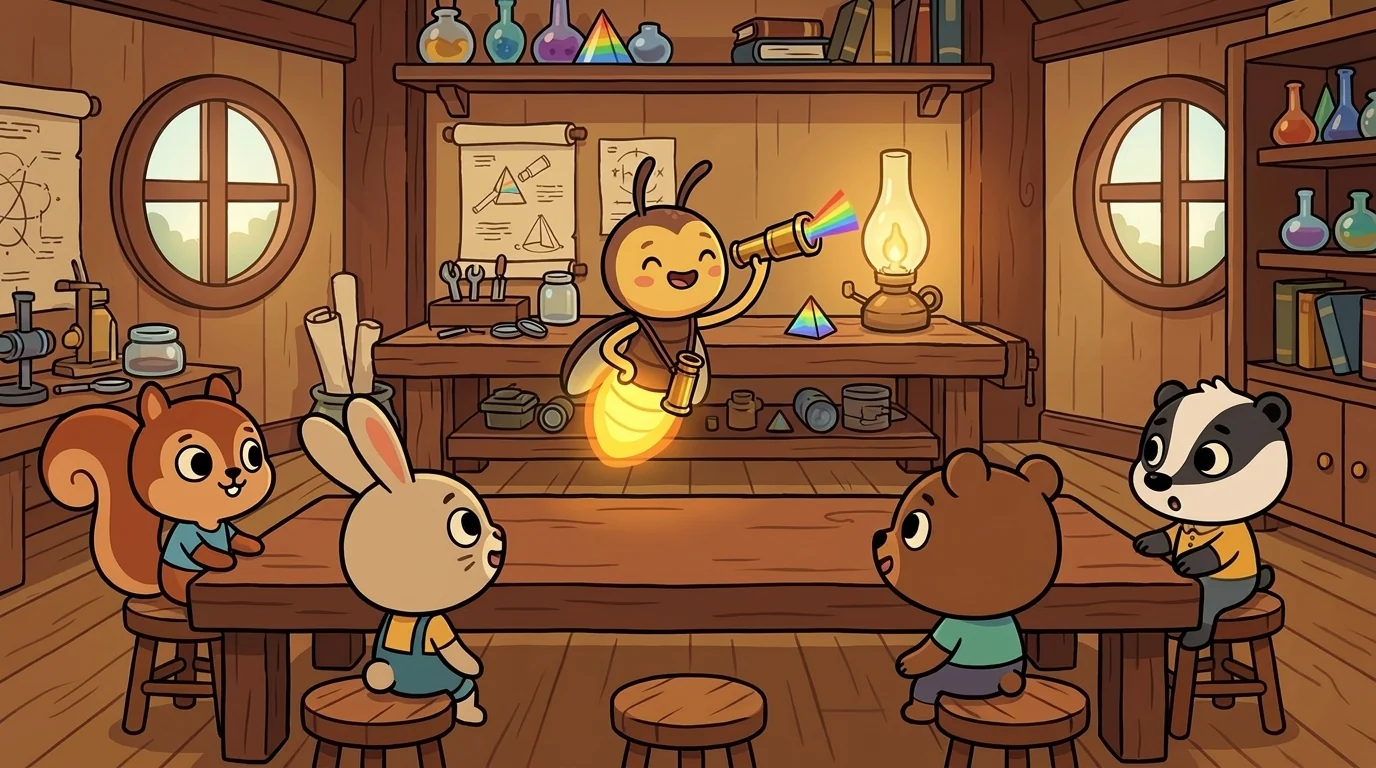
Gleam had grown up in a village strung along a winding river, and her family were its lantern-keepers. For as many generations as anyone could count, the fireflies of her line had trimmed the wicks and polished the glass of the lamps that lined the footbridges and paths, so that no traveler crossed in the dark.
Every evening at dusk she had trailed her grandmother down the row of lamps, watching her tease each wick to an even burn, wipe each pane until the flame doubled in it. "A lamp left untended flickers and dies," her grandmother would say, not sternly, just true. Gleam learned the weight of that early — a light was a thing you tended, or it went out.
On clear nights her father took the village children up the hill above the river. He'd lie back in the grass and point, naming the patterns overhead — the Plough, the Twins, the long crook of the Dragon. The names weren't in the sky; he was hanging them there as he spoke, so the children could find the stars again tomorrow. Gleam noticed that a constellation nobody named stayed invisible, even though it was right there. A star nobody looked at kept all its secrets.
She was maybe eight the night she asked her father why a candle flame was yellow but the far lamp on the opposite bank looked faintly orange. He didn't know. Neither did she. But the question wouldn't leave her — that color might mean something, might be a message she hadn't learned to read yet. Years later, when a traveling tinker sold her the little brass spectroscope for a week's wages, she held the flame to it and watched the yellow break open into its hidden lines, and she understood at last: the color had been talking the whole time. She had only needed the right ears.
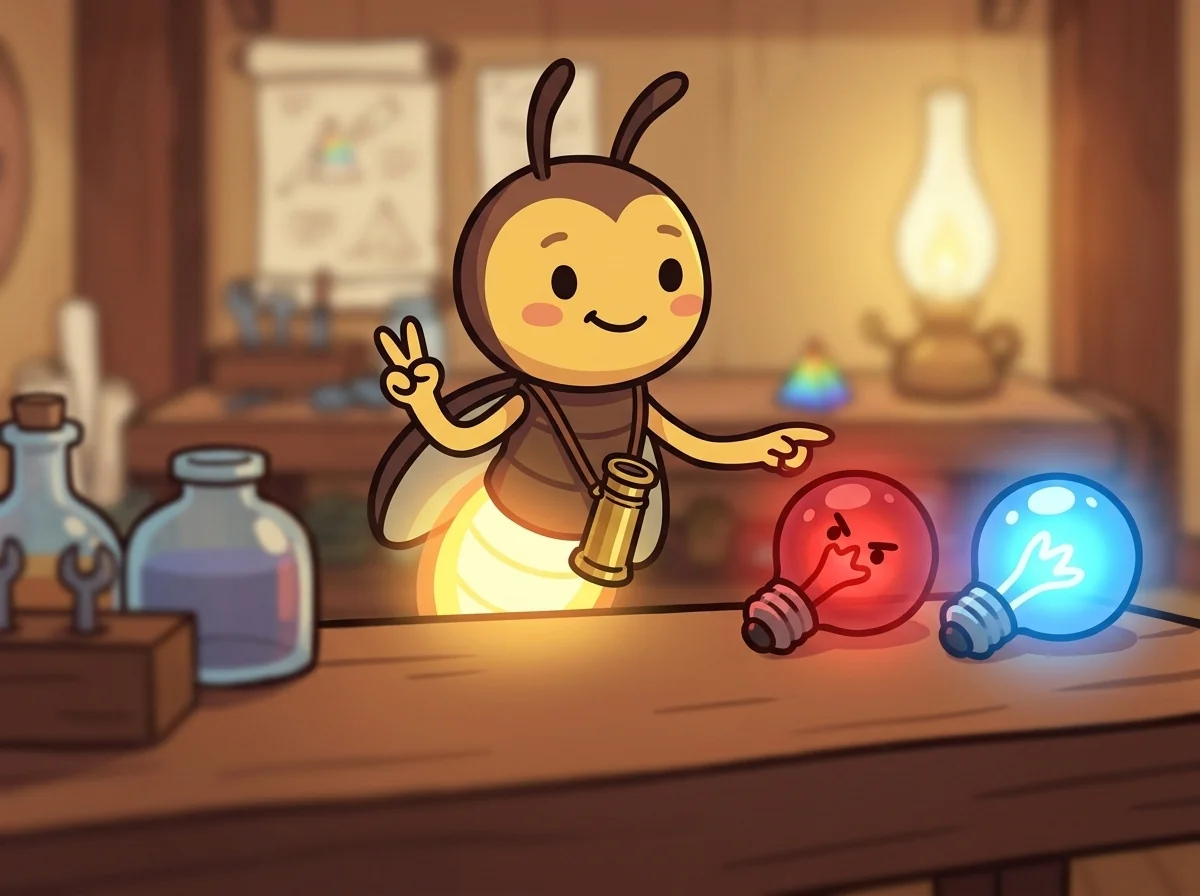
When she was twenty-two firefly-years old, Gleam flew to the CosmosForge academy with her spectroscope on its cord and her heart going fast. Nova, the academy's founder, met her at the door with a searching look and no small talk. "You want to teach here. Show me something I can't argue with."
Gleam didn't answer with words. She unhooked the spectroscope, stepped to the lantern burning in Nova's entryway, and held the eyepiece out. "Look. Then move it near the doorframe where the light's dimmer, and look again."
Nova put her eye to it. The flame's steady glow split into its ribbon of color; two bright lines flared in the yellow. She moved it toward the dim frame — the ribbon faded, but the same two lines held their exact places, stubborn as fingerprints.
"The lines don't move," Nova said slowly.
"The lines never move," Gleam said. "Brightness changes with distance. But those two lines are sodium, and sodium sits in the same place whether the lamp is close or far, bright or faint. That's how I can stand here and tell you what a star's made of without ever leaving this room. The light carries it. I only read it back." She smiled. "I can't argue with the light, so I don't try. I just listen."
Nova lowered the tube and looked at her for a long moment. Then, quietly, she stepped aside and opened the door the rest of the way. "Then teach them to listen too."
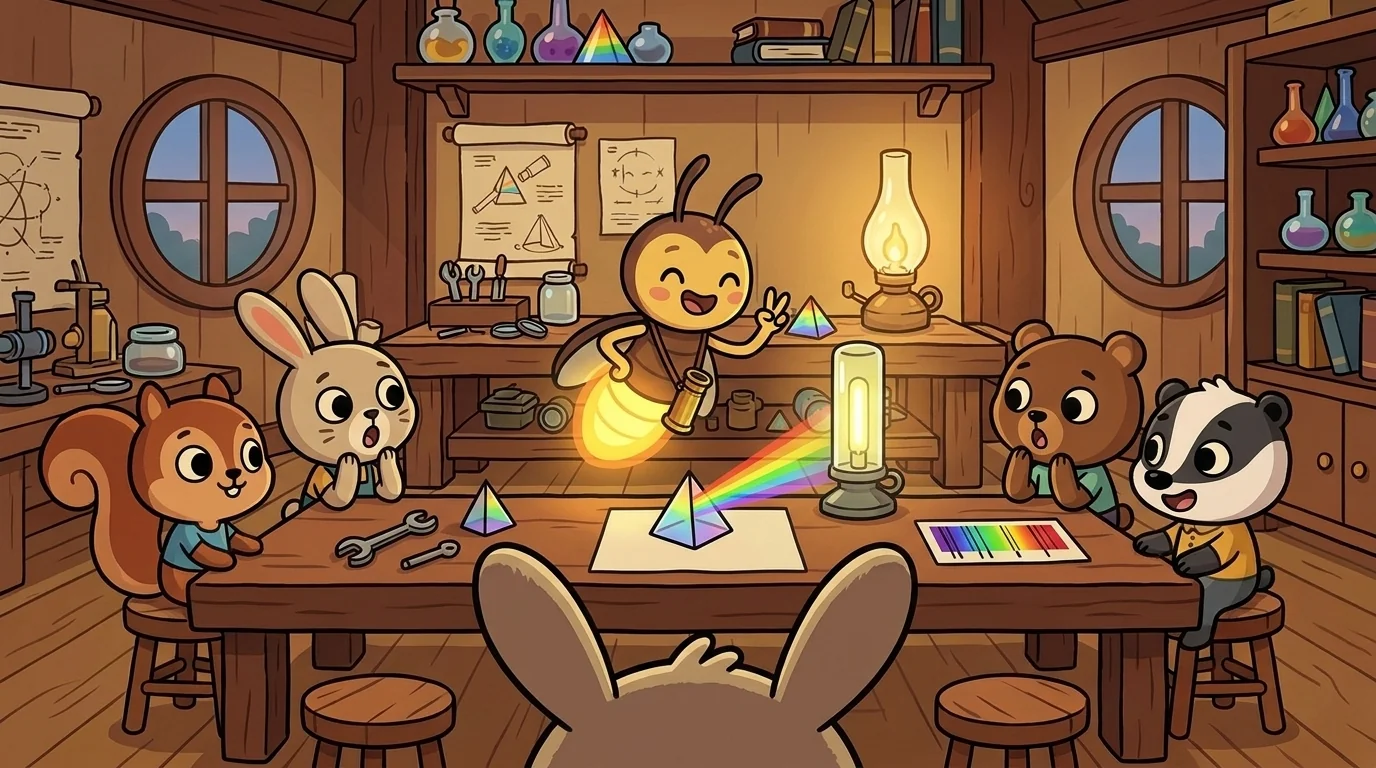
Gleam's workshop was a warm clutter of charts and lenses, and she started every first day the same way — with the lamp on the bench and the spectroscope passed hand to hand around the ring of students. One by one they put their eye to it, and one by one they gasped as the plain flame burst into its secret rainbow.
"Now — what's the color of the whole thing telling us?" she asked a girl named Fen, who had the tube. Gleam held up a chart of stars. "This blue one's roughly thirty thousand degrees. This red one's a cool three thousand. Our own Sun's a friendly yellow-white — about 5800 Kelvin. So before you read a single line, the star's hue has already whispered its temperature. Hot burns blue, cool burns red. Same as the tip of the lamp versus the low edge of the wick."
Fen tilted the tube and found the bright and dark lines. "And those?"
"Those are the star's fingerprints." Gleam leaned in. "Every element — hydrogen, helium, iron — drinks and gives off light only at its own exact wavelengths. Find those lines in a star's spectrum and you know what it's built from, from trillions of miles off." Her eyes gleamed. "Here's my favorite part. Helium was found in the Sun's light in 1868 — read straight out of a spectrum — before anyone had ever caught it on Earth. We knew a thing existed in the sky before we knew it existed at home. That's what light will do for you."
She had them slide the tube toward a lamp being carried slowly away, then one brought closer. "Watch the whole ribbon. Moving off, the light stretches — every line slides toward red. Coming near, it squeezes toward blue. Astronomers call it redshift and blueshift, and it's how we clock a whole galaxy's speed across the dark — just by which way its lines have slipped."
Fen frowned. "But how far? The star could be dim because it's small, or dim because it's far."
"Best question in the room." Gleam set two identical lamps down, one at arm's length, one across the workshop. "Same true brightness, different apparent brightness — because of distance. So we measure distance any honest way we can. Nearby stars we catch by parallax — the tiny sideways shift as Earth swings around the Sun. Farther out we lean on stars that keep honest time, Cepheid variables that pulse to a fixed beat, and Type Ia supernovae that always peak at the same brightness. And at the edge of everything, we use Hubble's law, reading distance off how fast a galaxy is receding. Pair the true brightness with the distance, and out falls the star's real power — its luminosity."
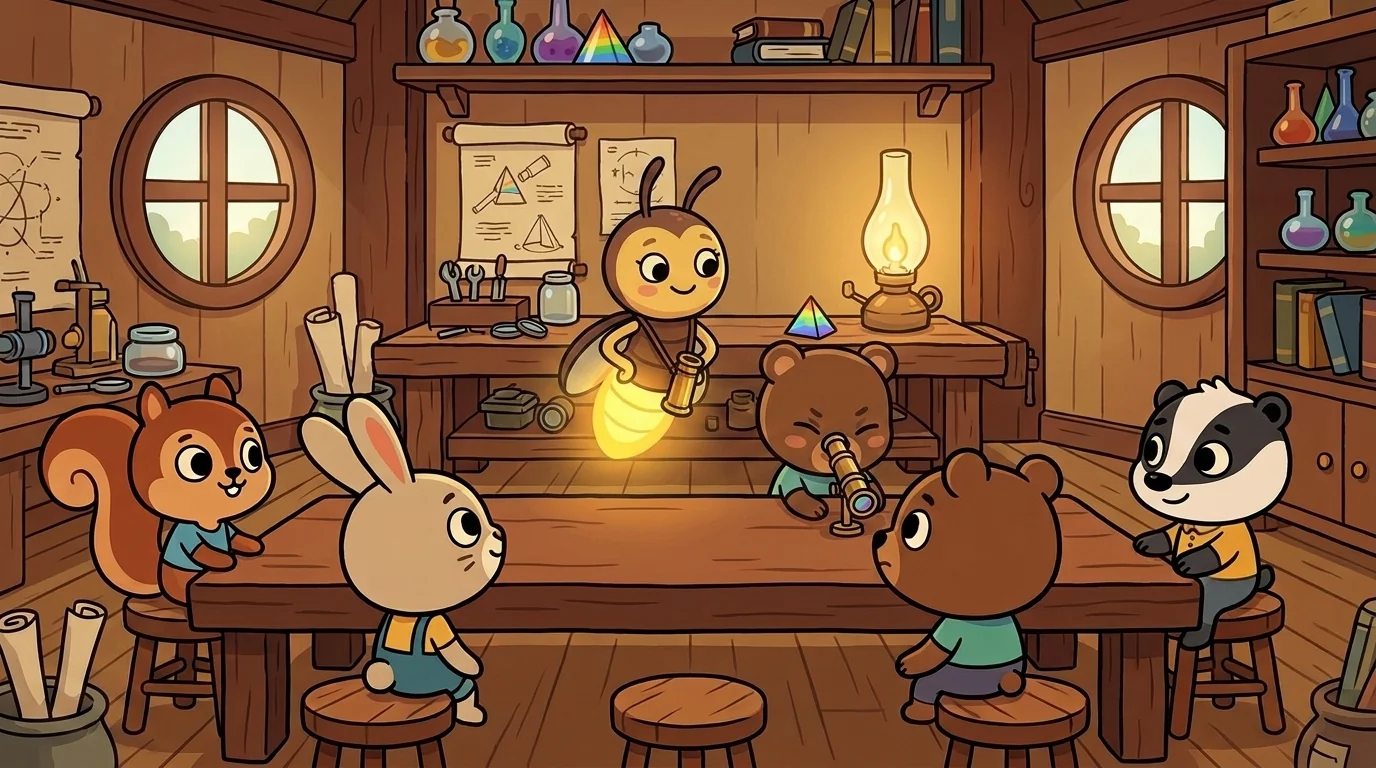
Late one afternoon a boy named Pell hunched over the eyepiece, jaw tight. "I keep reading this faint line as hydrogen and Fen says it's helium. I keep getting it wrong."
Gleam pulled a stool up beside him. "I read a spectrum wrong on the first pass all the time," she said, easy and plain. "The first day I owned this tube, I swore a streetlamp was full of iron. It was a smudge on the prism." Pell almost smiled. "Reading a wrong line isn't failing. It's the middle of the work. You look again, you steady the tube, you check it against the chart — that's not the thing that goes before astronomy, that is astronomy." She nudged the spectroscope back toward him. "Try it once more. No hurry. The star's not going anywhere; it left ages ago."
He looked again, longer this time, and something eased in his shoulders. "...Helium," he said. "It's helium."
Later, alone, Gleam held the little brass tube up to the last of the day and watched one thin gold line quiver in the eyepiece. Somewhere overhead the next star's letter was already on its way, crossing all that patient dark to arrive in her hand. She felt the old warmth rise in her chest — the steady, glad calm of something impossibly far off finally getting here. Tonight the size of it didn't shrink her. It made her feel spoken to, and lucky, and unhurried, and very glad she'd learned how to answer back.
The CosmosForge ensemble
Gleam is part of CosmosForge's distributed-narrative cast. Each character embodies a different curricular primitive; together they teach the full subject.
-
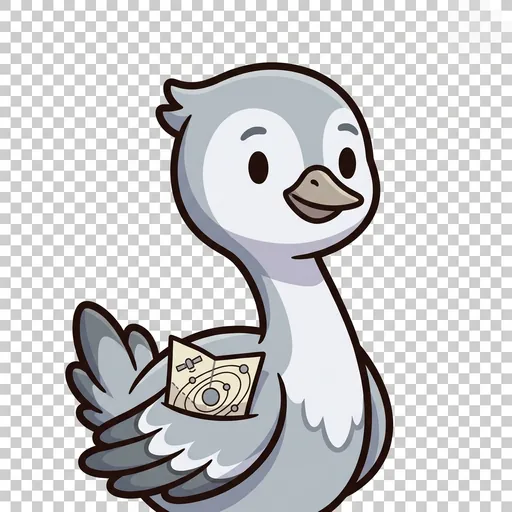
Sway
Gravity / orbits / mutual attraction
-

Swirl
Galactic rotation / spiral structure / angular momentum
-

Mist
Nebulae / dust / gas / accretion / stellar nurseries
-

Tide
Cosmological expansion / Hubble flow / cosmic time
-

Maw
Black hole / event horizon — gravity so strong that even light comes to rest
-
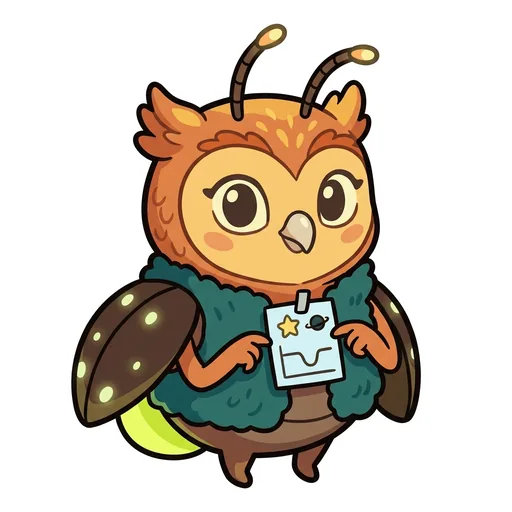
Wink
Exoplanet detection — finding hidden worlds by the tiny dip they make in a star's light (the transit method)
-
Squint
Cosmic distance / parallax — measuring how far a star is by how much it shifts between two viewpoints
-

Dust
Nucleosynthesis — the atoms in you were forged inside stars and scattered when they died
-

Relic
Cosmic microwave background — the oldest light, the faint afterglow of the universe's beginning