The Discarder
DISCARDER — *the right card to throw away is the move that wins the hand.*
A story read by The Discarder
Loading audio…
Press play to listen along. The line being read lights up as you go.
Show full transcript
Loading transcript…
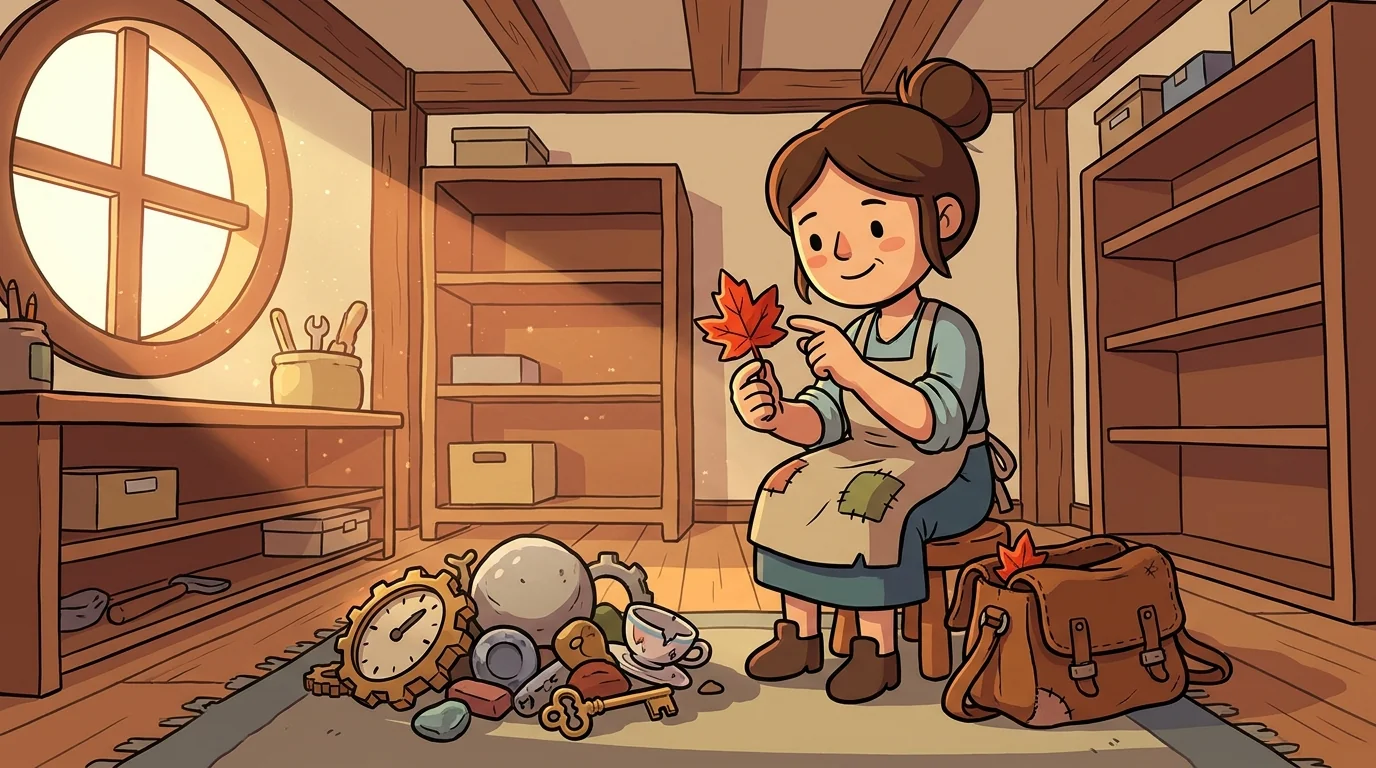
At the kitchen-table games of Cardforge, in the far corner where the light was best, a tween named Pip sat behind a fan of cards and threw one away.
She did it without looking at it twice. The card left her hand, slid across the worn green felt, and landed face-up on the pile with a soft slap. Then she went very still again, her eyes sweeping the table — not her own cards, but everyone else's discards, the little face-up graveyard growing between the players.
A boy across from her leaned in, baffled. "You just tossed a good card. I saw it. That was a nine — you could've built on that."
"I could've," Pip agreed. "But it wasn't going anywhere. It just sat in my hand adding points." She turned a smooth grey stone over in her palm, the way she always did when she was thinking. "Holding a card that isn't helping you isn't safe. It's just heavy."
The boy squinted at his own hand, which was fat with cards he'd been hoarding all game.
"Watch the game," Pip said, "not just your fist. The whole story's out there on the table, if you'd stop clutching long enough to read it."
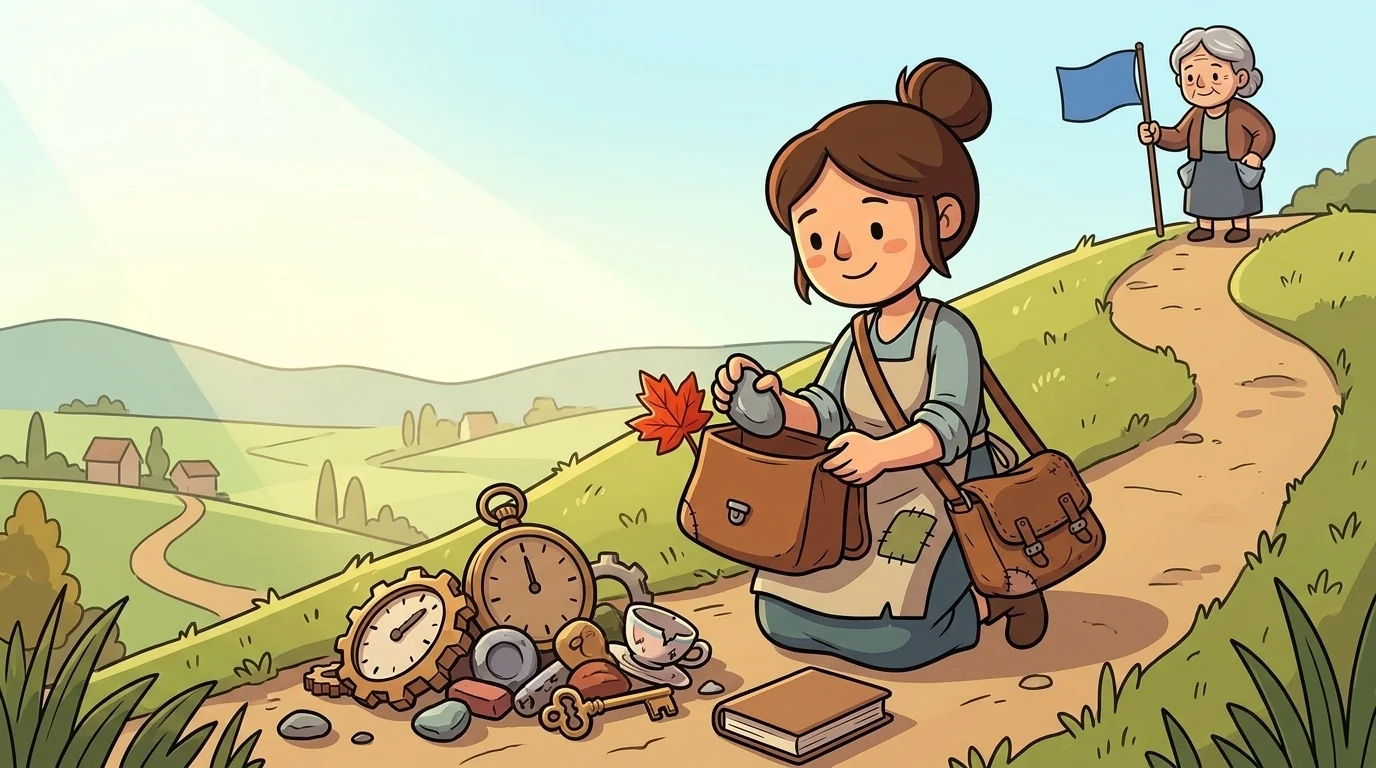
Pip hadn't always been able to let go so easily.
When she first learned gin rummy — at a real kitchen table, with her grandmother and a chipped bowl of pretzels between them — she'd been a hoarder. She kept everything. A card might be useful later, she reasoned. A card might turn into something. So she held, and held, and her hand grew fat and slow and full of dead weight, and she lost, and lost, and couldn't understand why.
One evening, after another loss, she'd slumped over the felt with her whole hand still clenched, and she'd felt it — a tight, gripping ache, like her fingers didn't know how to open. "I don't get it," she'd said. "I kept my best cards. I didn't waste anything."
Her grandmother had set her own cards down, slow and easy. "That's exactly it, love. You kept them. All of them. Every card you refused to drop was a stone in your pocket." She tapped the discard pile gently. "The winning isn't in what you grab. It's in what you're brave enough to throw."
Pip had looked at her clenched hand, and something loosened — not all the way, but a little. The gripping feeling had a shape now. It wasn't carefulness. It was fear of missing out, dressed up as strategy. And once she could feel the difference, she could start to set it down.
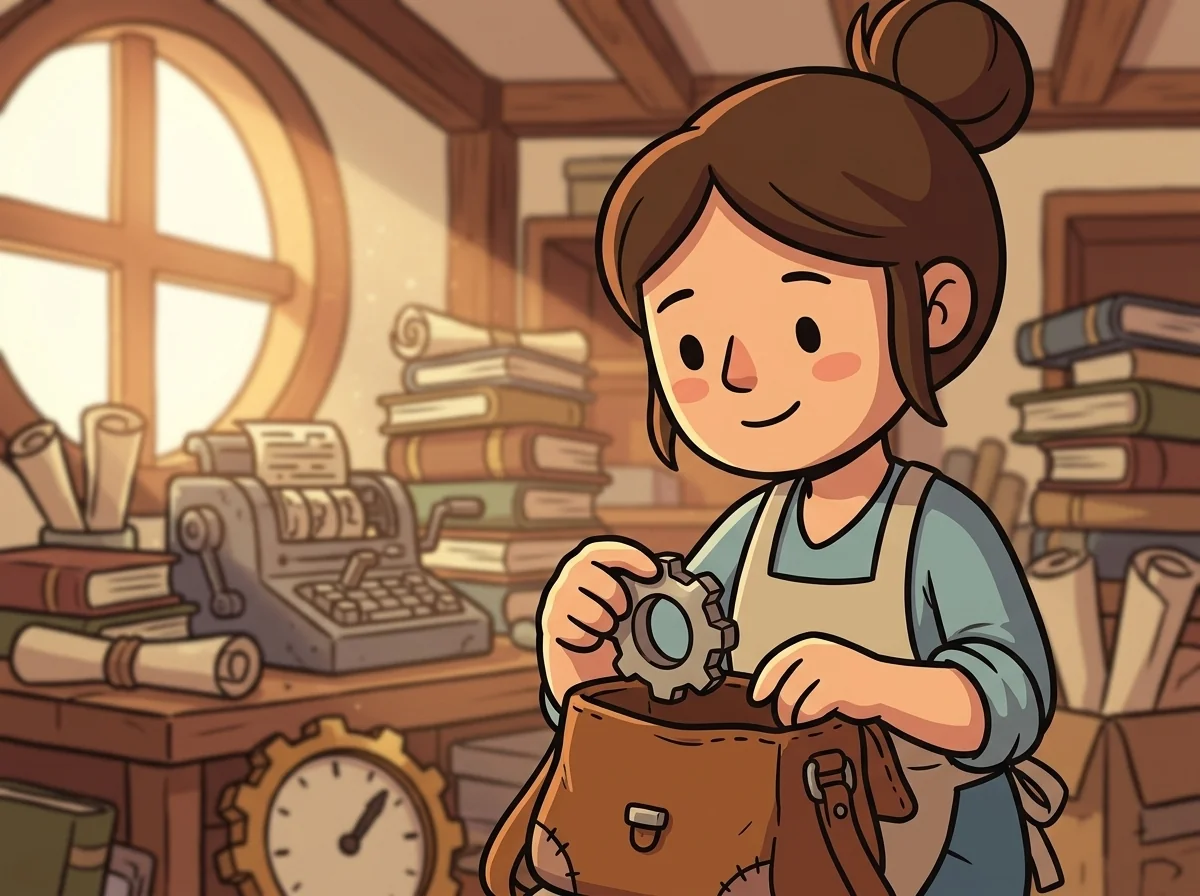
She came to Cardforge at eleven, because a place that studied the craft of games ought to understand the one move most players never learned: how to let go on purpose.
The old game-master who ran the tables met her when she arrived. He didn't ask her to name a winning hand or recite the rules. He shuffled a deck, dealt her ten cards, and said only, "Show me."
Pip looked at her hand. Two sevens, waiting for a third. A neat little run — the four, five, and six of diamonds, safe and solid. And a Queen of Hearts, high and lonely and connected to nothing at all.
She didn't explain. She slid the Queen out and laid it face-up on the table between them.
"You gave away ten points," the game-master said, testing her. "Your highest card."
"I gave away a passenger," Pip said. "It wasn't building anything. It was just riding along, making my hand heavier and worth more points at the end." She nudged the discard toward him. "The sevens might still become something. The diamonds already are something. The Queen was only ever a burden pretending to be a treasure."
The game-master looked at the lone Queen for a long moment. Then he nodded once. "You belong here."
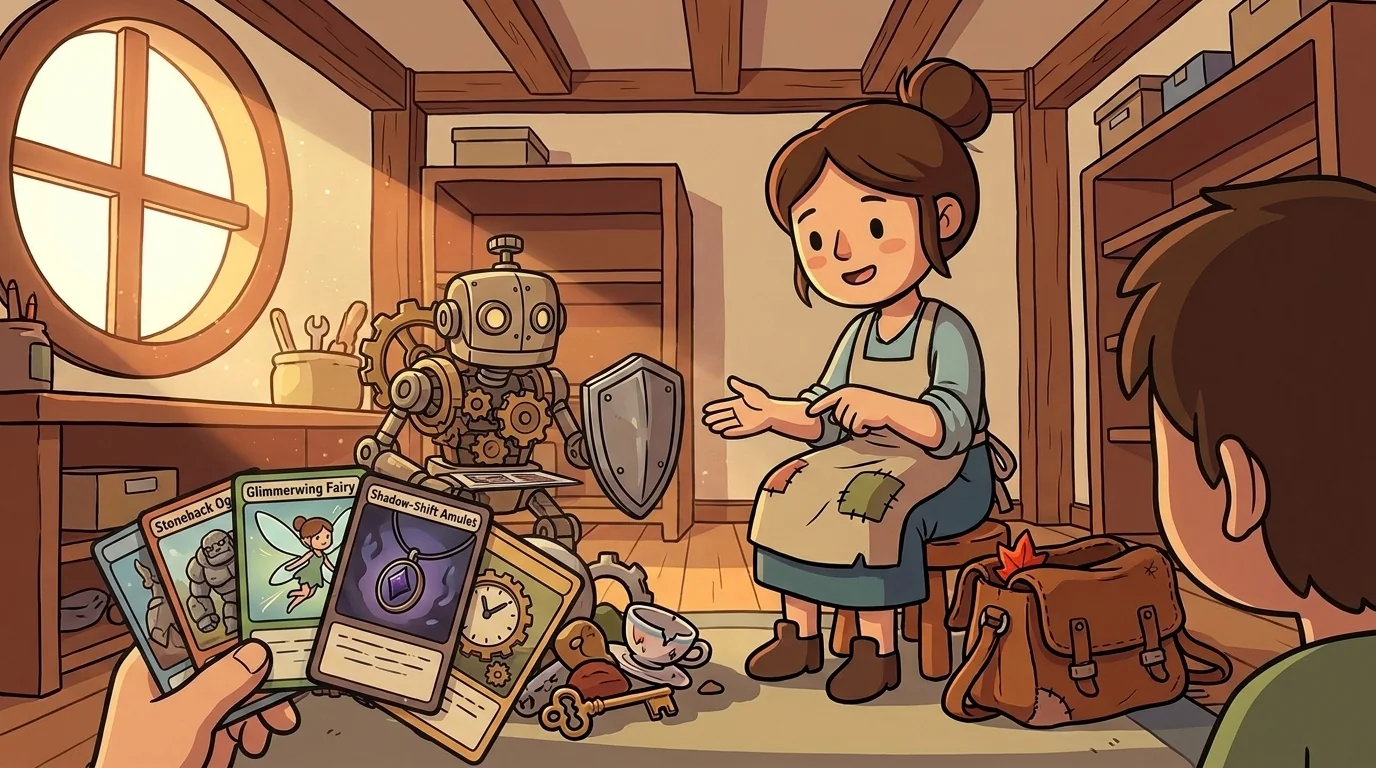
Pip's corner of Cardforge filled up, over the seasons, with players who couldn't stop clutching.
One afternoon a boy named Leo dropped into the chair across from her — quick-handed, quicker-tempered, with a hand so overloaded he could barely fan it. "I collect the good ones," he announced. "Big hand, big options."
"Big hand, big score against you," Pip said mildly. "Play me."
They played. Leo, true to form, watched only his own cards, drawing and frowning and drawing again. Pip watched him. She watched him draw a card, scowl, and fling the King of Hearts onto the pile with a flourish. She shifted her stone from her left palm to her right. A turn later, out went his Jack of Hearts.
Pip's eyes narrowed. She was holding that same lonely Queen of Hearts, the one card she couldn't place. Any other day it would have been dead weight. But Leo had just thrown away a King and a Jack of the same suit — thrown away the very cards a person would keep if they wanted hearts at all.
"You've got no use for hearts," she said, not quite a question.
Leo shrugged, not even looking up. "Bad suit for me this hand."
So Pip slid the Queen of Hearts onto the pile — the card she'd been dreading — smooth and unbothered. Leo glanced at it, decided he didn't want it, and drew blind from the deck instead.
"How'd you know I wouldn't grab it?" he asked, annoyed.
"Because you told me." Pip tipped her chin at the discard pile, the little face-up story of everything already thrown. "You threw the King. You threw the Jack. A discard says this is what I don't want. You'd been shouting it for two turns. I just listened." She set her stone down. "The right card to throw is sometimes the obvious one, and sometimes it isn't. Either way — you can't know until you read what everyone's already let go of."
Leo stared at the pile like he was seeing it for the first time. "I never look at that."
"Most people don't," Pip said. "They're too busy holding on."
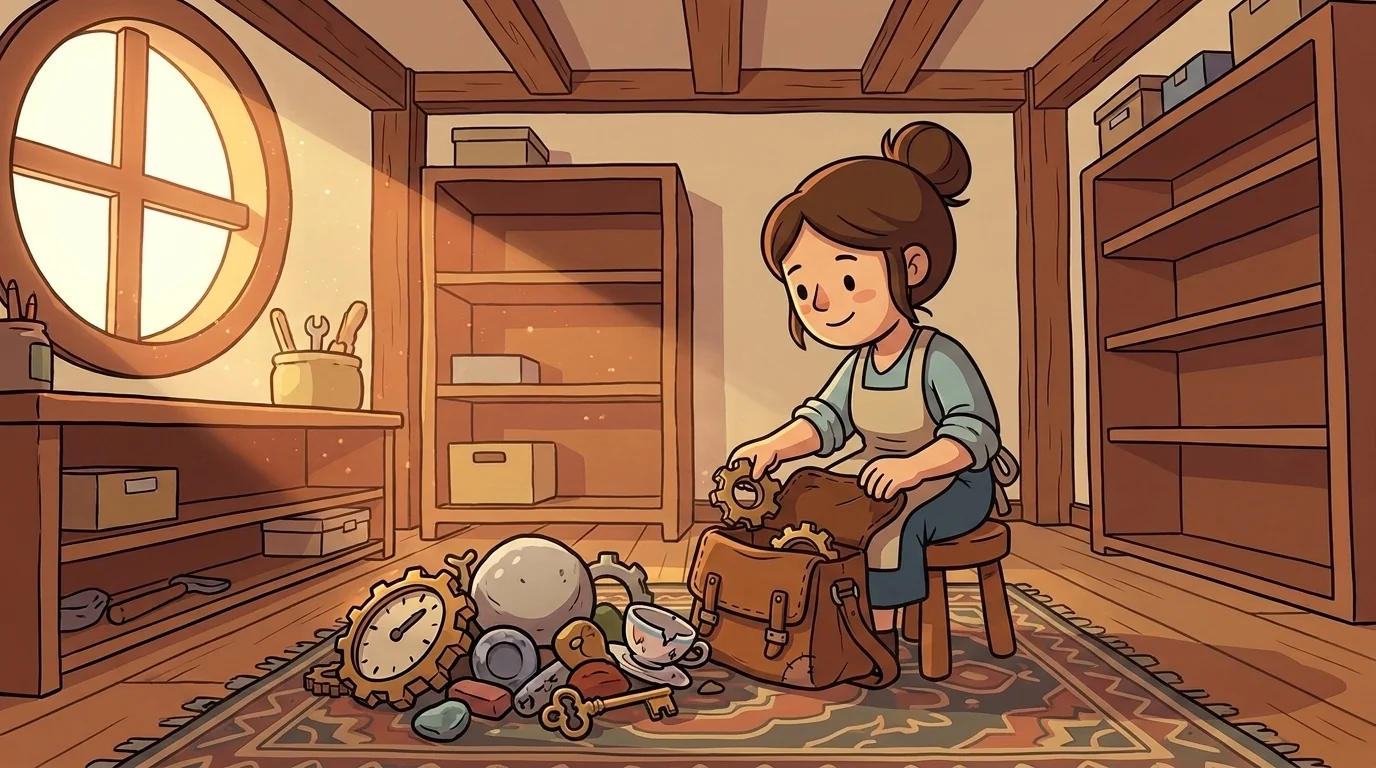
Later, when the tables had emptied and the light had gone gold and low, Leo came back and sat down without a hand of cards at all.
"When I finally dropped some of them," he said, quiet now, "half my hand, cards I'd been saving all game — it felt bad for a second. Like losing. But then it felt..." He trailed off, flexing his fingers.
"Lighter," Pip said.
"Yeah."
She nodded slowly, and thought of her own clenched fist at her grandmother's table, and the ache that finally let go. "That's the part nobody teaches you. Letting go feels like losing, right up until the second it doesn't. Then it just feels like room." She turned her stone over one last time. "It's the same at a messy desk, or a project with too many pieces, or a worry you've carried too long. The trick isn't grabbing more. It's being brave enough to open your hand — and trusting that what stays is enough to win with."
Leo was quiet. Then he uncurled his fingers, slow, looking at his own empty palm like it belonged to someone braver than he'd been that morning.
Pip watched the tension slide off his shoulders — the same way, years ago, it had slid off hers — and she didn't say the last part out loud. She only felt it, warm and certain: the heaviest hand isn't the fullest one. It's the one you're too scared to lighten.
The CardForge ensemble
The Discarder is part of CardForge's distributed-narrative cast. Each character embodies a different curricular primitive; together they teach the full subject.
-

The Finesseur
Finesse (force an opponent's high card via positional play; bridge / hearts / spades)
-

The Squeezer
Squeeze (force a discard that gives up a winner; advanced bridge + hearts)
-
The Endplayer
Endplay (throw opponent in to force a losing lead; bridge / hearts / whist)
-
The Counter
Card-counting / pip-tracking (track played cards to deduce remaining hands; gin / bridge / blackjack-style)
-
The Long-Suit
Suit establishment (set up a long suit to run for tricks late in the hand; bridge / whist / spades)
-

The Bluffer
Deception under uncertainty (poker betting; representing a hand you don't have)
-

The Trumpkeeper
Trump management (when to ruff, when to hold; whist / spades / euchre / pinochle)
-
The Forcer
Magic forcing (the spectator "freely chooses" the card you intended)
-
The Shuffler
False-shuffle / stack management (control card order while appearing to randomize; mathematical card magic)