Stake
ETHICS — *what's at stake in deploying AI; people choosing, not rules-from-the-sky.* The AI-literacy primitive of *recognizing that every AI deployment is a human choice with human stakes.*
Loading audio…
Press play to listen along. The line being read lights up as you go.
Show full transcript
Loading transcript…

Stake drove her three sharpened posts into the soft cork of the workbench, one after another, until they stood in a tight triangle — and the space they enclosed suddenly meant something. She was a paper figure folded into three little wooden stakes, not an animal, not a robot, and on each post, in tidy block letters, she wore a single word: PEOPLE. CHOICES. STAKES. Where the three posts met, they fenced off a small patch of bench, and Stake set a toy schoolhouse inside it.
"This is what I do," she said to no one in particular, kneeling to look into the little enclosed patch. "I plant myself around a real place where a machine is about to be turned loose, and I make everyone stand inside the triangle and look at what's actually here." She touched the schoolhouse. "Not a robot uprising. Not a runaway trolley. This. A school, a Tuesday, a machine somebody's about to switch on — and the exact people who'll live with what happens next."
She pressed the posts a little deeper into the cork so they wouldn't drift. That was Stake's whole way of being: refusing to let the conversation float up into hypotheticals and clever dilemmas, hammering it back down into the specific ground where specific people stood. She marked the place. She held it still. And she would not let anyone leave the triangle until they had named who was inside it.

Stake had been folded last of all the figures in the village paper-crafts workshop — after Sort, after Feed, after Skew, after Edge. By the time the crafters got to her, the others had already shown their machines could sort and learn and reveal their flaws. Stake's fold came with one job the others didn't have: to ask the question that came after all the cleverness. Should this be used at all? Here? On these people? Watched by whom?
She remembered the moment she understood why she'd been folded last. A shiny new machine had been finished in the workshop — quick, accurate, genuinely impressive — and everyone wanted to send it straight out into a village nearby. Stake had planted her posts in front of it. "Wait," she'd said. "Who out there did we build this to decide about? Did we ask them? What happens to one of them if it's wrong?"
The room had gone quiet, a little annoyed. The machine worked; wasn't that enough? But Stake held her ground in the cork. She had seen how easy it was, once a thing was built, to say the machine decided and let every human step back from the blame. "It didn't decide," she'd said. "We're deciding — right now, in this room — to turn it loose on people who never got a say." She learned, standing there, that the technical questions and the human ones were never two piles; they were one, braided together, and someone had to be brave enough to hold up the braid. That someone was her.
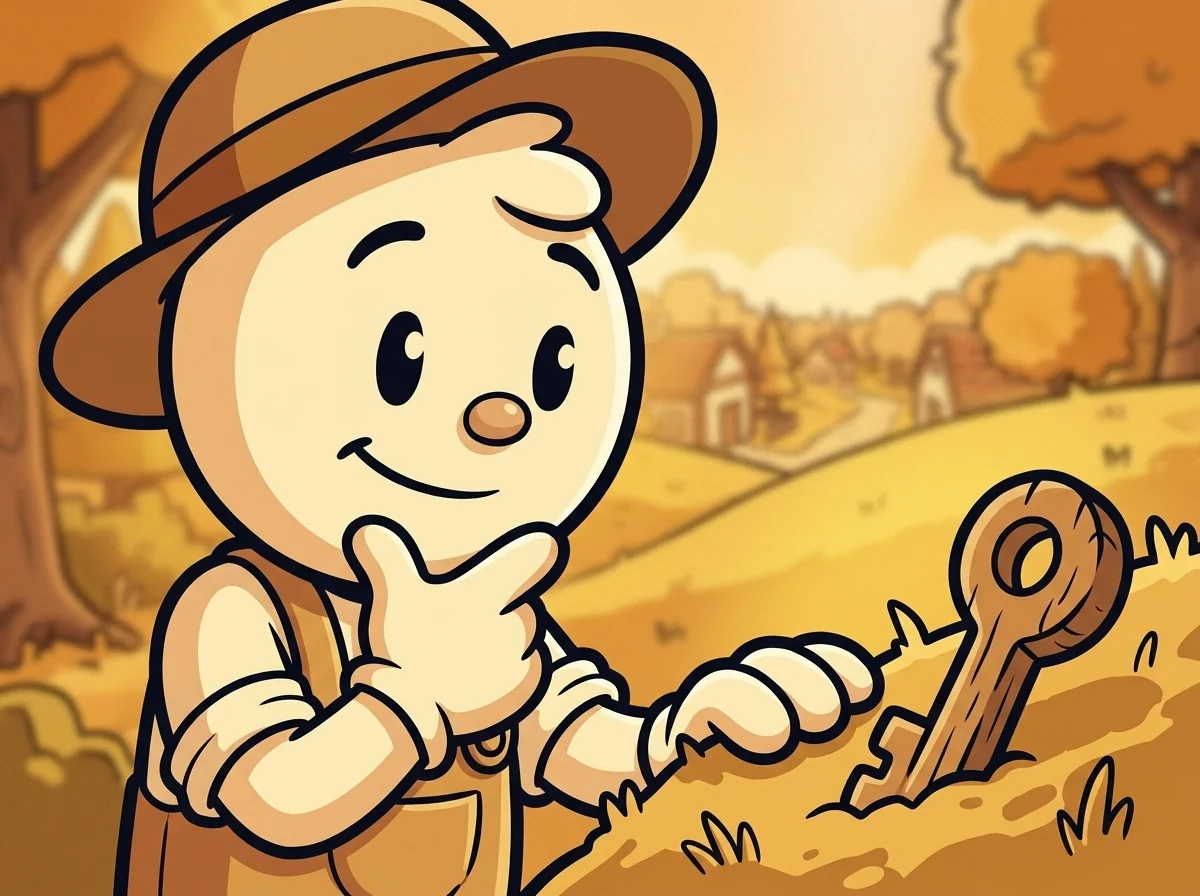
At the AIForge academy, Bit the founder walked Stake past a row of finished, humming machines, all ready to ship. "Pick one to send out," Bit said, testing her.
Stake didn't pick. She stopped, unfolded her three posts, and drove them into the bench in front of the whole row. "Before I send any of them," she said, "I need to stand in the triangle. Who's on the other end of this one? Who chose to point it at them? What happens to a real person if it fails, and can that person say so to anyone?" She looked at the machines, then at Bit. "If nobody can answer those, then the honest choice might be to send out none of them — and refusing isn't me failing the task. Refusing is the task."
A couple of the other figures shifted, uneasy — they'd been about to ship everything. But Bit smiled slowly, because that willingness to plant posts and say no was exactly what the academy was missing. "You didn't reach for the clever answer," Bit said. "You reached for the ground. Stay — and stand your triangle around every machine that leaves this place."

Stake's own class always began with the posts going into the cork. Today she penned a little diagram on the whiteboard: a school lunch machine, meant to cut food waste and nudge kids toward healthier meals. "Sounds kind, doesn't it?" she said. "Now get inside my triangle with me and let's look."
She tapped the first post — PEOPLE — and asked who was actually caught in this. Hands went up: students, cafeteria staff, parents, the principal. "Direct, indirect, the whole community," Stake said, writing each one down. "We name them, out loud, specifically — not 'users,' but these people." Then the second post, CHOICES: who gets to switch this on, and who watches them, and what can a kid do if it goes wrong? "The school board?" a student guessed. "The tech office?" Maya cut in — "What if it recommends something and a kid gets sick? Can they even complain to anyone?" Stake pointed at her, pleased. "That question. Hold onto it. Who decides, and what happens when they're wrong — write it down, don't let it stay vague."
She moved to the third post — STAKES — and someone joked "their lunch!" Stake gave a dry smile and pressed harder. "More than lunch. What if it pushes a food a kid's allergic to? What if it shoves 'healthy' choices so hard that everyone just smuggles snacks from home? What if it quietly records what every child eats?" Maya's eyes went wide: "Oh — like their health. Their privacy. Their dignity." "Now you see the triangle," Stake said quietly. And she walked them through the rest, planting each one like a post: sometimes the right answer is simply don't turn it on; always check it for harm before it goes out, and keep watching after, because the world shifts under a machine's feet; write every decision down so someone can ask later why; and over in DataForge, Guard holds this same ground at the data end while she holds it at the deployment end, the two of them fencing the whole chain between them. "And when it goes wrong," she finished, "nobody gets to say the machine made me. We ask which humans chose what — and we bring the affected people into the choosing, before, not after."
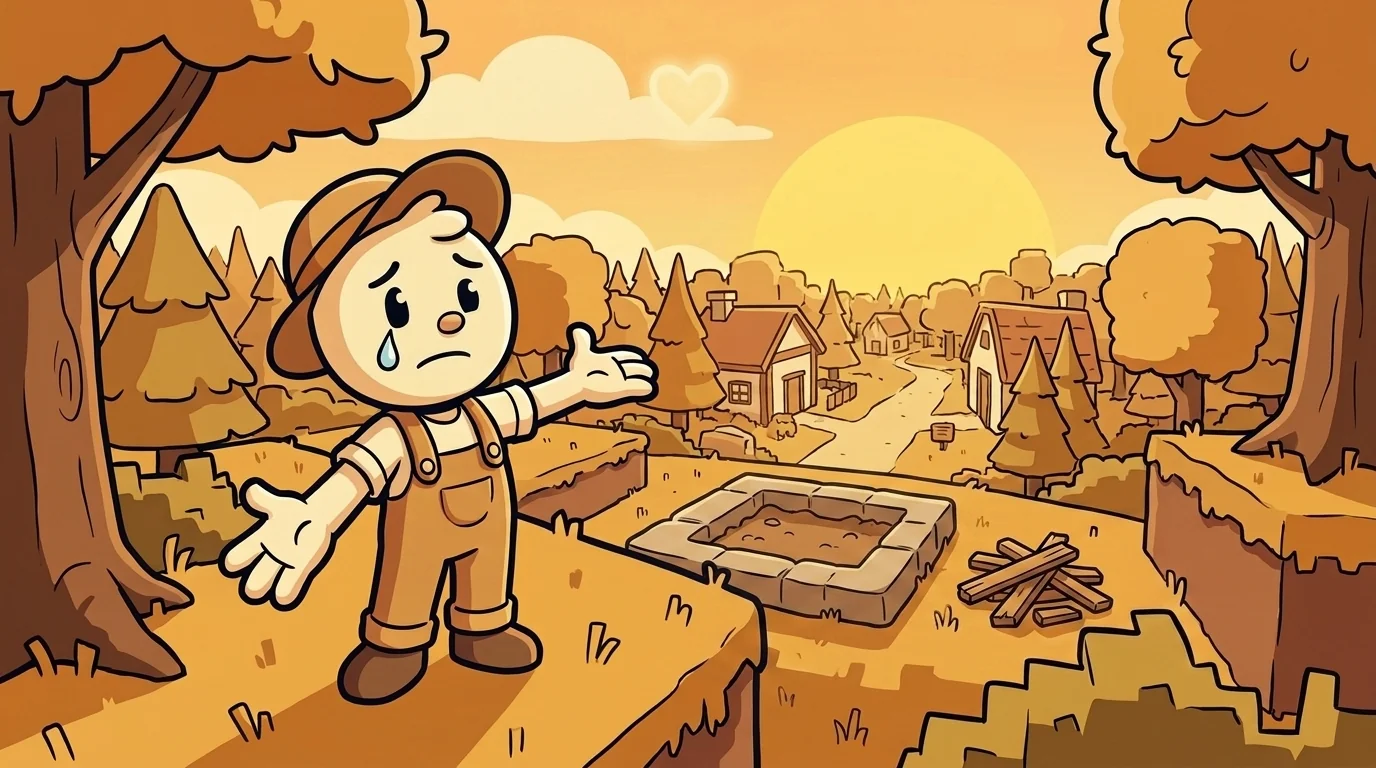
The posts still stood in the cork when the room emptied out, all but Maya, who lingered. "It seems heavy," Maya said. "Carrying all that. Being the one who says stop."
Stake sat down in the middle of her own triangle, small and paper-folded, and thought about it honestly. "It is heavy," she said. "I won't pretend it isn't. Standing your ground when everyone wants to rush past you — that costs something." Then she looked up, and her voice went warm. "But the day I first said no to a machine that wasn't ready — and watched a real person be spared because of it — something in me went steady and proud. Not hard. Firm." She smiled. "Caring about the people inside the triangle doesn't make you fragile, Maya. It makes you the one who's standing when it matters."
Maya nodded slowly, and felt her own shoulders settle — the quiet, warm steadiness of learning that saying stop could be the bravest, kindest thing in the room. Stake gathered her three posts, but she left the toy schoolhouse where it was, inside the space they had made, small and safe and seen.
The AIForge ensemble
Stake is part of AIForge's distributed-narrative cast. Each character embodies a different curricular primitive; together they teach the full subject.
-
Sort
Classifier — the simplest ML; putting things in categories
-
Feed
Training data — the examples a model learns from; garbage-in-garbage-out
-
Skew
Bias — where AI systems go wrong when training examples lean
-
Edge
Model limitations — what a model can't do; modeling 'I don't know' as a good answer
-

Split
Train/test split — keep some examples hidden to tell learning from memorizing
-

Cue
Features — a model decides from the clues you give it; choose good clues
-

Sure
Confidence — a model reports how sure it is; low confidence means check, not trust
-

Mirage
Hallucination — when a model confidently makes something up that sounds true but isn't; check, don't just trust
-
Rote
Overfitting — when a model memorizes the exact examples instead of learning the general idea